Sponsored

FORD issues a do-not -drive- advisory

YaBoiNewton

Well-Known Member
Joined
Jul 23, 2020
Threads
2
Messages
457
Reaction score
1,001
Location
Florida
Vehicle(s)
2019 XLT supercrew Sport FX4, 2008 Bullitt w Saleen Supercharger
Occupation
Automotive Engineer
Vehicle Showcase
1
This sucks. Ford / Takata are simply replacing a defective air bag with another defective airbag.

Both need to STEP UP and fix the problem.

I may simply unplug / remove both airbags and take my chances.
Well, the new one isn't defective...it's just going to become defective eventually. Remember, millions of these inflators were made, but most of them are not fragmenting in accidents.

Takata does not exist anymore and the OEMs all over the world have taken extensive measures to scrutinize all new inflator technology. The OEMs have certainly stepped up in my opinion.

So if I had mine replaced 6 years ago, I'll need to do it again? Is this documented
Potentially. It depends on a variety of factors. Please keep in mind I am just some stranger, albeit an informed one, on the internet, but I can't speak to the specifics of the recall and how the recalls are determined. Just look out for a recall notice, drive safely as you normally should anyways, and have the free work done if it ever comes your way again.
 

YaBoiNewton

Well-Known Member
Joined
Jul 23, 2020
Threads
2
Messages
457
Reaction score
1,001
Location
Florida
Vehicle(s)
2019 XLT supercrew Sport FX4, 2008 Bullitt w Saleen Supercharger
Occupation
Automotive Engineer
Vehicle Showcase
1
Well it all comes back to Takata saving money by substituting cheaper Ammonium Nitrate as a propellant instead of the stable but more expensive Tetrazole, Sodium Azide, or Guanadine nitrate used by Autoliv or TRW airbags. The reason given was that Sodium Azide is more toxic, but in reality how many times are you going to be exposed in a lifetime. I saw a documentary about it where some of the engineers involved quit over the decision as they knew of the dangers, and wanted no part of it, and the likely outcome.
I don't want to get too deep in this discussion, as I am a professional in the industry, but this comment is rather uninformed about the technology. Basically all solid propellants in the world have the same problem as AN.

Doesn't mean all airbag inflators are unsafe, they're actually very safe, but it does mean that the Takata situation is not nearly as simple as this documentary may have implied.
 

Cmar

Well-Known Member
First Name
Cam
Joined
Feb 10, 2020
Threads
20
Messages
1,875
Reaction score
5,185
Location
Australia
Vehicle(s)
Ford Ranger PX
Occupation
Medical Scientist
I don't want to get too deep in this discussion, as I am a professional in the industry, but this comment is rather uninformed about the technology. Basically all solid propellants in the world have the same problem as AN.

Doesn't mean all airbag inflators are unsafe, they're actually very safe, but it does mean that the Takata situation is not nearly as simple as this documentary may have implied.
Thanks for the update, only going on the information supplied in the doco. Would appreciate your views as an professional in the area.
 

Mustang2Ranger

Well-Known Member
First Name
Garrett
Joined
Mar 20, 2019
Threads
7
Messages
691
Reaction score
1,135
Location
Southern California
Vehicle(s)
19 Ranger Lariat,06 Escape Hybrid,01 Sienna,06 TSX
Yes not to name everything, but storage and quality control at the Mexico plant were an issue, and the chemicals the industry has moved away from


YaBoiNewton

Well-Known Member
Joined
Jul 23, 2020
Threads
2
Messages
457
Reaction score
1,001
Location
Florida
Vehicle(s)
2019 XLT supercrew Sport FX4, 2008 Bullitt w Saleen Supercharger
Occupation
Automotive Engineer
Vehicle Showcase
1
Thanks for the update, only going on the information supplied in the doco. Would appreciate your views as an professional in the area.
My view is to pay attention only to the science - and the recall notices - and take whatever any documentary says with a heavy grain of salt. Anything portrayed as some shocking truth should always be met with skepticism.

Look instead to research that is crucified many times over by anonymous peer review before it is deemed appropriate to publish. Documentaries rarely see that level of scrutiny.

Anyways, rangers are pretty dope, amirite?
 

YaBoiNewton

Well-Known Member
Joined
Jul 23, 2020
Threads
2
Messages
457
Reaction score
1,001
Location
Florida
Vehicle(s)
2019 XLT supercrew Sport FX4, 2008 Bullitt w Saleen Supercharger
Occupation
Automotive Engineer
Vehicle Showcase
1
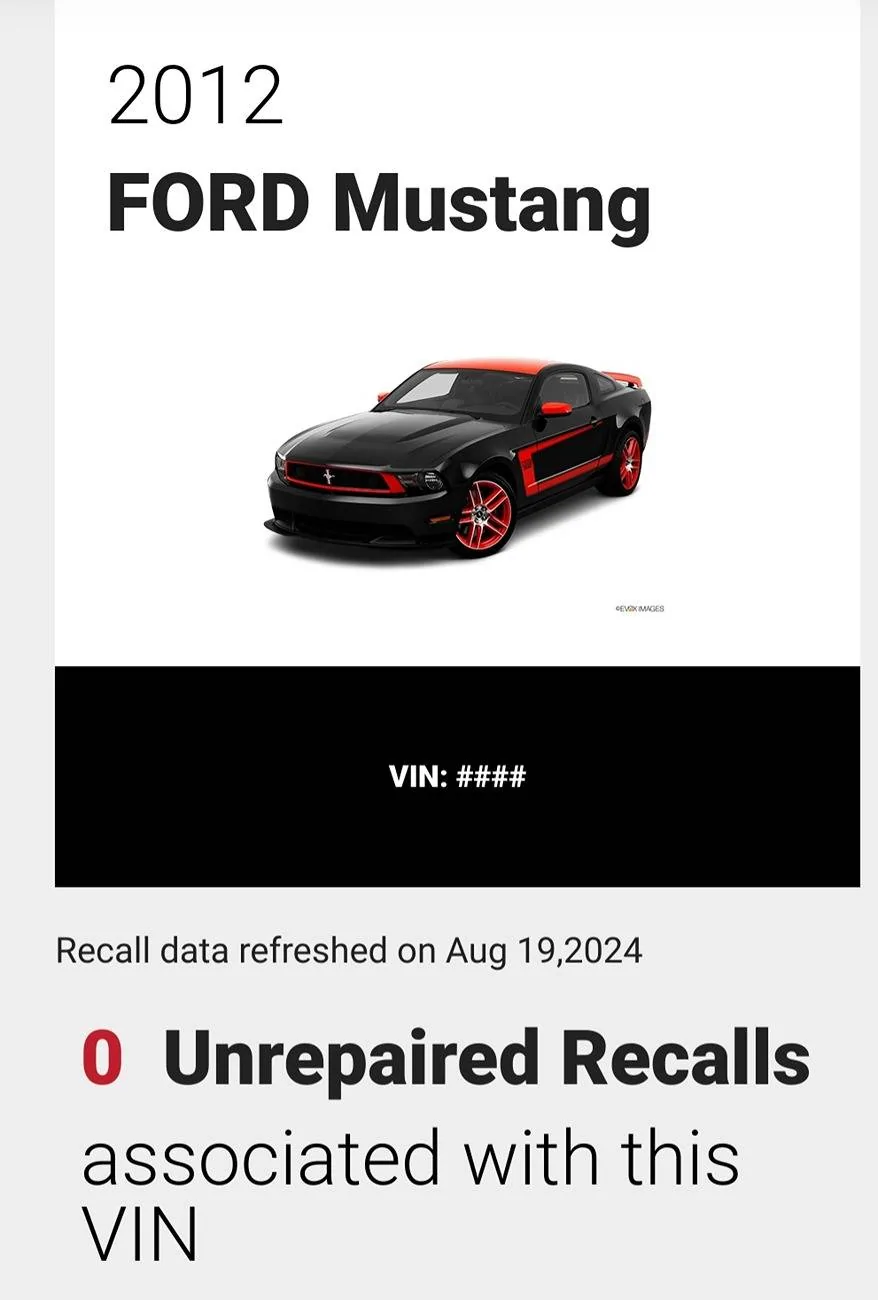
I have been getting letters and e-mails for the 2012 Mustang GT that I traded in to a Ford dealer in 2015. I guess nobody follows up on this stuff.
I got my 08 mustang from my inlaws and started getting the notices as soon as the title was transferred. Ford kept sending them to my inlaws as well for good measure lol
 

Cmar

Well-Known Member
First Name
Cam
Joined
Feb 10, 2020
Threads
20
Messages
1,875
Reaction score
5,185
Location
Australia
Vehicle(s)
Ford Ranger PX
Occupation
Medical Scientist
Appreciate your views. Agreed that nothing is ever as simple as it may appear.

Rangers are indeed pretty good, it took Ford Rangers to finally topple Toyota Hilux from number one selling vehicle over here. Nissan, Mitsubishi, Isuzu, VW, and Mazda all tried, but it was Ranger which finally accomplished it. Even with their faults, someone obviously put a lot of thought and market research into these cars.
 
Last edited:

TJC

Well-Known Member
First Name
Tony
Joined
Aug 28, 2020
Threads
45
Messages
3,944
Reaction score
9,900
Location
North Carolina
Vehicle(s)
93 Miata, 05 Ranger 4x4, 20 Ranger 4x4, 23 CX-5
Well, the new one isn't defective...it's just going to become defective eventually.
Semantics. Quantify "Eventually".

The thing is a ticking time bomb, and the clock apparently starts each time the airbag is replaced. And if I put on my engineering hat, the clock actually starts ticking at the time of manufacture. So how long have these airbags been sitting in a warehouse?

I call BS on this one.

There must be engineering data somewhere that speaks to the issue. Ford never informed me I'd be back at ~5 year intervals for airbag replacements. Not in any of the documentation, or letters sent to me.

If they had I would have insisted that they actually fix the problem.

I own autos from 1993 - 2003 that have never had a recall on the airbags. This implies the industry knows how to design and manufacture airbags without "expiration dates" well before this rime period. After all this is not new technology.

Each time that I have taken my truck in for the airbag replacement, I've had to remove the glove box to get rid of the rattles from loose crap that wasn't loose before the replacements. It is a day spent at the dealership, and another 1/2 day to secure the wires and other loose crap that was left dangling around.

Forgive my rant, but I don't want a 3rd BandAid. I want a permanent solution.
 

YaBoiNewton

Well-Known Member
Joined
Jul 23, 2020
Threads
2
Messages
457
Reaction score
1,001
Location
Florida
Vehicle(s)
2019 XLT supercrew Sport FX4, 2008 Bullitt w Saleen Supercharger
Occupation
Automotive Engineer
Vehicle Showcase
1
Semantics. Quantify "Eventually".

The thing is a ticking time bomb, and the clock apparently starts each time the airbag is replaced. And if I put on my engineering hat, the clock actually starts ticking at the time of manufacture. So how long have these airbags been sitting in a warehouse?

I call BS on this one.

There must be engineering data somewhere that speaks to the issue. Ford never informed me I'd be back at ~5 year intervals for airbag replacements. Not in any of the documentation, or letters sent to me.

If they had I would have insisted that they actually fix the problem.

I own autos from 1993 - 2003 that have never had a recall on the airbags. This implies the industry knows how to design and manufacture airbags without "expiration dates" well before this rime period. After all this is not new technology.

Each time that I have taken my truck in for the airbag replacement, I've had to remove the glove box to get rid of the rattles from loose crap that wasn't loose before the replacements. It is a day spent at the dealership, and another 1/2 day to secure the wires and other loose crap that was left dangling around.

Forgive my rant, but I don't want a 3rd BandAid. I want a permanent solution.
That's not really how it works...the environment the inflator exists in while installed is the problem. The inflators sitting in an air conditioned warehouse are fine. Inflators sitting in the dashboard of a car in Florida that gets hit with full sun every day not so much. If you live in a more mild climate then you are a lower priority for replacement. This information is all out there to read if you just look for it.

I understand your frustration with it, but it's not gonna change.
 

TJC

Well-Known Member
First Name
Tony
Joined
Aug 28, 2020
Threads
45
Messages
3,944
Reaction score
9,900
Location
North Carolina
Vehicle(s)
93 Miata, 05 Ranger 4x4, 20 Ranger 4x4, 23 CX-5
Thank you for the enlightenment.

I have found sources and read up on Takata. If I understand this correctly. It seems Takata has a history of cutting corners, Seat belt recalls came first, which they and Honda failed to report for at least 5 years, then repeated airbag recalls from those manufactured in Mexico. It seems Takata knowingly went down this road. Three of their senior executives were named and charged, not just the corporation.

In April and May 2013, a total of 3.6 million cars were recalled due to defective Takata airbags. All of those airbags were made at, or otherwise used inflator units manufactured by, Takata's Monclova Plant in Coahuila, Mexico, operated by Takata's North American/Mexican subsidiary, TK Holdings Inc. In November 2014, BMW announced they would move any orders from the Mexican plant to a Takata plant in Germany.
In June 2014, Takata admitted their Mexican subsidiary had mishandled the manufacture of explosive propellants and improperly stored chemicals used in airbags. Identifying vehicles with defective airbags was made more difficult by the failure of TK Holdings Inc. to keep proper quality control records. That prompted another round of recalls in June 2014.
...​
...​
  • Ammonium nitrate, used by Takata as airbag propellant from the late 1990s as a cheaper, but less stable alternative to tetrazole
  • Sodium azide, older, highly stable airbag propellant phased out by Takata in the 1990s in favor of the less potentially toxic tetrazole
  • Guanidine nitrate, alternative airbag propellant used in Autoliv and TRW airbags, less sensitive to moisture

Two final questions
  1. Is the entire airbag replaced or just the inflator?
  2. Is Ammonia Nitrate still being used in the replacement inflators?
Thanks!
 

YaBoiNewton

Well-Known Member
Joined
Jul 23, 2020
Threads
2
Messages
457
Reaction score
1,001
Location
Florida
Vehicle(s)
2019 XLT supercrew Sport FX4, 2008 Bullitt w Saleen Supercharger
Occupation
Automotive Engineer
Vehicle Showcase
1
Thank you for the enlightenment.

I have found sources and read up on Takata. If I understand this correctly. It seems Takata has a history of cutting corners, Seat belt recalls came first, which they and Honda failed to report for at least 5 years, then repeated airbag recalls from those manufactured in Mexico. It seems Takata knowingly went down this road. Three of their senior executives were named and charged, not just the corporation.

In April and May 2013, a total of 3.6 million cars were recalled due to defective Takata airbags. All of those airbags were made at, or otherwise used inflator units manufactured by, Takata's Monclova Plant in Coahuila, Mexico, operated by Takata's North American/Mexican subsidiary, TK Holdings Inc. In November 2014, BMW announced they would move any orders from the Mexican plant to a Takata plant in Germany.
In June 2014, Takata admitted their Mexican subsidiary had mishandled the manufacture of explosive propellants and improperly stored chemicals used in airbags. Identifying vehicles with defective airbags was made more difficult by the failure of TK Holdings Inc. to keep proper quality control records. That prompted another round of recalls in June 2014.
...​
...​
  • Ammonium nitrate, used by Takata as airbag propellant from the late 1990s as a cheaper, but less stable alternative to tetrazole
  • Sodium azide, older, highly stable airbag propellant phased out by Takata in the 1990s in favor of the less potentially toxic tetrazole
  • Guanidine nitrate, alternative airbag propellant used in Autoliv and TRW airbags, less sensitive to moisture

Two final questions
  1. Is the entire airbag replaced or just the inflator?
  2. Is Ammonia Nitrate still being used in the replacement inflators?
Thanks!
Not gonna comment on whether or not Takata historically cut corners, but yeah it seems to be messy manufacturing.

Not sure why Sodium Azide keeps being brought up as if it's a good alternative...that stuff is nasty to burn and dangerous to manufacture. It doesn't get used anymore because it was such a dangerous propellant for everyone involved. Modern propellants are far safer for the people in manufacturing and the end user.

1) I don't know, gotta ask Ford
2) Yes
 
Last edited:

Cmar

Well-Known Member
First Name
Cam
Joined
Feb 10, 2020
Threads
20
Messages
1,875
Reaction score
5,185
Location
Australia
Vehicle(s)
Ford Ranger PX
Occupation
Medical Scientist
Not gonna comment on whether or not Takata historically cut corners, but yeah it seems to be messy manufacturing.

Not sure why Sodium Azide keeps being brought up as if it's a good alternative...that stuff is nasty to burn and dangerous to manufacture. It doesn't get used anymore because it was such a dangerous propellant for everyone involved. Modern propellants are far safer for the people in manufacturing and the end user.

1) I don't know, gotta ask Ford
2) Yes
I believe that now it is customary to include a desiccant in the package in an attempt to keep the AN more stable. We live in a climate similar to Florida and so it was of concern over here too.
Sponsored


Top