jblc
Well-Known Member
- Thread starter
- #1
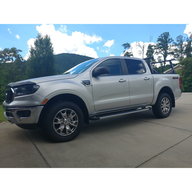
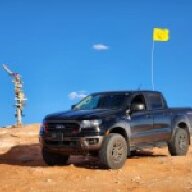
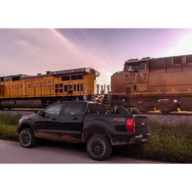
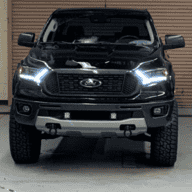
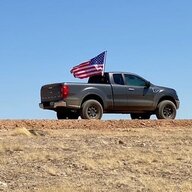
I went to an offroad location for the first time to explore the (more limited) capabilities of my FX2 2WD. I've been light offroad on fire roads, etc., but not more. I have some questions below 
My goal was to understand better the limits of 2WD w/ locking diff ranger. Preview: I didn't find its limits...see item #7 for why.
Obviously 4wd is far more capable; i don't plan to offroad for sport much, so it was for a learning experience.
Here are brief impressions on 2WD with "Beginner" and "Moderate" trails (Hollister Hills SVRA). The trails included rocks, dirt, dust; so mainly terrain undulations and some clusters of rocks (no mud or water, or larger rocks). Overall, the 2wd w/locker Ranger is more capable than I thought, and based on what i observed I'm seeking advice from others, with questions below
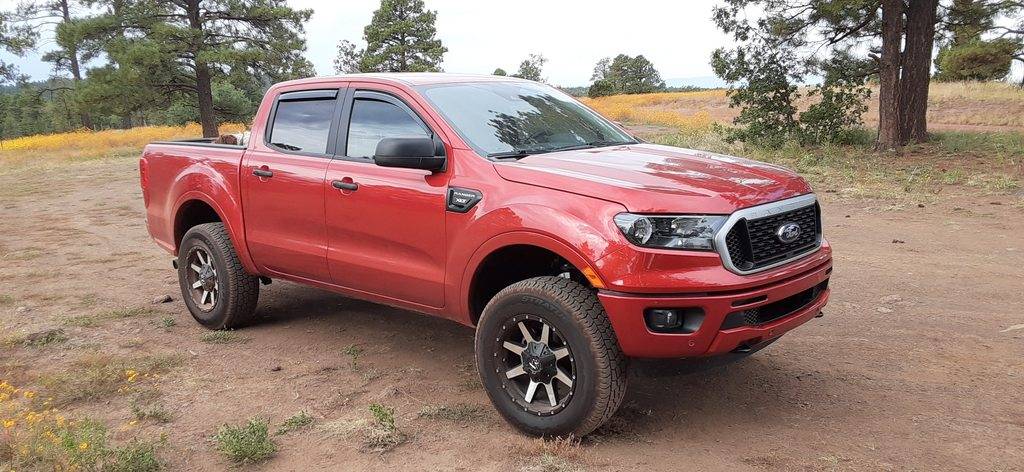
My offroad-related changes are
- Bilstein 5100 front/back (set to no-lift, stock height, in front)
- Destination AT2 265/70R17
- skid plates: read diff, fuel tank, steering, and engine
- onboard air compressor
- 9x cameras (not for offroad only, but useful for that).
- recovery gear eg traction boards, snatch strap / shackles, etc.
- canopy / other gear. Not meant for offroad specifically, but it's ~400 lb total in back; so better traction.
Here are the impressions -- again, from a beginner and with 2WD -- while aired down to 20 psi:
1. Plenty of power. Too much power actually, when not having a Low gear. Trying to go in 1st gear (eg locking out anything else) was still too sudden, fast, and jerky. I would have liked some control to move far slower, eg reliably 1-2 mph. This felt like the main limitation of 2wd: no Low gear.
2. Approach/clearance/breakover could handle more than I expected, esp when vehicle was both in sideways tilt and sharper fwd/back angles.
I did find it hard to know, though, when the limit would be reached. How do people when they're about to reach the limits? Or just collide into plates and detect that way? I couldn't tell perspective from the front/underbody/etc cameras.
3. Seemed very stable over terrain. I did not feel any shifting, etc. I don't know how to know its limits though, eg what angle is safe to not roll. What is a good rule of thumb for the Ranger?
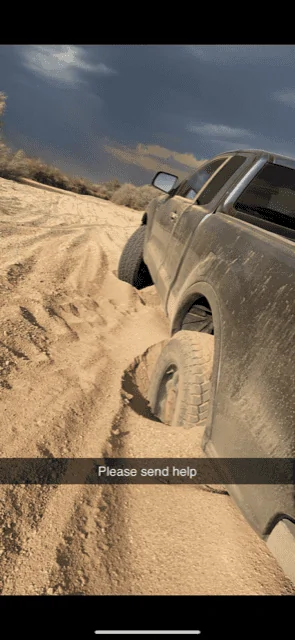
4. I never felt near the limit of 2WD, because I intentionally avoided getting in too deep this first time. There were two sketchy (to me ) instances: balancing on two opposite wheels only while going downhill, and going over a (to me) steep and sideways-tilted turn.
The locker 100% helped back out of the two-opposite-wheels situation to re-orient and try again, since one rear wheel was in the air.
The steep and sideways-tilted turn seemed hairy to me (the instrument cluster measured about +12 deg up, +9 deg sideways tilt, and with a large breakover bump), but there was no slippage and plenty of power. I'm guessing I'm not near the limit with my cautious driving, but I have no knowledge of the limit, so it seemed high
5. Deep ruts are deceptively tricky to navigate. I dragged my read diff plate a bit for a meter or two accidentally. I'm still not sure how to drive across ruts, when needing to cross them at an angle: it seems like high forces on the tire, since the wheels were forced into the ruts.
6. The extra 2" from the front 5100's would have been nice. It was set to stock height (for fuel savings). I don't plan on going offroad much, so this is fine for my vehicle's purpose, but I noticed the advantage even an extra 2" would give.
7. I have no idea how to know what mechanical forces the suspension can tolerate.
How slow do I need to go over bumps, dips, etc, to not bend or break any bearings/linkages? I tried to go as slow as possible.
I noticed, though, a very subtle clunk through the steering wheel near the end, when i turned the wheel either direction. I'm certain it has not been there with normal driving this past year.
But I also haven't driven slowly before. So, I can't tell if this is normal -- eg power steering engaging differently when on deflated tires, or just slow speed behavior -- or if I damaged something / loosened something.
Since I wasn't sure, I drove home to ask for advice, instead of trying to do more
Any thoughts on this?
Note: It did not come back on the highway. I rechecked lugnut torque before HW driving back, and needed to add about 10 ft-lb to each front lugnut to get to 100. It would be surprising it that would cause a clunk from a wheel shifting though.
I'm impressed with 2wd to have gone over some of this (admittedly) basic terrain without issue. Hopefully without issue given the clunk question
My goal was to understand better the limits of 2WD w/ locking diff ranger. Preview: I didn't find its limits...see item #7 for why.
Obviously 4wd is far more capable; i don't plan to offroad for sport much, so it was for a learning experience.
Here are brief impressions on 2WD with "Beginner" and "Moderate" trails (Hollister Hills SVRA). The trails included rocks, dirt, dust; so mainly terrain undulations and some clusters of rocks (no mud or water, or larger rocks). Overall, the 2wd w/locker Ranger is more capable than I thought, and based on what i observed I'm seeking advice from others, with questions below
My offroad-related changes are
- Bilstein 5100 front/back (set to no-lift, stock height, in front)
- Destination AT2 265/70R17
- skid plates: read diff, fuel tank, steering, and engine
- onboard air compressor
- 9x cameras (not for offroad only, but useful for that).
- recovery gear eg traction boards, snatch strap / shackles, etc.
- canopy / other gear. Not meant for offroad specifically, but it's ~400 lb total in back; so better traction.
Here are the impressions -- again, from a beginner and with 2WD -- while aired down to 20 psi:
1. Plenty of power. Too much power actually, when not having a Low gear. Trying to go in 1st gear (eg locking out anything else) was still too sudden, fast, and jerky. I would have liked some control to move far slower, eg reliably 1-2 mph. This felt like the main limitation of 2wd: no Low gear.
2. Approach/clearance/breakover could handle more than I expected, esp when vehicle was both in sideways tilt and sharper fwd/back angles.
I did find it hard to know, though, when the limit would be reached. How do people when they're about to reach the limits? Or just collide into plates and detect that way? I couldn't tell perspective from the front/underbody/etc cameras.
3. Seemed very stable over terrain. I did not feel any shifting, etc. I don't know how to know its limits though, eg what angle is safe to not roll. What is a good rule of thumb for the Ranger?
4. I never felt near the limit of 2WD, because I intentionally avoided getting in too deep this first time. There were two sketchy (to me
) instances: balancing on two opposite wheels only while going downhill, and going over a (to me) steep and sideways-tilted turn.The locker 100% helped back out of the two-opposite-wheels situation to re-orient and try again, since one rear wheel was in the air.
The steep and sideways-tilted turn seemed hairy to me (the instrument cluster measured about +12 deg up, +9 deg sideways tilt, and with a large breakover bump), but there was no slippage and plenty of power. I'm guessing I'm not near the limit with my cautious driving, but I have no knowledge of the limit, so it seemed high
5. Deep ruts are deceptively tricky to navigate. I dragged my read diff plate a bit for a meter or two accidentally. I'm still not sure how to drive across ruts, when needing to cross them at an angle: it seems like high forces on the tire, since the wheels were forced into the ruts.
6. The extra 2" from the front 5100's would have been nice. It was set to stock height (for fuel savings). I don't plan on going offroad much, so this is fine for my vehicle's purpose, but I noticed the advantage even an extra 2" would give.
7. I have no idea how to know what mechanical forces the suspension can tolerate.
How slow do I need to go over bumps, dips, etc, to not bend or break any bearings/linkages? I tried to go as slow as possible.
I noticed, though, a very subtle clunk through the steering wheel near the end, when i turned the wheel either direction. I'm certain it has not been there with normal driving this past year.
But I also haven't driven slowly before. So, I can't tell if this is normal -- eg power steering engaging differently when on deflated tires, or just slow speed behavior -- or if I damaged something / loosened something.
Since I wasn't sure, I drove home to ask for advice, instead of trying to do more
Any thoughts on this?
Note: It did not come back on the highway. I rechecked lugnut torque before HW driving back, and needed to add about 10 ft-lb to each front lugnut to get to 100. It would be surprising it that would cause a clunk from a wheel shifting though.
I'm impressed with 2wd to have gone over some of this (admittedly) basic terrain without issue. Hopefully without issue given the clunk question
Sponsored
Last edited: