Sponsored

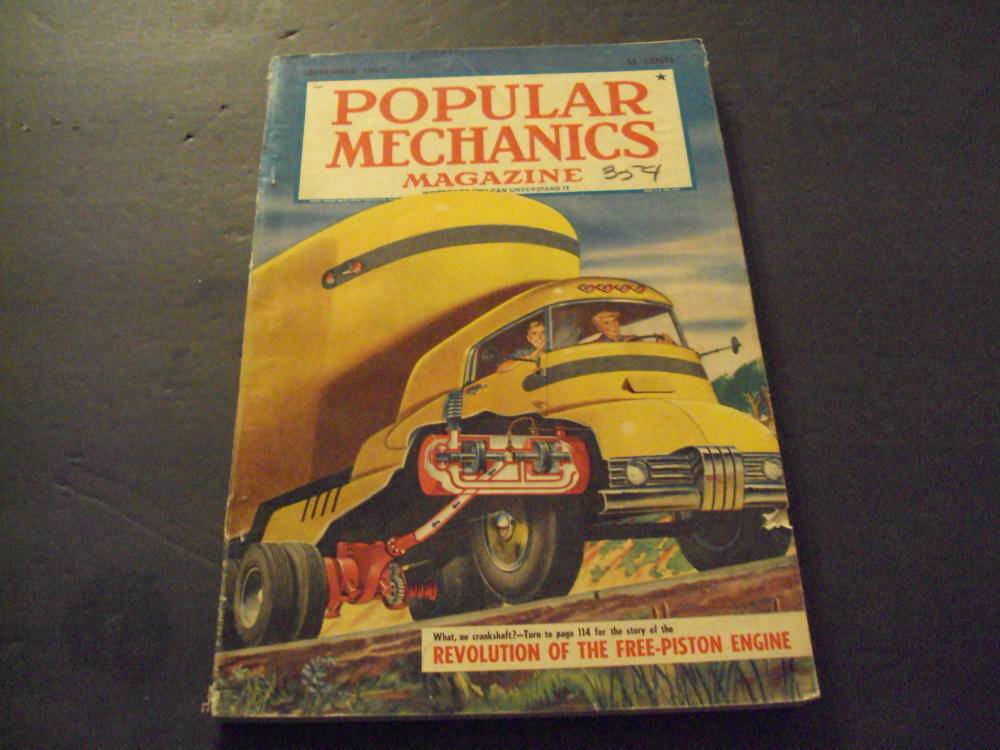
Revolutionary New Engine

OP
OP

TJC

Well-Known Member
First Name
Tony
Joined
Aug 28, 2020
Threads
45
Messages
3,925
Reaction score
9,829
Location
North Carolina
Vehicle(s)
93 Miata, 05 Ranger 4x4, 20 Ranger 4x4, 23 CX-5
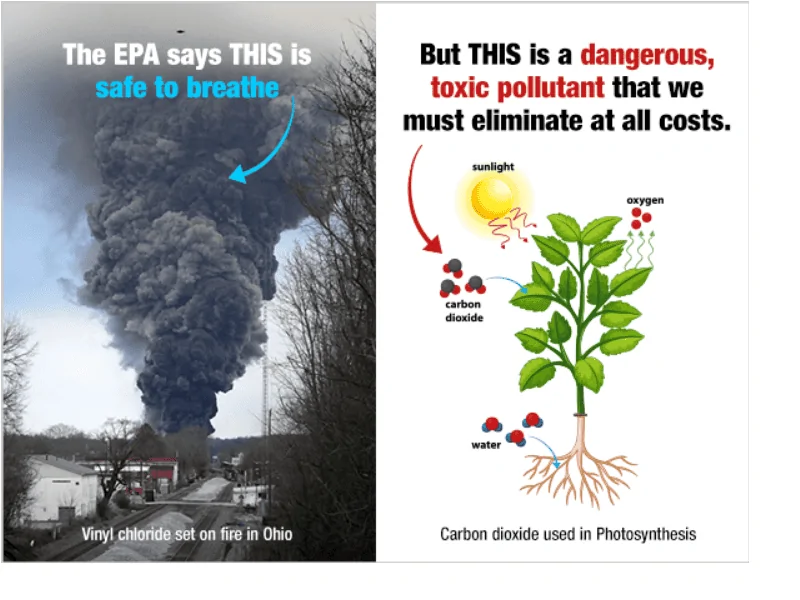
Fossil fuels, peak oil, global warming, hole in the ozone, the buzzwords go on and on. All very bad but drink the rainbow water in Ohio, it's safe...
If you are smart, do the opposite of whatever the government tells you to do.
:like:

All You Need to Know.webp
Sponsored


jblc

Well-Known Member
First Name
JB
Joined
Nov 15, 2020
Threads
75
Messages
749
Reaction score
644
Location
USA
Vehicle(s)
2021 XLT FX2 supercab
Also, just noticed. There's no countermass in that engine, since it's just 1 cylinder. It seems it'd shake the car like crazy.
Just another point to it potentially being a scam
 

Jason B

Well-Known Member
First Name
Jason
Joined
May 19, 2021
Threads
9
Messages
3,008
Reaction score
8,315
Location
Louisiana
Vehicle(s)
2021 XL STX SE 4x2
Occupation
machinist
Every few years we hear of a 'Revolutionary new engine that will change the world'. But they are usually just a concept or a rehash of and old idea, that works in theory, but not in real life situations.
In this case, it's still burning a fuel to create electrical power. Its real-life efficiency remains to be seen.

Dr. Albert Einstein has a famous quote: “In theory, theory and practice are the same. In practice, they are not.”
 
OP
OP

TJC

Well-Known Member
First Name
Tony
Joined
Aug 28, 2020
Threads
45
Messages
3,925
Reaction score
9,829
Location
North Carolina
Vehicle(s)
93 Miata, 05 Ranger 4x4, 20 Ranger 4x4, 23 CX-5
I call the process "polishing the stone". Ideas germinate and wait until key technology catches up to make that idea a reality. Sometimes it takes centuries for that tech to arrive in a practical form.

Look at the piston engine, started out as Steam, & the Stirling, which were woefully inefficient ECE technology , then a key technology arrives and the concepts blossom into the ICE engine. That evolution is still ongoing.

Of course the water gets muddied by politics and and human greed, but somehow we muddle through it all.

Another example is flight. Da Vinci's drawings in the late 15th early 16th centuries... the dream was there, but key technology had to catch up.... and it took 400 years to realize the vision!

The final example is a little more present day(1960), but I am sure just as crazy to us as flight was to a 16th century peasant... the Dyson's Sphere. The idea may never reach fruition. but the seed has been sown, and awaits many technological advances before becoming reality.

Before you poo-pah the Dyson's Sphere as impossible (in my mind nothing is impossible, it just hasn't been done yet), I believe we are far further away from this feat than you do. I'm one of those who do not believe that the US actually landed on the moon in 1969. There is at the present, no way that a human being could survive the 25,000 mile transit through the Van Allen Radiation belts surrounding the earth. The radiation levels are simply (massively) too intense. Ask yourself why the Int'l Space Station is parked in a low earth orbit of only 250 miles. The answer is the Van Allen Belts, which begin in earnest at 1000 miles out.
 
Last edited:


Jason B

Well-Known Member
First Name
Jason
Joined
May 19, 2021
Threads
9
Messages
3,008
Reaction score
8,315
Location
Louisiana
Vehicle(s)
2021 XL STX SE 4x2
Occupation
machinist
I call the process "polishing the stone". Ideas germinate and wait until key technology catches up to make that idea a reality. Sometimes it takes centuries for that tech to arrive in a practical form.

Look at the piston engine, started out as Steam, & the Stirling, which were woefully inefficient ECE technology , then a key technology arrives and the concepts blossom into the ICE engine. That evolution is still ongoing.

Of course the water gets muddied by politics and and human greed, but somehow we muddle through it all.

Another example is flight. Da Vinci's drawings in the late 15th early 16th centuries... the dream was there, but key technology had to catch up.... and it took 400 years to realize the vision!

The final example is a little more present day(1960), but I more sure just as crazy to us as flight was to a 16th century peasant... the Dyson's Sphere. The idea may never reach fruition. but the seed has been sown, and awaits many technological advances before becoming reality.

Before you poo-pah the Dyson's Sphere as impossible (in my mind nothing is impossible, it just hasn't been done yet), I believe we are far further away from this feat than you do. I'm one of those who do not believe that the US actually landed on the moon in 1969. There is at the present, no way that a human being could survive the 25,000 mile transit through the Van Allen Radiation belts surrounding the earth. The radiation levels are simply (massively) too intense. Ask yourself why the Int'l Space Station is parked in a low earth orbit of only 250 miles. The answer is the Van Allen Belts, which begin in earnest at 1000 miles out.
A thing called science debunks your myth humans can't survive the VA belts. It took me 3 seconds to find this:

"NASA had to create a radiation barrier within the spacecraft and figure out a trajectory that avoided the thickest, most radioactive part of the belts while traveling as fast as possible. Scientists determined that if the speed of the Apollo spacecraft was about 25,000 kilometers per hour, it would take a spacecraft about 52.8 minutes to pass through the belts. Scientists found that the radiation dose received during that amount of time would be, at most, 11.4 rads and that’s without the protection of a spacecraft. And since a lethal radiation dose for a human is 300 rads in one hour, NASA deemed the missions a go. After all that, it turned out, that during the Apollo missions, the average radiation doses on the skin of the astronauts came out to be 0.38 rad."
 
OP
OP

TJC

Well-Known Member
First Name
Tony
Joined
Aug 28, 2020
Threads
45
Messages
3,925
Reaction score
9,829
Location
North Carolina
Vehicle(s)
93 Miata, 05 Ranger 4x4, 20 Ranger 4x4, 23 CX-5
Yes, science is a wonderful thing. Kinda like statistics. You can make them say anything. If NASA and the Internet says so, it must be real.

Shielding against radioactivity requires very heavy and dense materials such as lead. There was no such shielding on the Apollo spacecraft or on the ISS. (Aluminum won't do.)

Believe what you will. I am not attempting to change yours or anyone else's mind. I only gave my opinion. Let me wallow in my ignorance.
 

Cinci36

Well-Known Member
First Name
Christopher
Joined
Nov 14, 2022
Threads
0
Messages
54
Reaction score
37
Location
45150
Vehicle(s)
Ranger
Occupation
Mail handler
VW,with their polo, smaller than a golf, expermented with a diesel generator motor, 2 cylinder to do nothing but charge the batteries of an electric car, when they were low, they shelved it. Why i dont know, but they did try it in the late 90s. Maybe battery technology.
 

WOADKIL

Well-Known Member
First Name
Wil
Joined
Mar 25, 2021
Threads
46
Messages
583
Reaction score
1,723
Location
Cyber Orange County, CA
Vehicle(s)
2021 Ranger XLT Supercrew Cab FX4
Occupation
RETIRED ENGINEER
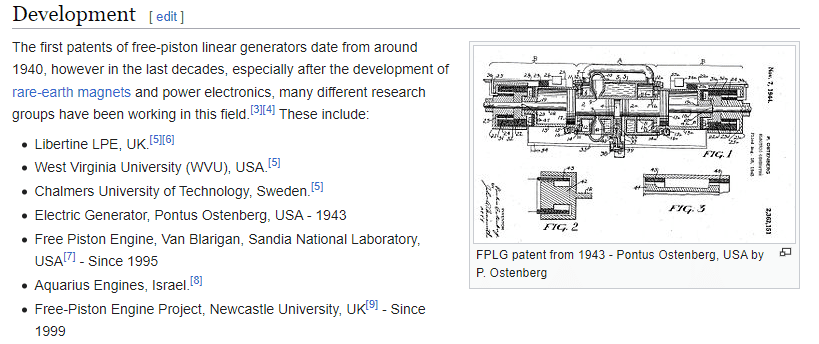
Been aroundsince at least 1940:
1676921139084.png


And, there has ben no mention (unless I missed it) about how efficient that this system can be.

In November 1970, GM paid $50 million, ($348,886,033 in 2021 dollars), for initial licenses to produce their version of the Wankel rotary engine, and GM President Ed Cole initially projected its release in three years. Was gonna save the world until longevity and poor efficiency killed it..

As a result of the poor efficiency, the Wankel engine with peripheral exhaust port has a larger amount of unburnt hydrocarbons (HC) released into the exhaust.[65][66] The exhaust is, however, relatively low in nitrogen oxide (NOx) emissions, because the combustion is slow, and temperatures are lower than in other engines,

Great engine for racing because it excelled in power to weight ratio.

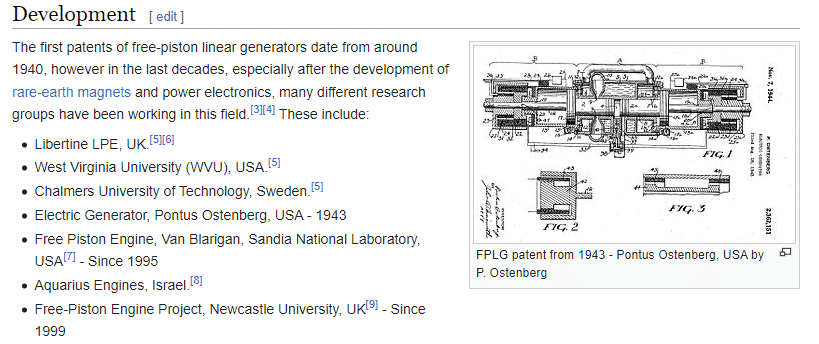
WIKI LINK

1676921278674.png
 
OP
OP

TJC

Well-Known Member
First Name
Tony
Joined
Aug 28, 2020
Threads
45
Messages
3,925
Reaction score
9,829
Location
North Carolina
Vehicle(s)
93 Miata, 05 Ranger 4x4, 20 Ranger 4x4, 23 CX-5
I believe that I read it was over double that of the typical ICE engine - somewhere around 35%-40% on the early prototypes. Still looking for current info. .

TEL AVIV, Israel, Aug. 9, 2022 /PRNewswire/ -- Aquarius Engines (TASE: AQUA) have revealed that they signed a research and development deal with the United States Army via the US Army Combat Capabilities Development Command (DEVCOM) in March 2020, which has now been extended by an additional five years until July 2027.
Aquarius Engines invented, developed, and manufacture lightweight super-efficient linear engines based on the company's proprietary technology, that can operate on a range of alternative fuels, including hydrogen, methanol, ethanol-E85 and LPG.
Aquarius Engines boasts 41 registered patents in the US and abroad and another 36 patents pending.
------------------ Best I could find at the moment ------------

An Israeli firm says a super-efficient engine it has created could drastically reduce fuel consumption and help power an auto industry revolution as manufacturers search for environmentally sound alternatives.

Industry analysts, however, question the reinvented internal combustion engine's chances of success at a time when purely electric car technology is advancing and attracting investors.

The invention from Israeli-based Aquarius Engines is currently being discussed by France's Peugeot, the firm said.

Aquarius says the cost of the engine will be as low as $100 (92 euros).

According to the firm, the engine can allow cars to travel more than 1,600 kilometres (990 miles) on a single tank of fuel, more than double current distances.

Such efficiency is vital as countries seek to reduce carbon dioxide emissions—a main cause of climate change. Car engines are a major source of CO2 emissions.

Aquarius's technology works by stripping back the traditional engine under the bonnet.

It replaces the combustion engine with its multiple pistons thrusting up and down with a single piston that goes side-to-side.

It has fewer than 20 parts and a single action, the company said.

In tests by the German engineering company FEV, the Aquarius engine's efficiency was more than double that of traditional engines.

Shaul Yakobi, inventor and co-founder of Aquarius Engines, poses next to a single piston combustion engine invented by the firm to drastically reduce fuel consumption

"It is the highest efficiency you will probably meet," co-founder Gal Fridman told AFP at the company's offices near the Israeli commercial capital of Tel Aviv.

"It has the lowest emissions and the highest power-to-weight ratio."

A Peugeot spokesman said: "We are discussing with them, as with many other start-ups, without obligation or a specific project."

For Peugeot and others, the engine could help them compete with the growing popularity of electric cars, John German, senior fellow at the International Council on Clean Transportation, said.

He said the engine would work best as part of a plug-in hybrid system, with manufacturers looking at "the idea of putting a smaller, inexpensive, range extender" alongside a battery and motor.

But he said Aquarius's radical design, and the changes it would require to manufacturing lines, might make companies in a risk-averse industry hesitant.
 
Last edited:

TomSim

Well-Known Member
First Name
tom
Joined
Dec 11, 2023
Threads
8
Messages
148
Reaction score
156
Location
toronto
Vehicle(s)
2019 Ranger Lariat
Occupation
retired
I don't get it. Are they claiming that this small engine can power a vehicle via electrical generation?
Something seems scammy to me. Or maybe the total area of the piston -- even doubling combustion (combustion each side) -- leads to significant power increase over an equivalent V4 piston area?
If so, what's different than using an efficient existing V4 to generate electricity? Is it just the double-sided nature?
But if it's the same power as (say) a V4, then where's all the cooling, lubrication, etc? Modern engines are designed small and light as they can be already, to be reliable long-term. So, they're pretty massive.

I think I'm missing something...
what about the smallest air cooled honda generator, mounted on the top you your trunk, powering an invertor. One electric motor on each wheel, a bank of batteries of course, Houstan, we have ignition//however, an automaker would never mass produce this as they wouldn't make any money on service/repair etc...
 

Grumpaw

Well-Known Member
First Name
Steve
Joined
Jul 1, 2021
Threads
84
Messages
5,860
Reaction score
29,196
Location
Fishersville, Va.
Vehicle(s)
Previous 2021 Ranger, Now 2019 Ford Expedition
Occupation
Navy Vet., Retired Police Sgt., Grumpy Old Senior Citizen
I have developed an engine that only has 3 moving parts and runs on plain water....
It is only in the development stage and I need $$$$$ to bring it to full development.
I need you members to send me $$$$$, at least $1000.oo each so I can start....once I reach $1,000,000.oo I'll be able to construct a prototype out of clay and old Campbell soup cans.
Let me know if you can help !!!
 

Jason B

Well-Known Member
First Name
Jason
Joined
May 19, 2021
Threads
9
Messages
3,008
Reaction score
8,315
Location
Louisiana
Vehicle(s)
2021 XL STX SE 4x2
Occupation
machinist
what about the smallest air cooled honda generator, mounted on the top you your trunk, powering an invertor. One electric motor on each wheel, a bank of batteries of course, Houstan, we have ignition//however, an automaker would never mass produce this as they wouldn't make any money on service/repair etc...
That wouldn't work anyway. "The smallest air-cooled Honda generator" puts out only about 800 watts/ 1HP, barely enough to get the truck moving.
 

JesseS

Well-Known Member
First Name
Jesse
Joined
May 26, 2021
Threads
19
Messages
1,755
Reaction score
4,824
Location
NorCal (Roseville)
Vehicle(s)
2021 Ranger XLT FX4, Jayco 26' Class A
Occupation
Retired, work is a four letter word.
Yes, science is a wonderful thing. Kinda like statistics. You can make them say anything. If NASA and the Internet says so, it must be real.

Shielding against radioactivity requires very heavy and dense materials such as lead. There was no such shielding on the Apollo spacecraft or on the ISS. (Aluminum won't do.)

Believe what you will. I am not attempting to change yours or anyone else's mind. I only gave my opinion. Let me wallow in my ignorance.
Shielding for Nuclear Radiation (U235) needs to be robust due to the energy levels of the particles emitted. The radiation in the Van Allen belt(s) varies from low to medium, and does not require dense material for shielding due to being mostly cosmic radiation (solar wind) and charged particles. Due to the short transit time and low levels of radiation Astronauts would be safe with the shielding provided by the spacecraft, but sensitive electronic equipment would need additional shielding. Opinions vary (I was trained in radiation exposure prevention), I have a neighbor who swears the earth is flat.
 

Stevedbvik1

Well-Known Member
First Name
Steve
Joined
Oct 4, 2021
Threads
38
Messages
2,706
Reaction score
8,019
Location
Michigan
Vehicle(s)
2022 Ranger Tremor XLT
Occupation
Retired
I have developed an engine that only has 3 moving parts and runs on plain water....
It is only in the development stage and I need $$$$$ to bring it to full development.
I need you members to send me $$$$$, at least $1000.oo each so I can start....once I reach $1,000,000.oo I'll be able to construct a prototype out of clay and old Campbell soup cans.
Let me know if you can help !!!
Checks in the mail
Sponsored


Top