
Sponsored

So i drove my 2019 straight to the dealership when had loss of power bogging and dash lighting up... seen its the tube sensor thing going to clutch fa

airline tech

Well-Known Member
Joined
Aug 24, 2022
Threads
28
Messages
4,469
Reaction score
8,545
Location
Midwest - KS
Vehicle(s)
2022 Ranger Lariat-Super Crew, Cactus Gray
Occupation
Aircraft Tech
The fuse circuit has a minimum of 4 points of failure, and each one adversely affects all 4 systems. There appears to be no redundancy. Several questions come to mind...

1 - Do each of these systems fail gracefully when power is lost to the circuit?
  • Cabin Heater (Coolant Pump)
  • Trans Fluid Heater Coolant Cont Valve
  • Turbo-Charger By-Pass Valve
  • Variable Oil Pump (Oil Press Cont Solenoid Valve)
2 - Is the internal pressure relief valve mechanical (pressure spring)

Ok, did some digging for the circuits that are tied into the Fan Clutch:
This is what I found:

Now keep in mind that all of these circuits will only drop if the Fan Clutch wire harness shorts out and possibly blows the fuse.
This is only showing the power feed side, you also have the VREF (5-Volt) circuit not depicted here. I found the diagram that only has this circuit as I missed some things on the complete engine control circuit.
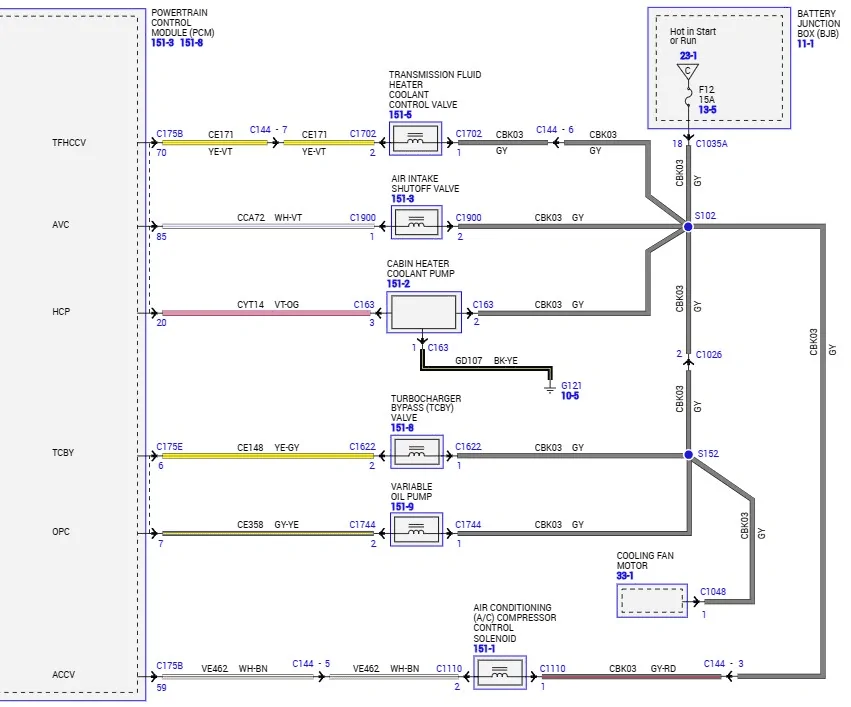
1692421619426.png


1. The Cabin Heater (Coolant Pump) - Only active with ASS, provides coolant flow with cold outside temps while in ASS is active to continue flow (with electric) coolant pump to take place of the water pump with engine not running. ---So most likely ASS will disable.

2. Trans Fluid Heater Coolant Cont Valve - Normally open, closed with 12-volt power applied.
This valve allows or by-passes coolant through the Tran Oil Cooler for heat transfer tranny fluid to the coolant.

3. Turbo-Charger By-Pass Valve: No Fail safe found but assume that it will not work with no power.

4. Fan Clutch, now if the fan is not rotating or low airflow across the radiator, then the cooling system has a failsafe mode. (2) modes open/closed loop failure
This puts engine into LIMP mode, reduced engine power and limits to 3,000 RPM and has the ability to limit to 800 RPM, it can also deactivate (2) cylinders. (Overheat Protection)

5. Air Intake Shut-Off Valve (Note: diagram is nomenclated wrong) this is the Aspirator Valve.
This is normally closed and when powered it allows vacuum to be added to the brake booster, if the booster is sensing low vacuum.

6. AC Compressor Control Solenoid: Ac Compressor will not run, so no AC

7. Oil Pressure Cont Solenoid: Lengthy Description (Copy/Paste)
No Fail-Safe mode found for this, but the Oil Press sensor will read a low pressure and put engine into LIMP Mode (Power Reduced) if this solenoid drastically drops oil pressure.

You will still have an Oil Pump, mechanically driven, you just will not get the variable control out of it, so it should be full pressure (unaltered)

Update:
I dug into the Pinpoint test for the solenoid, and with it disconnected, (same as power drop with blown fuse) Oil Press should rise by 40 PSI, so this would be the fail-safe.


Unclear which system we have in the Ranger as it is not clear

Oil Pressure Control Solenoid
A conventional mechanical oil pump is connected to and driven by the crankshaft and produces oil
pressure proportional to engine speed, The Variable Oil Pump (VOP) is capable of varying its
output oil pressure as necessary. The Oil Pressure Control Solenoid, also known as Variable Oil
Pump Control (VOPC), is a solenoid that controls the output of the Variable Oil Pump.
There are two VOP systems currently being used. They are (1) a two-stage pressure system and
(2) continuous variable pressure system. The two-stage pressure system provides two pressure
modes, low and high. The continuous variable pressure system directly controls output pressure
based on commands from the Variable Oil Pump Control (VOPC) solenoid.
There are currently two different hardware configurations currently in use for these two systems.
They are (1) Variable Displacement Oil Pump (VDOP) which controls the oil pump directly and (2)
Active Oil Filter Adapter (AOFA) which controls the oil drain system.
The VDOP adjusts the pump’s displacement using a moveable slide that controls the filling and
draining of the oil in the reservoir via two ports in the pump. The oil pressure control solenoid
controls the amount of oil filling by partially or completely opening and closing the passage. The
AOFA consists of a conventional oil pump and a separate oil bypass line. The oil pressure control
solenoid opens and closes a bypass line which allows oil to drain back to the sump. The VDOP
can be configured to operate as both a two-stage pressure system as well as a continuous
variable pressure system; however, the AOFA can only be used for a two-state pressure system.
Regardless of pump and system types, the actual solenoid hardware is identical.
Sponsored

 
Last edited:
TJC

Well-Known Member
First Name
Tony
Joined
Aug 28, 2020
Threads
45
Messages
3,948
Reaction score
9,923
Location
North Carolina
Vehicle(s)
93 Miata, 05 Ranger 4x4, 20 Ranger 4x4, 23 CX-5
Airline Tech,

First, THANK YOU for the comprehensive reply. It is very much appreciated.

It is amazing to me how complex modern automobile system have become. My sister-in-law were just stranded in a 750 mile trip one way due to the oil pressure sensor failing. The truck simply died on the road! Had the truck taken to a dealer who diagnosed the failure and had them on the road in 24 hours. What an inconvenience.

It seems to me that a single fuse linked to multiple disparate systems is not only impractical, but is also a critical failure point that could put driver and occupants are risk.

If I am reading this correctly, I can lose AC, Brake Control, Oil Pressure, and the Turbo over a clutch fan failure? And those failures will occur when the sensor cable breaks/grounds out (+5v line shorts blowing the fuse) when the clutch seizes up.

Talk about the (Butterfly) domino effect! Ford engineers had to be cognisant of this risk and signed off on it. I can see lawsuits in the future due to the ramifications from this engineering decision. Losing power brakes is dangerous for the average driver.

I think I am fine with a mechanical fan clutch, a real oil pressure gauge, and a simple vacuum line to my brake booster.

Update: My understanding - 5V is used as control and base power voltage in the electronics. 12V is used to actuate solenoids, etc based upon 0v - 5V signals rec'd by PCM from electronic sensors, etc.

Many who do not know better will panic when the power brake boost fails. as the brakes will appear to not be functional. Think about how many can not drive a manual shift car. Then think about having to stomp hard on the brake pedal to stop.

It is reassuring to know you will still have oil pressure when you find yourself in limp mode.
 
Last edited:

airline tech

Well-Known Member
Joined
Aug 24, 2022
Threads
28
Messages
4,469
Reaction score
8,545
Location
Midwest - KS
Vehicle(s)
2022 Ranger Lariat-Super Crew, Cactus Gray
Occupation
Aircraft Tech
Airline Tech,

First, THANK YOU for the comprehensive reply. It is very much appreciated.

It is amazing to me how complex modern automobile system have become. My sister-in-law were just stranded in a 750 mile trip one way due to the oil pressure sensor failing. The truck simply died on the road! Had the truck taken to a dealer who diagnosed the failure and had them on the road in 24 hours. What an inconvenience.

It seems to me that a single fuse linked to multiple disparate systems is not only impractical, but is also a critical failure point that could put driver and occupants are risk.

If I am reading this correctly, I can lose AC, Brake Control, Oil Pressure, and the Turbo over a clutch fan failure? And those failures will occur when the sensor cable breaks/grounds out (+5v line shorts blowing the fuse) when the clutch seizes up.

Talk about the (Butterfly) domino effect! Ford engineers had to be cognisant of this risk and signed off on it. I can see lawsuits in the future due to the ramifications from this engineering decision. Losing power brakes is dangerous for the average driver.

I think I am fine with a mechanical fan clutch, a real oil pressure gauge, and a simple vacuum line to my brake booster.
Note: I updated my post: The Oil Pressure will (Fail-Safe) and rise 40 PSI with the loss of power on the solenoid.

You will still have brakes, just no power assist and the brake pedal will be firm.

Plus, to clarify the power feed is 12 volts.

The 5-Volt Ref (VREF) is a reference circuit for Crank Position Sensor and Fan Clutch
It also feeds (5-Volts) to the Exhaust Press Sensor.

A brief understanding, the 5 Volt Ref is a power feed for the Signal Return, and it is telling the PCM what the various sensors are doing / position/ reading, in the Fan Clutch case it is telling the PCM what. the Fan Speed should be, and this signal is sent to Pin #2 and verified by Pin #5
This is the connector on the Fan Clutch (5-Wires)

Pin 1 = Fused 12-volt power, (Shared 12 Volt power with items mentioned)
Pin 2 = PCM Control for Fan (Variable Speed Control)
Pin 3 = VREF (5 volts) - Shares circuit with Crank Sensor and Exhaust Press Sensor
Pin 4 = VREF Signal Return, Shared with numerous engine sensors)
Pin 5 - PCM - Fan Speed Sense (Reading Actual Fan Speed)

Note: The wiring diagram, on the left side of the diagram is the PCM, the PCM is applying the ground for each individual circuit, with (1) exception and that is when ASS activates, and the PCM loses power the Cabin Heater Coolant still has a ground (Body Ground) all other users on the circuit are shut off due to loss of ground.
ASS = Auto Start / Stop

Pin
Circuit
Gauge
Circuit Function
Qualifier
1​
CBK03 (GY)​
16​
FUSE - 12 OR CIRCUIT BREAKER (VPWR 3)​
2​
VEC03 (WH-BU)​
20​
CTRL MOD. - COOLING FAN CONTROL VARIABLE (FC-V)​
3​
LE135 (GY-VT)​
20​
CTRL MOD. - POWERTRAIN # CRANKSHAFT POSITION SENSOR (CKP) +​
4​
RE429 (GY-OG)​
20​
CTRL MOD. - POWERTRAIN # VARIABLE RELUCTANCE SENSOR (VRSRTN) (CAMSHAFT POSITION)​
5​
VEC10 (GY-YE)​
20​
SENSOR - FAN SPEED (FSS)​
 
Last edited:

Fx4ranger2019Larait

Well-Known Member
First Name
Ricky
Joined
Jun 12, 2021
Threads
0
Messages
224
Reaction score
731
Location
SoCal
Vehicle(s)
2019 Ranger FX4 Larait
Occupation
Sprinkler Fitter
Note: I updated my post: The Oil Pressure will (Fail-Safe) and rise 40 PSI with the loss of power on the solenoid.

You will still have brakes, just no power assist and the brake pedal will be firm.

Plus, to clarify the power feed is 12 volts.

The 5-Volt Ref (VREF) is a reference circuit for Crank Position Sensor and Fan Clutch
It also feeds (5-Volts) to the Exhaust Press Sensor.

A brief understanding, the 5 Volt Ref is a power feed for the Signal Return, and it is telling the PCM what the various sensors are doing / position/ reading, in the Fan Clutch case it is telling the PCM what. the Fan Speed should be, and this signal is sent to Pin #2 and verified by Pin #5
This is the connector on the Fan Clutch (5-Wires)

Pin 1 = Fused 12-volt power, (Shared 12 Volt power with items mentioned)
Pin 2 = PCM Control for Fan (Variable Speed Control)
Pin 3 = VREF (5 volts) - Shares circuit with Crank Sensor and Exhaust Press Sensor
Pin 4 = VREF Signal Return, Shared with numerous engine sensors)
Pin 5 - PCM - Fan Speed Sense (Reading Actual Fan Speed)

Note: The wiring diagram, on the left side of the diagram is the PCM, the PCM is applying the ground for each individual circuit, with (1) exception and that is when ASS activates, and the PCM loses power the Cabin Heater Coolant still has a ground (Body Ground) all other users on the circuit are shut off due to loss of ground.
ASS = Auto Start / Stop

Pin
Circuit
Gauge
Circuit Function
Qualifier
1​
CBK03 (GY)​
16​
FUSE - 12 OR CIRCUIT BREAKER (VPWR 3)​
2​
VEC03 (WH-BU)​
20​
CTRL MOD. - COOLING FAN CONTROL VARIABLE (FC-V)​
3​
LE135 (GY-VT)​
20​
CTRL MOD. - POWERTRAIN # CRANKSHAFT POSITION SENSOR (CKP) +​
4​
RE429 (GY-OG)​
20​
CTRL MOD. - POWERTRAIN # VARIABLE RELUCTANCE SENSOR (VRSRTN) (CAMSHAFT POSITION)​
5​
VEC10 (GY-YE)​
20​
SENSOR - FAN SPEED (FSS)​
Airline tech thank you for your detailed response very informative.

Thought I’d post my experience.

As for the rubber hose I noticed mine ripped apart during routine maintenance (oil change). maybe 2 years after purchase around 30k miles (original owner). Glad I noticed when I did never knew a clutch fan could lead to some many more problems. As for the hose I replaced mine with some good quality vacuum hose same diameter and new zip ties for wires. Hose has held up so far.61k miles now.
IMG_0575.jpeg
IMG_0574.jpeg

Don’t have any pictures of it broken. But there was tension on wires it was still free floating when clutch fan was spinning. But I could see how debris or anything over time could make it bind up and rip wires apart. Definitely something worth keeping an eye on or maybe proactively changing the hose.


TJC

Well-Known Member
First Name
Tony
Joined
Aug 28, 2020
Threads
45
Messages
3,948
Reaction score
9,923
Location
North Carolina
Vehicle(s)
93 Miata, 05 Ranger 4x4, 20 Ranger 4x4, 23 CX-5
Do you think maybe the hose deteriorated allowing the friction of the clutch to wrap the wires up, or did the clutch fail in the locked position causing the hose to fail.

This will aid in determining the solution. Stiffer hose vs a more rigid solution such as a separate metal bridge to anchor the sensor cable separate from the hose. I'm going to have to get under the hood to see what is feasible. I am certain that I am not leaving it stock, as it is a failure waiting to happen. The possibility may be low, but the repercussions are extensive.
 

airline tech

Well-Known Member
Joined
Aug 24, 2022
Threads
28
Messages
4,469
Reaction score
8,545
Location
Midwest - KS
Vehicle(s)
2022 Ranger Lariat-Super Crew, Cactus Gray
Occupation
Aircraft Tech
Do you think maybe the hose deteriorated allowing the friction of the clutch to wrap the wires up, or did the clutch fail in the locked position causing the hose to fail.

This will aid in determining the solution. Stiffer hose vs a more rigid solution such as a separate metal bridge to anchor the sensor cable separate from the hose. I'm going to have to get under the hood to see what is feasible. I am certain that I am not leaving it stock, as it is a failure waiting to happen. The possibility may be low, but the repercussions are extensive.
This is my point of stupid design.
If it is just the hose breaking down and ripping apart over time, then easy fix and preventive maintenance (replace)

Wire routing, I am questioning the engineering reason for routing the harness inline with the hose vs a rigid route.


I would like to know what is the designed failure of the clutch, is it actually intended to break the hose and wires?
I have a hard time thinking they designed it this way.

The most important question is why is the electric module designed to free float in the first place vs screwed / bolted in place.

Hmm - enquiring minds want to know.

More research needed on this, hopefully the Ford Tech’s on this site can give us some insight on internal operation.
 

TJC

Well-Known Member
First Name
Tony
Joined
Aug 28, 2020
Threads
45
Messages
3,948
Reaction score
9,923
Location
North Carolina
Vehicle(s)
93 Miata, 05 Ranger 4x4, 20 Ranger 4x4, 23 CX-5
This is my point of stupid design.
If it is just the hose breaking down and ripping apart over time, then easy fix and preventive maintenance (replace)

Wire routing, I am questioning the engineering reason for routing the harness inline with the hose vs a rigid route.


I would like to know what is the designed failure of the clutch, is it actually intended to break the hose and wires?
I have a hard time thinking they designed it this way.

The most important question is why is the electric module designed to free float in the first place vs screwed / bolted in place.

Hmm - enquiring minds want to know.

More research needed on this, hopefully the Ford Tech’s on this site can give us some insight on internal operation.
Yes, lots of questions. And not a great deal of logical (to me) answers. If this free floating design was the optimal choice of Ford engineers, it would have been better to leave it as an old style mechanical clutch.

But the design evidence says otherwise.

Serious engineering compromises everywhere.

What kind of fuel savings is worth the expense and the introduction of multiple points of failure to unrelated systems inherent in this design?
 

airline tech

Well-Known Member
Joined
Aug 24, 2022
Threads
28
Messages
4,469
Reaction score
8,545
Location
Midwest - KS
Vehicle(s)
2022 Ranger Lariat-Super Crew, Cactus Gray
Occupation
Aircraft Tech
Not a Ranger, but I have an understanding of design of the electronic module.
It has to be interconnected for speed sense to the hub.
So, if the Ranger shares this basic design, then what I can tell is that there will always be some tension (rotating force) on the hose (support) for the module.

So, this leads to the exact reason for the hose breaking (why?)
It's either normal wear on the hose, over time and breaks apart.
or
Internal wear on the clutch, exerting more than normal tension on the hose.

The main thing is that it does not appear to give any codes or known complaints about the fan until this happens.
Now Fan Clutches fail (of course) and the Ranger will generate a code, or you will hear loud fan noise with no power (limited speed)
I am leaning towards the root cause is the hose itself, needs to be routine inspected, as when it breaks in half you are taking away the rotation support and the rotating force will let the electric module spin too far and rip the wire harness when it does.

Update:
Crap after I sat back and thought for a moment, the sensor is not interconnected to the hub, the knub he shows in the video is the Hall Effect Sensor (pick-up) for fan speed.

Update 2:
After watching the video again, the outer Knub's are the Hall Effect Sensor for Fan Speed Sense,
as he flips the sensor over you see the inner knubs that interconnect the hub to the sensor, this would be the Fan Speed Control side of the sensor.
So, YES, the electronic module connects to the hub and has rotating force applied to it.

The spacing between the knubs allows for movement as the clutch is engaged / disengaged.

Update 3:
He does it so fast it’s hard to see
But if you look on the outside edge of the sensor you can see the engagement tabs for the sensor to the hub.
The little knub when he turns it over that appears to line up with the grooves on the hub is the fan control.
This is what controls the porting of the fluid within the clutch.


6.0 powerstroke fan - YouTube
 
Last edited:

Muffin1

Well-Known Member
First Name
Rob
Joined
Sep 24, 2019
Threads
37
Messages
673
Reaction score
1,258
Location
NJ
Vehicle(s)
2019 Silver STX 4X4 SC / 2024 XLT 4X4 Cactus Gray
Will warranty cover? Or did I screw up driving here
Can you post your mileage just curious as to when this part may start failing and the lifespan ?
Thanks.
 

TJC

Well-Known Member
First Name
Tony
Joined
Aug 28, 2020
Threads
45
Messages
3,948
Reaction score
9,923
Location
North Carolina
Vehicle(s)
93 Miata, 05 Ranger 4x4, 20 Ranger 4x4, 23 CX-5
From videos that I have watched in researching this, the clutch is a wear item that typically lasts 120K-150K miles. Failure is typically loss of friction, not clutch locking up.

This seems to imply the issue in our Rangers is with the hose failing to hold the cable away from the fan. If this is indeed the case, the problem can be easily remedied.

The folks at BlueProofDiesel sell a Fan Clutch Wire Harness Saver for the 6.0L Ford engine, but the part looks to be generic to all fan cabling. It sells for $14.95. I can easily replicate it for less.

Using the wire harness saver with a stronger bridge than the hose Ford used may be enough to eliminate wires being destroyed when the clutch fails.

Let's hope so!
 
Last edited:
OP
OP

Jay blas

Member
First Name
Jay
Joined
Aug 17, 2023
Threads
2
Messages
11
Reaction score
7
Location
Las vegas
Vehicle(s)
2019 ranger
Occupation
Cdl transport

Muffin1

Well-Known Member
First Name
Rob
Joined
Sep 24, 2019
Threads
37
Messages
673
Reaction score
1,258
Location
NJ
Vehicle(s)
2019 Silver STX 4X4 SC / 2024 XLT 4X4 Cactus Gray
Yea it appears the fan is doing more than just cooling the coolant in the radiator with all the sensor monitoring and feedback.
Maybe if a electric fan was used like most vehicles currently have we wouldn't have another reliability issue with this vehicle or at least lower those chances with a simpler design and part.

Also anyone know or maybe own a Bronco on this forum if it uses the same design fan?
And wondering if the '24 Ranger is still using this design fan or was it changed ?
Might tell us something were now finding out if they changed it.
 
OP
OP

Jay blas

Member
First Name
Jay
Joined
Aug 17, 2023
Threads
2
Messages
11
Reaction score
7
Location
Las vegas
Vehicle(s)
2019 ranger
Occupation
Cdl transport
That is the stupid design of the clutch fan and is the common (if it fails result)
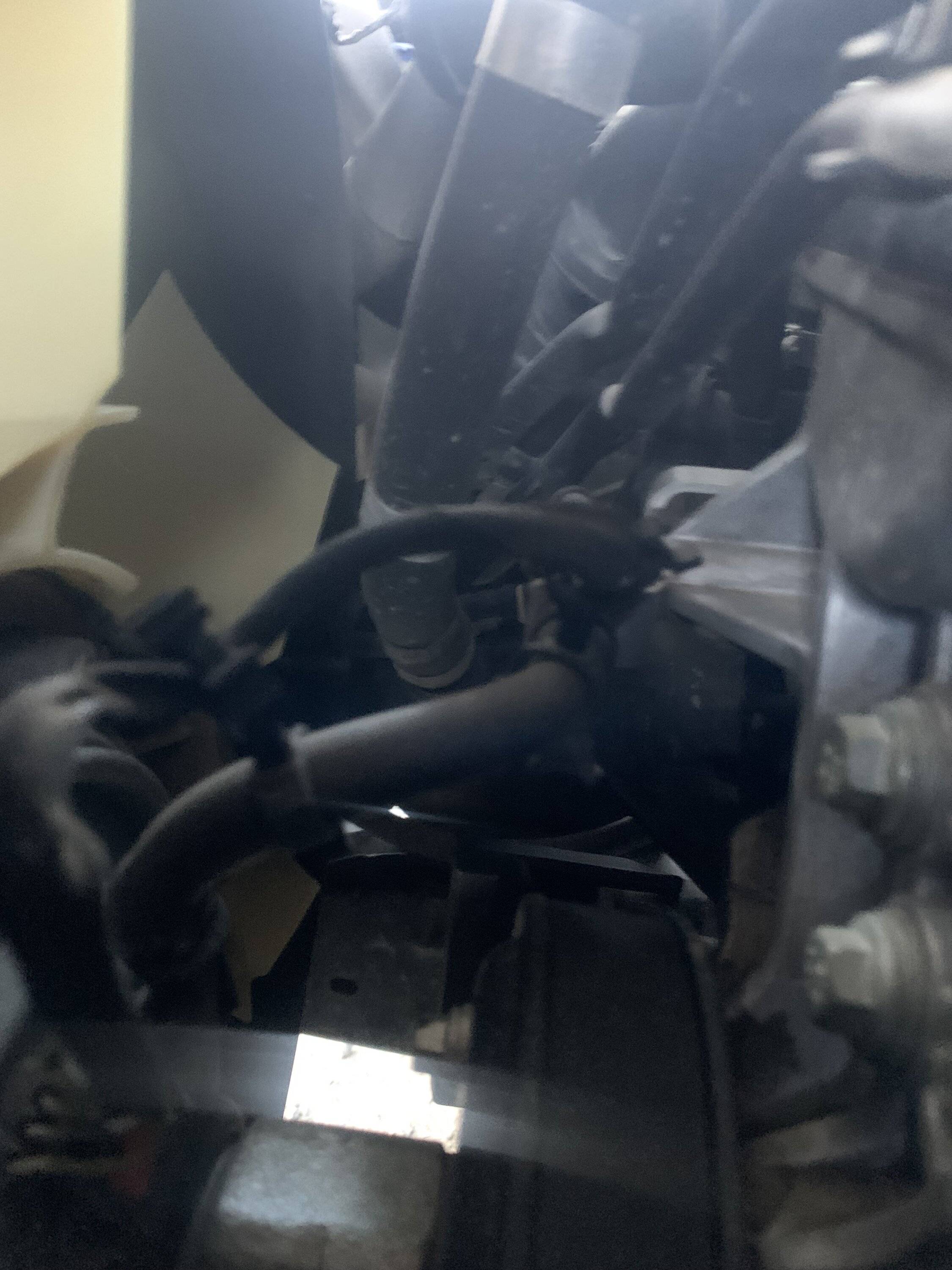
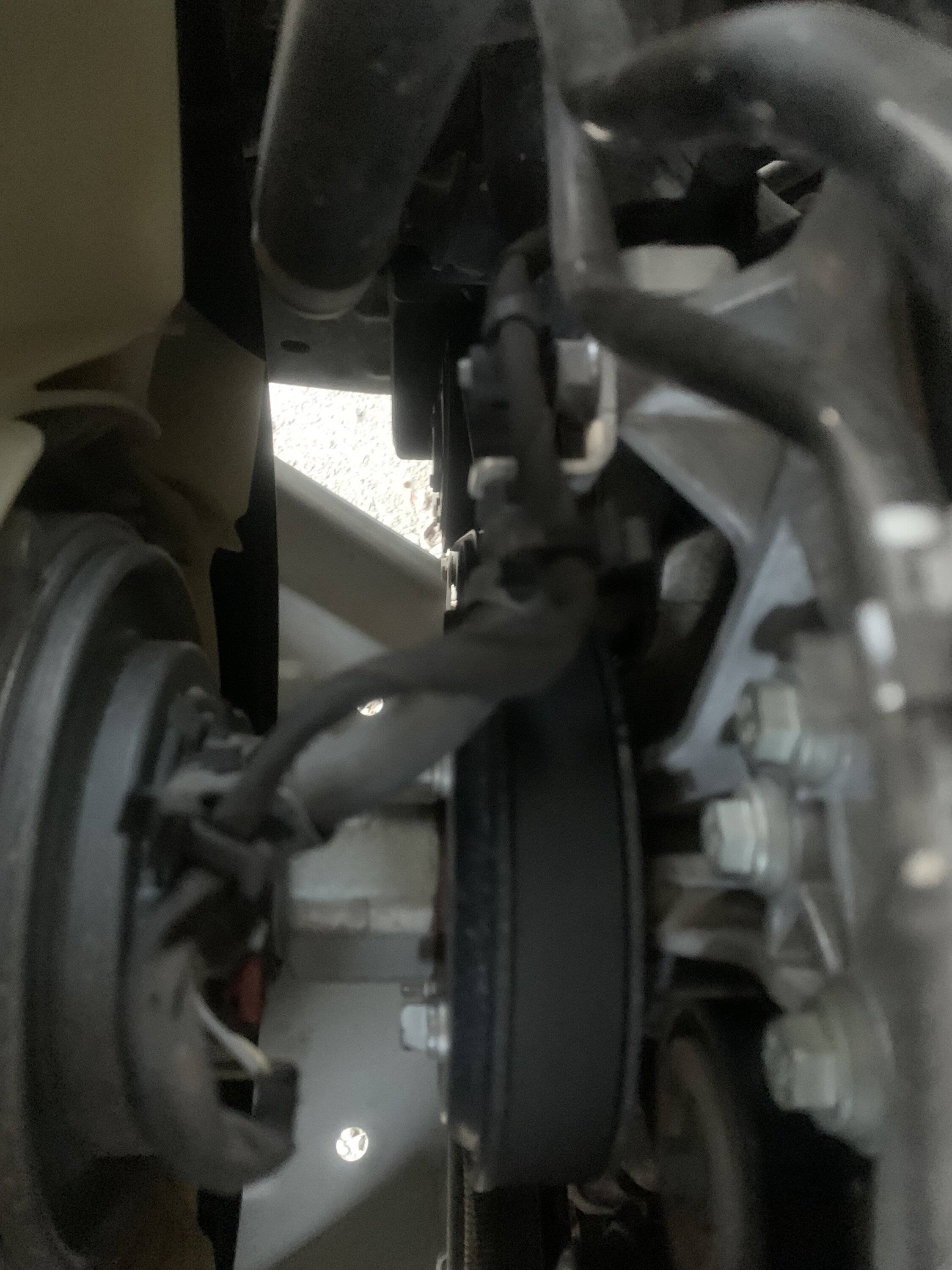
That little rubber hose is a anti rotating design for the sensor on the back of the clutch - note the wire harness for the sensor is clamped to the hose.
Clutch fails, sensor rotates breaking hose in half taking the wire harness with it, thus ripping wires apart.
Tripping all the dash warnings.
So pretty much my clutch fan is failed?
 

Muffin1

Well-Known Member
First Name
Rob
Joined
Sep 24, 2019
Threads
37
Messages
673
Reaction score
1,258
Location
NJ
Vehicle(s)
2019 Silver STX 4X4 SC / 2024 XLT 4X4 Cactus Gray
@Jay blas,
what did the service writer say (or his attitude )to you about the issue, was he surprised like he hasn’t seen that before?
or oh yea we seen this problem a couple times
any backlog getting your parts and hopefully your covered although you mentioned above you have 44,000 miles, keep us posted hope it works out smoothly for you.
Sponsored


Top