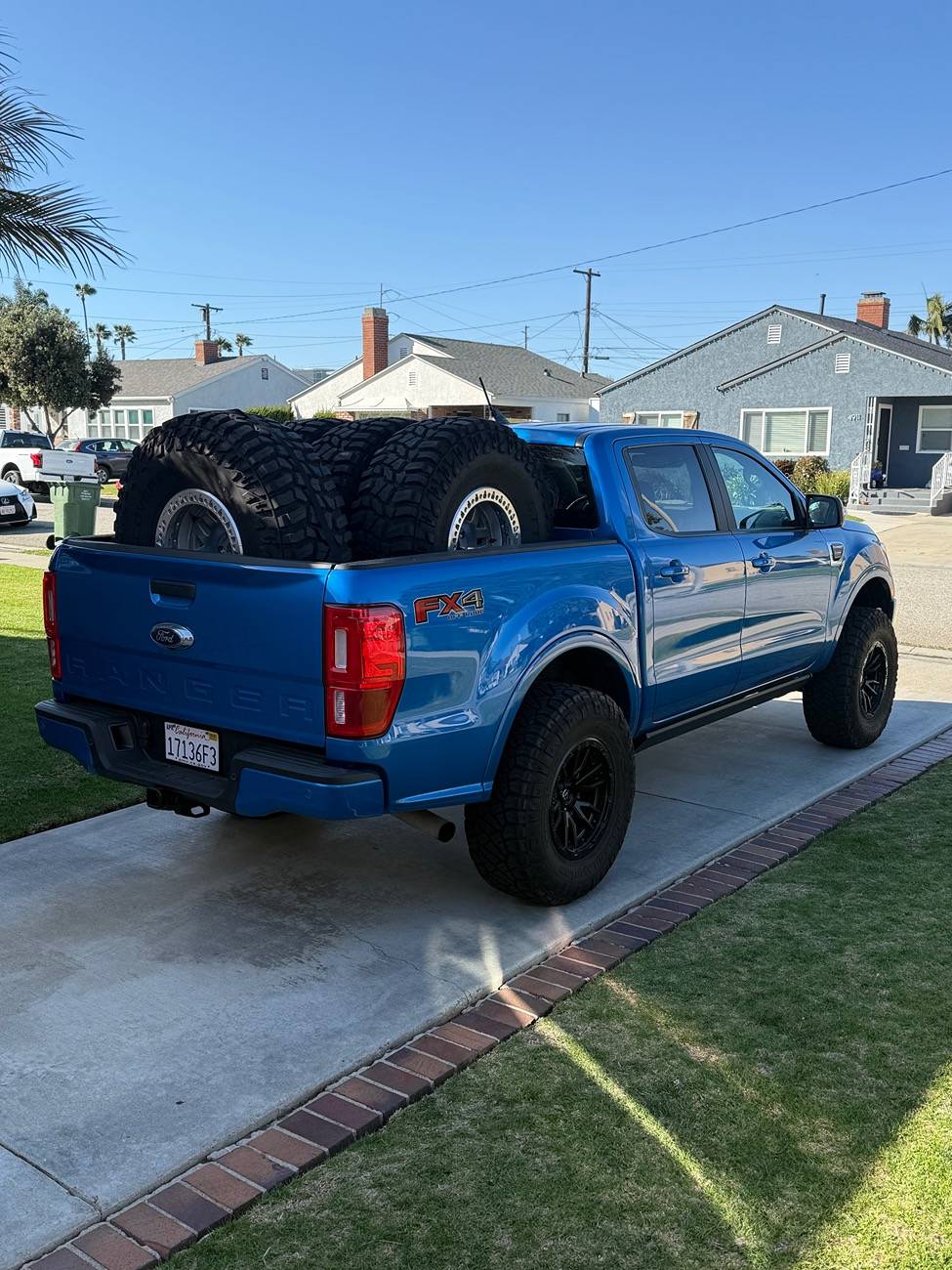
Hey... Soooo.... if you are putting those tires/wheels in the bed on this nice blue truck, whatcha gonna do with the take offs? and what size are they? Asking for a friend, Thanks!
Hey... Soooo.... if you are putting those tires/wheels in the bed on this nice blue truck, whatcha gonna do with the take offs? and what size are they? Asking for a friend, Thanks!
Here's the summary of the TMF topic (#2) above - In the example below they went from 31.5" to 37" tires, but it is only 1 of the 4 factors that enter into the equation. Doing the math will tell the story.
Now for the fun (and heartbreaking) part. Using the Commutative Property of Multiplication, our ability to multiply factors in any order and receive consistent results, we must multiply the TMF of the preceding 4 steps in any order. The formula we use is as follows:
A • B • C • D = E
1.199 • 1.175 • 1.22 • 1.375 = 2.363
TMF (E) = 2.363
Key:
A - Differential Factor
B - Tire Factor
C - Mass Factor
D - Power Factor
E - TMF
In this case, the example truck began life with 800ft.lbs. of torque. Upsizing tires, deleting the truck and simply having a heavier trim selection more than doubled the applied torque of this truck compared to an unmodified base model. Below is the formula for calculating applied torque using your TMF:
A • E = N
800 x 2.363 = 1,891
N = 1,891ft.lbs. of Torque
Key:
A - The Amount of Torque Produced from the Factory
E - TMF
N - Applied Torque at Crankshaft
Conclusion:
By simply rationalizing our easy to calculate TMF to our factory torque rating, we can accurately identify how much torque is actually being applied to our drivetrain components. This is a critical metric for understanding the right transmission parts for our personal application.
It is imperative when researching a transmission or transmission modification to understand at length how this concept works because vehicles (specifically diesel trucks) with TMF’s in the 1.1 to 1.4 range tend to have substantially shorter lives, with vehicles in the 1.5 and above range being exceedingly more likely to fail within their first 150,000 miles. Vehicles above a factor of 2 are generally only alive due to the conservatism of the driver or the infancy of the power.