Sponsored

Let's get this Flat Tow or Neutral Tow thing figured out here...

D K

Well-Known Member
First Name
David
Joined
Mar 3, 2026
Threads
3
Messages
52
Reaction score
27
Location
Portland, OR
Vehicle(s)
Rubicon, Miata, Thunder Roadster
Occupation
US Navy veteran, Aircraft technician, Construction manager, Race car builder
Hello Everyone.

I chimed in on a couple of threads a while ago and there was some 'interesting opinions' when it comes to flat towing, etc. and what is the right way as opposed to what the owner's manual says.

Before I go any further, I want to make clear that I don't suggest, encourage or condone any deviation from the Ford Ranger owner's manual and any experimentation outside of what is recommended by Ford, you will do at your own risk and most likely will kill a school bus full of nuns by doing so.
This post is strictly for entertainment!

Little bit about me, I was was an aircraft tech in the Navy out of high school and have built and roadraced cars and shifter karts for many years as well as working for AAA as a tow unit driver for their rapid response team doing accident recoveries.

As we all know, the 10R80 is a great transmission but has a fragile soul...
It's like having a stripper for a wife - things start out great, but you know eventually things will go wrong and at some point there is going to be a medical examiner's van in front of your house.

When it comes to flat towing, Ford recommends going through the Neutral Tow procedure which puts the transmission and the transfer case into neutral.
Wonderful.
The only issue is that when an automatic transmission is in neutral, turning the output shaft can (and will) start turning the clutch plates and this CAN cause damage and wear since the hydraulic pump is not running. How much wear and damage this causes? I don't know? And I don't care at this point.
Point being that damage is possible, and I don't want to participate in that study.

If you go to Google and search: Ideal way to flat tow an automatic transmission 4X4 truck, it will tell you to put the transmission into park and transfer case into neutral. This, is of course, a complete contradiction to what's said in the owner's manual. This is the proper way to get things done (in my unqualified opinion of course).

So, where do we go from here?

I decided, for curiosity's sake, let's find out?

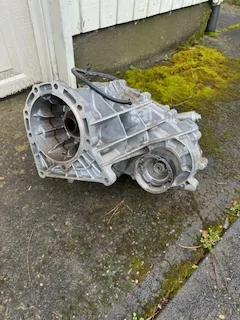
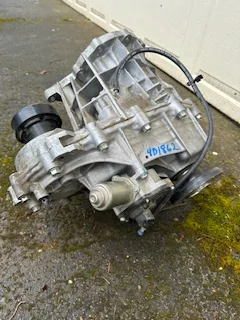
I went ahead and purchased a Ranger transfer case to study it and to find out exactly what we are all dealing with.

Ladies and gentlemen, please welcome Shannon. Shannon is an organ donor, she indicated so on her driver's license and she requested her body to go to scientific research.
My goal is to learn a thing or two and see what is 'really going on'
Here she is:

So, the first goal was to figure out to see if there is an opportunity to place the transfer case into neutral.
This wasn't as easy as it sounded.
As a matter of fact, there is no 'mechanical' way to keep the transfer case in neutral. Ford has a way of keeping it in neutral, but this involves applying voltage to a motor and if this voltage 'goes away' then so does your transfer case neutral. Thanks Ford.

To be completely honest, I am not happy about this. We all know zombies are coming and if I want the Ranger to be my 'bug out' vehicle, then this is an issue with me.

I am thinking about creating a manual override to the electronic transfer case gear selector motor and creating a mechanical method of placing the transfer case into true neutral so that you can place the transmission in Park to isolate the internals of the transmission from unlubricated friction.

I also want to say thank you to some of you who have helped me going down this rabbit hole!

Ranger tx case 1.webp


Ranger tx case 2.webp


Sponsored


airline tech

Well-Known Member
Joined
Aug 24, 2022
Threads
28
Messages
4,468
Reaction score
8,544
Location
Midwest - KS
Vehicle(s)
2022 Ranger Lariat-Super Crew, Cactus Gray
Occupation
Aircraft Tech
ok so it's not an actual detent position its merely using the T-Case motor (Tension) to hold its position.

I cannot place an actual cause (progression) on what actually happens but if we follow the power path we can see

1. The PCM Power Relay - Must be closed for the Transfer Case (4WD) relays to move the shift motor.
2. The Run Start Relay - Must be closed for the (ATCM) Switch to have power to command the PCM grounds to the (4wd) relay coils

In order for the Run Start Relay to close the PCM Power Relay must be closed

Normal - control logic - ATCM switch is moved and sends a data transmission via HS2 can bus
The ATSM sees the following important data on the HS2 Bus along with other non-related data
1. Ignition Status (this ties into switch position)
2. DR and Pass - Door Ajar Status (This ties into the Wake Circuit)
3. Vech Configuration Data - (this is the data transmission) sent when you move the switch

Neutral Tow (Enable)
Is done via the IPC and bypasses the (ATCM) switch via HS3 and HS1 data, the PCM supplies the ground to the (4WD) relays to move to this special position and via the Configuration Data the ATCH (Switch) indication goes dark (Ford should have provided) a light here but instead only provides a IPC message

Scenario #1

So internal logic of the PCM is holding in memory that it is in (Neutral Tow) command (Special Position)

Ford - notes and points out - Do Not Disconnect the Battery - when in the mode and i think it has to do with (Vech Configuration Data) that is written to the modules as its current state

Vehicle Configuration Data - The Master module is the BCM and what i think is happening is that a voltage -drop or brownout on the BCM / PCM causes it to become misconfigured and it loses that data (I'm in Neutral Tow)

The only way for the PCM power relay to close and power the PCM, originates from the BCM.
(The Master Module)

So, the PCM repowers and the (Neutral Tow) status is gone and the ATCM also sees the status is gone and it reverts back to either 2 -High or it drives itself to 4-Hi (which is the closest) position from neutral

The point is - It takes the PCM power relay to be closed to get any movement command to the T-Case motor - so the voltage drop theory is only plausible (when the modules) reboot and that only happens if a (wake) event is triggered and the PCM power relay must also be closed to power the (Run Start Relay) to get power on the ATCM switch


Scenario #2 - The TCU may be causing the (Wake Event) for its health checks as when the configuration is correct - the PCM Power Relay will close to get updated status of the modules, something could go wrong in that data transmission (while in wake) and trigger the neutral tow off

I am talking about being near the truck and you hear the Wastegate Cycle on its own - this is the Wake Circuit being activated via the Can Bus

Since I can prove that it takes the PCM Power Relay to be closed for any electrical command but cannot prove how it powers back up - as the voltage drop or brownout it's only a theory and what the reaction will be when the modules power back up (will they force a reboot) or wake command in a (neutral tow) situation

I can confirm along with others - that the truck can and will wake on its own from the TCU check in, by now it does not startle me as i am used to it happening - this is periodic TCU wake that sends the data (health) to the Ford servers from the truck and I have confirmed this is a full wake if the BCM senses activity (FOB) or (Proximity Presence) around the truck, what is unknown (confirmed) is if this full wake occurs if the (BCM) does not see activity of presence as it would take a (security camera with sound) to monitor the truck over a 8 hour period, from what i have researched it's only the TCU that powers (just enough to read and send data) if you are not in proximity - but if the BCM detects proximity of a FOB nearby a full wake event can be triggered to obtain a new (updated status) report to be sent.

Since I can prove that it takes the PCM Power Relay to be closed for any electrical command but cannot prove how it powers back up - as the voltage drop or brownout it's only a theory on what the reaction will be when the modules power back up (will they force a reboot) or wake command in a (neutral tow) situation

I can confirm along with others - that the truck can and will wake on its own from the TCU check in, by now it does not startle me as i am used to it happening - this is periodic TCU wakes that send the data (health) to the Ford servers from the truck and I have confirmed this is a full wake if the BCM senses activity (FOB) or (Proximity Presence) around the truck, what is unknown (confirmed) is if his full wake occurs if the (BCM) does not see activity of presence as it would take a (security camera with sound) to monitor the truck over a 8 hour period.

So is the FOB proximity close enough (in the RV) to pick it up as nearby (IDK) but if it is then this brings this scenario in play as a possible cause


Scenario #3

It's not voltage related at all - since there is not a (CONFIRMED) cause for this, it has been debated on the true cause, and the voltage drop theory has been pointed as the cause, but I do not believe it was confirmed

With the above information - No actual (hi-torque) detent and the T-Case motor is the holding force, what if wear or play in the motor causes it to shift a few degrees CCW and drop it into 4 -High - engaging 4-HI mechanically and this is not an electrical event as we have been led to believe.

When you repower the truck - the electrical control will see some kind of error (mismatch) and when you shift back to park - the electrical control will shift back to (2-High) - exiting the neutral tow as the ATCM switch is not going to be indicating anything - as its still thinking it should be in neutral tow and will be blank.

After seeing the video and understanding there is not a physical latched hard detent in the T-Case itself (Neutral) and Soley relies on the (Shift Motor) to maintain (Neutral) this scenario makes the most logical sense of what is actually occurring

I will say that in my experience (Neutral) on other T-Cases was a physical detent that normally had a (Higher Torque) to move (In & Out) of and if the Ranger is designed differently and is merely held by the shift motor, then any play in the motor gearing could shift it out of neutral and most likely 4-High as it would be the closest gear to settle in

Summary
While scenario 1 & 2 are plausible reasons for the uncommented shift out of neutral tow, scenario #3 for me makes the most logical sense as it makes it hard to pinpoint the exact reason as you are not inside the cab to see the electrical indications that the Wake Circuit triggered and there is no evidence (history) PIDs to see if it actually woke but may provide a history code for low voltage event (Freeze Frame) data this would possibly reveal a reboot or wake event possibly occurred.

Thanks for providing the information
 
Last edited:

airline tech

Well-Known Member
Joined
Aug 24, 2022
Threads
28
Messages
4,468
Reaction score
8,544
Location
Midwest - KS
Vehicle(s)
2022 Ranger Lariat-Super Crew, Cactus Gray
Occupation
Aircraft Tech
For a cleaner explanation
I dug a little deeper and now Scenario #1 - makes sense

The low voltage drop-out (Brownout) and then recovers
When it recovers - the BCM and PCM treat this as a (Wake Signal) - (this is how the PCM powers) and where I was hung up on how it was able to get power and it make sense
The IPC and PCM have lost the (Neutral Tow) command - via the Brownout and the voltage being reestablished above the minimum for the module treats it as a (Wake Signal)
This I believe is what is happening

So, the procedure setup for (Neutral Tow) - Place the switch in 2-High
and the truck reverts back to that position and is bypassing the necessary steps to disable neutral tow - which is movement of the shift lever to park - that actual movement (status change) is the actual trigger to come out of neutral tow.
 
OP
OP

D K

Well-Known Member
First Name
David
Joined
Mar 3, 2026
Threads
3
Messages
52
Reaction score
27
Location
Portland, OR
Vehicle(s)
Rubicon, Miata, Thunder Roadster
Occupation
US Navy veteran, Aircraft technician, Construction manager, Race car builder
You really are an airline tech, arent you?

For a cleaner explanation
I dug a little deeper and now Scenario #1 - makes sense

The low voltage drop-out (Brownout) and then recovers
When it recovers - the BCM and PCM treat this as a (Wake Signal) - (this is how the PCM powers) and where I was hung up on how it was able to get power and it make sense
The IPC and PCM have lost the (Neutral Tow) command - via the Brownout and the voltage being reestablished above the minimum for the module treats it as a (Wake Signal)
This I believe is what is happening

So, the procedure setup for (Neutral Tow) - Place the switch in 2-High
and the truck reverts back to that position and is bypassing the necessary steps to disable neutral tow - which is movement of the shift lever to park - that actual movement (status change) is the actual trigger to come out of neutral tow.


OP
OP

D K

Well-Known Member
First Name
David
Joined
Mar 3, 2026
Threads
3
Messages
52
Reaction score
27
Location
Portland, OR
Vehicle(s)
Rubicon, Miata, Thunder Roadster
Occupation
US Navy veteran, Aircraft technician, Construction manager, Race car builder
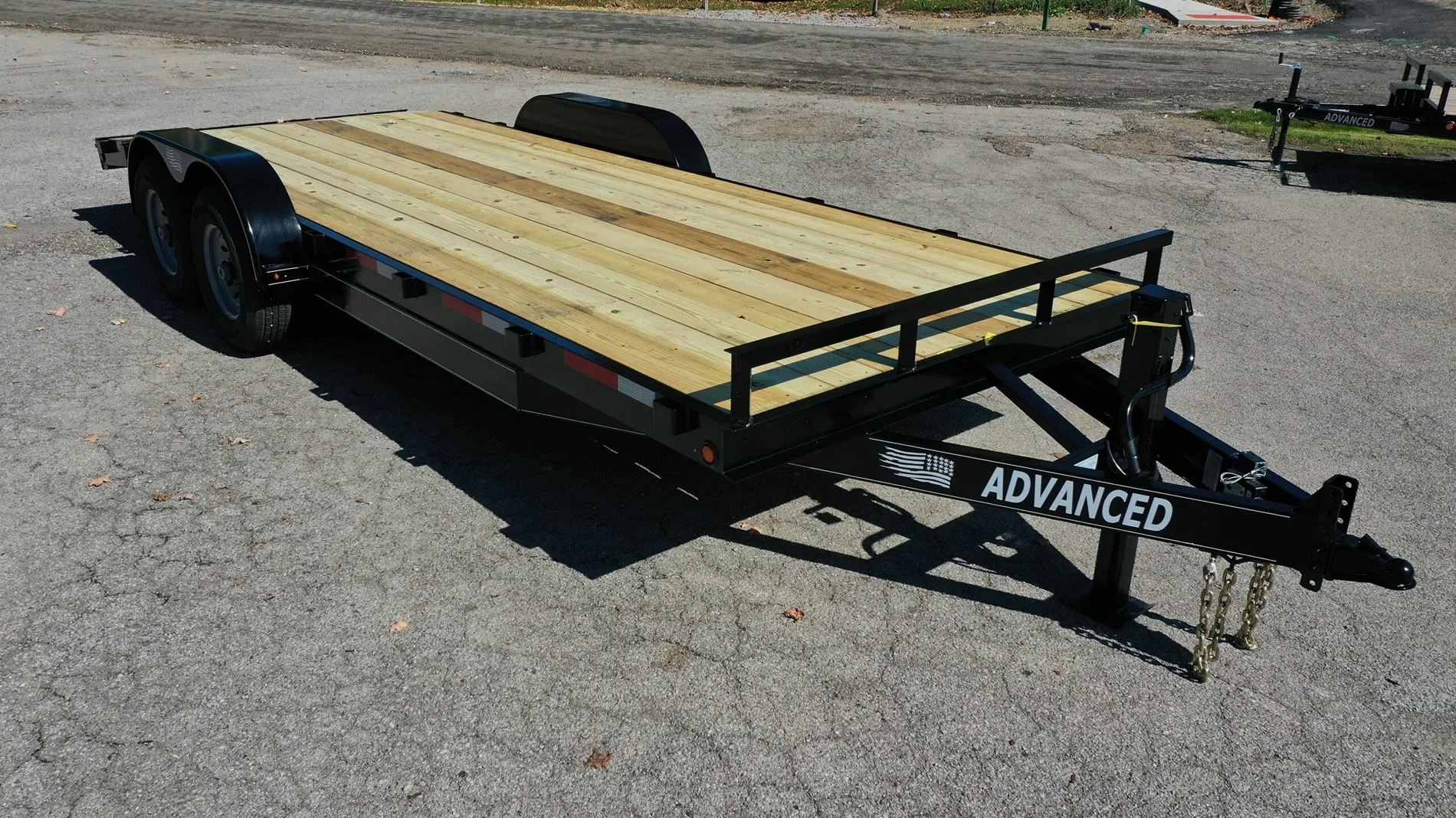
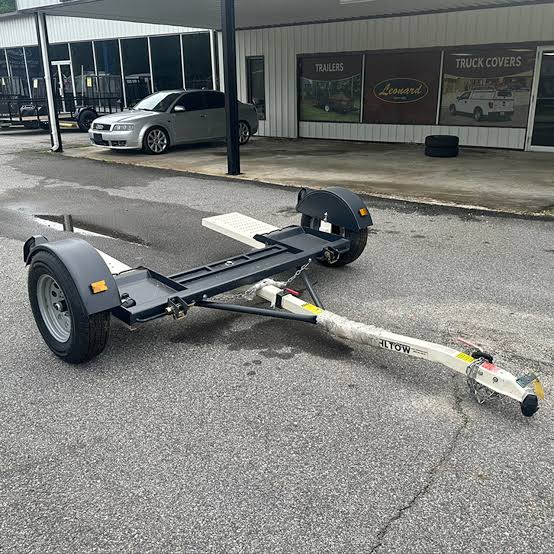
With respect to the 2 wheel dolly, you can only ever use that if the rear wheels are on the dolly.

I never trust flat towing. Ever

12k-Single-Car-Hauler_0973_1-scaled.webp


images.jpeg
 
OP
OP

D K

Well-Known Member
First Name
David
Joined
Mar 3, 2026
Threads
3
Messages
52
Reaction score
27
Location
Portland, OR
Vehicle(s)
Rubicon, Miata, Thunder Roadster
Occupation
US Navy veteran, Aircraft technician, Construction manager, Race car builder
Would there be interest in the community for a mechanically locked manual neutral switch if such thing existed?
This would enable the vehicle to be towed in park, without even switching on the ignition.
 
OP
OP

D K

Well-Known Member
First Name
David
Joined
Mar 3, 2026
Threads
3
Messages
52
Reaction score
27
Location
Portland, OR
Vehicle(s)
Rubicon, Miata, Thunder Roadster
Occupation
US Navy veteran, Aircraft technician, Construction manager, Race car builder
Now we know why Ford wants the transmission to be in neutral during flat towing.

The tx case is only in neutral on a hope an a prayer.


ok so it's not an actual detent position its merely using the T-Case motor (Tension) to hold its position.

I cannot place an actual cause (progression) on what actually happens but if we follow the power path we can see

1. The PCM Power Relay - Must be closed for the Transfer Case (4WD) relays to move the shift motor.
2. The Run Start Relay - Must be closed for the (ATCM) Switch to have power to command the PCM grounds to the (4wd) relay coils

In order for the Run Start Relay to close the PCM Power Relay must be closed

Normal - control logic - ATCM switch is moved and sends a data transmission via HS2 can bus
The ATSM sees the following important data on the HS2 Bus along with other non-related data
1. Ignition Status (this ties into switch position)
2. DR and Pass - Door Ajar Status (This ties into the Wake Circuit)
3. Vech Configuration Data - (this is the data transmission) sent when you move the switch

Neutral Tow (Enable)
Is done via the IPC and bypasses the (ATCM) switch via HS3 and HS1 data, the PCM supplies the ground to the (4WD) relays to move to this special position and via the Configuration Data the ATCH (Switch) indication goes dark (Ford should have provided) a light here but instead only provides a IPC message

Scenario #1

So internal logic of the PCM is holding in memory that it is in (Neutral Tow) command (Special Position)

Ford - notes and points out - Do Not Disconnect the Battery - when in the mode and i think it has to do with (Vech Configuration Data) that is written to the modules as its current state

Vehicle Configuration Data - The Master module is the BCM and what i think is happening is that a voltage -drop or brownout on the BCM / PCM causes it to become misconfigured and it loses that data (I'm in Neutral Tow)

The only way for the PCM power relay to close and power the PCM, originates from the BCM.
(The Master Module)

So, the PCM repowers and the (Neutral Tow) status is gone and the ATCM also sees the status is gone and it reverts back to either 2 -High or it drives itself to 4-Hi (which is the closest) position from neutral

The point is - It takes the PCM power relay to be closed to get any movement command to the T-Case motor - so the voltage drop theory is only plausible (when the modules) reboot and that only happens if a (wake) event is triggered and the PCM power relay must also be closed to power the (Run Start Relay) to get power on the ATCM switch


Scenario #2 - The TCU may be causing the (Wake Event) for its health checks as when the configuration is correct - the PCM Power Relay will close to get updated status of the modules, something could go wrong in that data transmission (while in wake) and trigger the neutral tow off

I am talking about being near the truck and you hear the Wastegate Cycle on its own - this is the Wake Circuit being activated via the Can Bus

Since I can prove that it takes the PCM Power Relay to be closed for any electrical command but cannot prove how it powers back up - as the voltage drop or brownout it's only a theory and what the reaction will be when the modules power back up (will they force a reboot) or wake command in a (neutral tow) situation

I can confirm along with others - that the truck can and will wake on its own from the TCU check in, by now it does not startle me as i am used to it happening - this is periodic TCU wake that sends the data (health) to the Ford servers from the truck and I have confirmed this is a full wake if the BCM senses activity (FOB) or (Proximity Presence) around the truck, what is unknown (confirmed) is if this full wake occurs if the (BCM) does not see activity of presence as it would take a (security camera with sound) to monitor the truck over a 8 hour period, from what i have researched it's only the TCU that powers (just enough to read and send data) if you are not in proximity - but if the BCM detects proximity of a FOB nearby a full wake event can be triggered to obtain a new (updated status) report to be sent.

Since I can prove that it takes the PCM Power Relay to be closed for any electrical command but cannot prove how it powers back up - as the voltage drop or brownout it's only a theory on what the reaction will be when the modules power back up (will they force a reboot) or wake command in a (neutral tow) situation

I can confirm along with others - that the truck can and will wake on its own from the TCU check in, by now it does not startle me as i am used to it happening - this is periodic TCU wakes that send the data (health) to the Ford servers from the truck and I have confirmed this is a full wake if the BCM senses activity (FOB) or (Proximity Presence) around the truck, what is unknown (confirmed) is if his full wake occurs if the (BCM) does not see activity of presence as it would take a (security camera with sound) to monitor the truck over a 8 hour period.

So is the FOB proximity close enough (in the RV) to pick it up as nearby (IDK) but if it is then this brings this scenario in play as a possible cause


Scenario #3

It's not voltage related at all - since there is not a (CONFIRMED) cause for this, it has been debated on the true cause, and the voltage drop theory has been pointed as the cause, but I do not believe it was confirmed

With the above information - No actual (hi-torque) detent and the T-Case motor is the holding force, what if wear or play in the motor causes it to shift a few degrees CCW and drop it into 4 -High - engaging 4-HI mechanically and this is not an electrical event as we have been led to believe.

When you repower the truck - the electrical control will see some kind of error (mismatch) and when you shift back to park - the electrical control will shift back to (2-High) - exiting the neutral tow as the ATCM switch is not going to be indicating anything - as its still thinking it should be in neutral tow and will be blank.

After seeing the video and understanding there is not a physical latched hard detent in the T-Case itself (Neutral) and Soley relies on the (Shift Motor) to maintain (Neutral) this scenario makes the most logical sense of what is actually occurring

I will say that in my experience (Neutral) on other T-Cases was a physical detent that normally had a (Higher Torque) to move (In & Out) of and if the Ranger is designed differently and is merely held by the shift motor, then any play in the motor gearing could shift it out of neutral and most likely 4-High as it would be the closest gear to settle in

Summary
While scenario 1 & 2 are plausible reasons for the uncommented shift out of neutral tow, scenario #3 for me makes the most logical sense as it makes it hard to pinpoint the exact reason as you are not inside the cab to see the electrical indications that the Wake Circuit triggered and there is no evidence (history) PIDs to see if it actually woke but may provide a history code for low voltage event (Freeze Frame) data this would possibly reveal a reboot or wake event possibly occurred.

Thanks for providing the information
 

TJC

Well-Known Member
First Name
Tony
Joined
Aug 28, 2020
Threads
45
Messages
3,947
Reaction score
9,921
Location
North Carolina
Vehicle(s)
93 Miata, 05 Ranger 4x4, 20 Ranger 4x4, 23 CX-5
I'd only flatbed it. Rear wheels spinning will result in the same exposure.

I find it difficult to believe that Ford would cut corners so much to depend on a powered relay to keep the system in neutral. A passive system is FAR more desirable.

I'm not going to trust an "electrical on" option to disengage the driveline. Seems best to simply pull the rear driveshaft. And that option seems far too inconvenient.

It is moderately OK for onetime events (I still don't like it), but not if your dragging the truck behind a RV.

I still prefer manual lockout hubs and manual shift transfer cases. They are just better. Many times Less is More.
 
OP
OP

D K

Well-Known Member
First Name
David
Joined
Mar 3, 2026
Threads
3
Messages
52
Reaction score
27
Location
Portland, OR
Vehicle(s)
Rubicon, Miata, Thunder Roadster
Occupation
US Navy veteran, Aircraft technician, Construction manager, Race car builder
100% agree!

Manual would definitely be the best option.
Looking at the tx case motor, there might be a way to build a mechanical interface. I am scratching my head if I want to mess with it...

I will tear it apart here soon and see if I can discover something interesting.
Currently, I have an idea that would be a bolt on situation without having to remove the transfer case or open it up.

I'd only flatbed it. Rear wheels spinning will result in the same exposure.

I find it difficult to believe that Ford would cut corners so much to depend on a powered relay to keep the system in neutral. A passive system is FAR more desirable.

I'm not going to trust an "electrical on" option to disengage the driveline. Seems best to simply pull the rear driveshaft. And that option seems far too inconvenient.

It is moderately OK for onetime events (I still don't like it), but not if your dragging the truck behind a RV.

I still prefer manual lockout hubs and manual shift transfer cases. They are just better. Many times Less is More.
 
OP
OP

D K

Well-Known Member
First Name
David
Joined
Mar 3, 2026
Threads
3
Messages
52
Reaction score
27
Location
Portland, OR
Vehicle(s)
Rubicon, Miata, Thunder Roadster
Occupation
US Navy veteran, Aircraft technician, Construction manager, Race car builder
Yes, but still not a feasible solution for everyone.

Disconnect drive shaft with the dolly. Easy peasy with u joints. Still doable with cv joint driveshafts. All but 10 minutes
 

airline tech

Well-Known Member
Joined
Aug 24, 2022
Threads
28
Messages
4,468
Reaction score
8,544
Location
Midwest - KS
Vehicle(s)
2022 Ranger Lariat-Super Crew, Cactus Gray
Occupation
Aircraft Tech
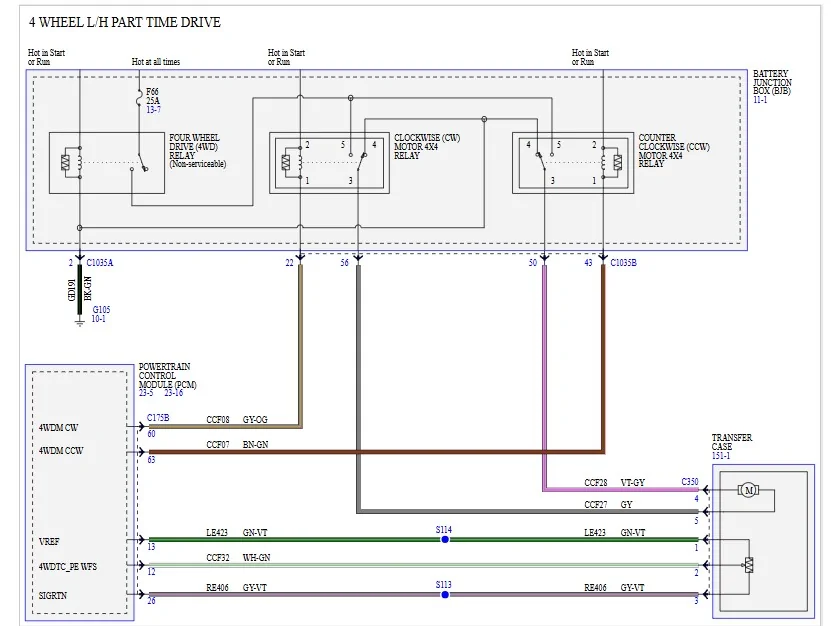
I was playing with Ideas and have found a possible solution for uncommand shifts

If we look at the motor (pins 4 & 5) and follow the (relaxed) state logic you will note
1. Both wires are connected together
2. They both are running to chassis ground

The (Motor Brake) is not provided from the ground, it's provided from both sides of the motor being tied together

So, one could install a (DPDT) switch in this circuit and have it wired so
1. Position 1 - normal operation
2. Position 2 - Tow Mode
In tow mode position -
- You create an open circuit from the BJB on both motor feed wires at the switch
-You create a jumper connection between both sides of the motor
- For circuit protection (in the event) of a switch failure, do not add a chassis ground

The reasoning for not adding a ground here is simply to protect the circuit (if a switch failure occurred) you would have a short to ground and blow the 4WD Relay fuse with an added ground

So, the procedure would be - after you are all done and (Neutral Tow) is set and truck is shut off, flip this switch. - VERY LAST STEP

and the opposite for disable - make it the VERY FIRST STEP

The only drawback is - if the truck tries to power the motor it's going to generate a - 4x4 fault
but you have taken away any chance of the motor - moving with the by-pass switch in tow position.


I want to also highlight something here that I am noting and it has to do with the (Braking) effect on the circuit.
The circuit must see a (Series Loop) on both sides of the motor, thinking outside the box here and wondering (What If?) either relay contact (at rest) was pitted this would create and high resistance in the circuit - therefore creating an open, now we have lost that braking effect and road vibrations etc could possibly let the shift motor move, not from any electrical command just simply a bad circuit completion
So, to summarize - my switch by-pass idea - also addresses this possible scenario and this just might be the smoking gun for some of the uncommented shift reports.

The VREF Feedback:

The VREF - circuit remains happy as it can still ref (commanded) position (Neutral)
So, in a (Brownout) event and the (modules) drop neutral tow memory the PCM will attempt to command the shift - but will be electrically blocked from the open circuit, so worst case scenario it will generate faults, but the motor will not be able to engage and damage the transmission

So yes, you would have to cut and splice into the wire harness, but this is the simplest way (Quick and Easy) for transitions in and out of (Neutral Tow)

Now the Transmission (Neutral or Park) Debate

I look at it this way -

With the T-Case in (Neutral) and Transmission in (Neutral) the T-Case is physically disconnected from the transmission - yes there may be some resistance spinning inside the transmission as it makes sense, but it would be minimal
In the failure event - the T-Case shifts out of (Neutral Tow) and the transmission begins actually dry spinning and overheating the transmission (no fluid movement) for cooling

If the transmission is in (Park) during this failure event - the park pawl would instantly shear off, and you would have the same dry spinning and overheat event.

Debate: Fence

In (Neutral) you have some slim chance of the transmission not being damaged and it depends on how long the drive was with the T-Case was engaged -50% Chance

In (Park) you have immediate confirmed damage - starting with the park pawl and possible cracked transmission case - 100% Chance

Which one would you prefer to (Risk)


4WD Circuit.webp
 

Fitzmotor

Gold Sponsor
First Name
Mike
Joined
May 6, 2021
Threads
24
Messages
1,388
Reaction score
5,836
Location
Saugus
Vehicle(s)
2021 Ranger Tremor, 75 crewcab F350, 65 Mustang
Occupation
Retired from Honda Racing.
Airline tech, that's brilliant break down of the system logic and very plausible solution, good write up!

I hope this solution gets real world testing! I would do it for sure!

I should have you tackle how to hard wire in a keyless entry pad vs the battery RFID POS. If the BCM has the pins it should be easy. Oops, sorry for the hijack!
 

TJC

Well-Known Member
First Name
Tony
Joined
Aug 28, 2020
Threads
45
Messages
3,947
Reaction score
9,921
Location
North Carolina
Vehicle(s)
93 Miata, 05 Ranger 4x4, 20 Ranger 4x4, 23 CX-5
The (Motor Brake) is not provided from the ground, it's provided from both sides of the motor being tied together
They are shunting the motor!

Back in High School I worked for a model train hobbiest (in his basement machine shop... and NOBODY but him had a basement in South Florida!).

We built 1/12th scale trains for those that had more money than sense. We used Old WWII aircraft landing gear motors that we rewired. We had 8 forward speeds and 8 reverse speeds, but to brake the train we progressively shunted the motors at 4 levels. Locking up cast iron train wheels would destroy our aluminum rails.

Here's Ford doing the same thing.
Sponsored


Top