
Sponsored

Trans Temps...

OP
OP
Grumpaw

Grumpaw

Well-Known Member
First Name
Steve
Joined
Jul 1, 2021
Threads
84
Messages
5,860
Reaction score
29,196
Location
Fishersville, Va.
Vehicle(s)
Previous 2021 Ranger, Now 2019 Ford Expedition
Occupation
Navy Vet., Retired Police Sgt., Grumpy Old Senior Citizen
Ah.....but can you get oil pressure with that fancy setup grasshopper? I know you can't pull an oil temp....we don't have a sensor. I use a wireless OBDII reader and OBD Fusion with a 7" Fire HD tablet. $24.95 for the refurbished tablet, $4.99 for OBD Fusion + $14.99 for the 315 sensor PID files for my 19' Ford Ranger. I was running an old version of Torque Pro but my old tablet went bye bye. I just put the new setup together this past weekend. Great gauge customization with OBD Fusion! I will post some pics soon.....

BTW...your trans temp is fine...I get to 210-212F fairly regularly..... :wink:
Oh, I know trans temp is OK. Pic's only show temps at 15 and 30 minutes after starting/driving.
I won't worry about temps until they get over 225-235 and still climb.
I have seen that trans temps hover around coolant temps when hot, and my coolant temps (with old Scan Gauge) while towing our travel trailer, in summer, never got over 210, so I don't really worry.
Sponsored


 

Apples

Well-Known Member
First Name
Alan
Joined
Jun 14, 2020
Threads
20
Messages
687
Reaction score
1,318
Location
Roswell, NM
Vehicle(s)
2019 Ranger XLT
Occupation
Retired
This isn't exactly true: "Nothing to worry about. Variable voltage vehicles will do that more than you believe"

Nominal charging voltage (lead-acid, AGM or not) hovers around 14.2, and for some vehicles which have rear mounted batteries (Buicks and some Dodges) is closer to 15.4.

If you pay attention to the voltage, it will indeed drop, to whatever the load dictates. This is the BMS (battery monitoring system) checking the battery's SoC. If the battery voltage stays at 13.2, there there is an issue someplace.
 

Frenchy

Well-Known Member
First Name
Chris
Joined
Mar 15, 2020
Threads
164
Messages
7,539
Reaction score
10,750
Location
Elizabeth, Colorado
Vehicle(s)
2012 Nissan Frontier, 1994 F150 XL, 2022 Ford Transit
Occupation
Field Service Technician
This isn't exactly true: "Nothing to worry about. Variable voltage vehicles will do that more than you believe"

Nominal charging voltage (lead-acid, AGM or not) hovers around 14.2, and for some vehicles which have rear mounted batteries (Buicks and some Dodges) is closer to 15.4.

If you pay attention to the voltage, it will indeed drop, to whatever the load dictates. This is the BMS (battery monitoring system) checking the battery's SoC. If the battery voltage stays at 13.2, there there is an issue someplace.
With Variable Voltage Vehicles they are designed to charge anywhere between 13-14.7 volts depending on many conditions and what the Computer decides. Is it best for the battery? Probably not but the vehicle Manufacturer has decided to run it that way.
 

SigOris

Well-Known Member
First Name
John
Joined
May 18, 2022
Threads
47
Messages
1,242
Reaction score
4,088
Location
Greenwood Maine
Vehicle(s)
MY23 F150 CC Lariat PB & MY25 Mustang GT Convertible 60th #0807
Occupation
Retired DoD EE
i have the same and i dont know what 80% of the stuff it monitors is lol.
Ed Zachary, I’m sure they are helpful in deep troubleshooting but most just need the basics


SigOris

Well-Known Member
First Name
John
Joined
May 18, 2022
Threads
47
Messages
1,242
Reaction score
4,088
Location
Greenwood Maine
Vehicle(s)
MY23 F150 CC Lariat PB & MY25 Mustang GT Convertible 60th #0807
Occupation
Retired DoD EE
Hmm, ovulating, eh? I guess the title of this thread is Trans Temps, and the only good ones are hot ....
I’ll find a link to show all the things it monitors of which 95% of it is useless to me.
 

Frenchy

Well-Known Member
First Name
Chris
Joined
Mar 15, 2020
Threads
164
Messages
7,539
Reaction score
10,750
Location
Elizabeth, Colorado
Vehicle(s)
2012 Nissan Frontier, 1994 F150 XL, 2022 Ford Transit
Occupation
Field Service Technician
I don't know what your background is, Frenchy, so I won't criticize further. But you're wrong! Here are a few facts you need to read over.

https://batteryuniversity.com/
Once again the vehicle manufacturers that installed Variable Voltage systems on cars and trucks of today(want to say it started in the early 2000's. Could be wrong) chose to have vehicles charge and run the electrical anywhere between 13-14.7 volts while running. This is something that will change while driving and will depend on many different conditions. Its not lile the older vehicles that were set at 14.7 no matter what.

As for my background? I have been wrenching professionally for just over 9 years now. 6 of those years have been in Automotive in both Nissan and Ford wich I am certified. 1 year in a mine working on giant Haul Trucks. 2 years working on Forklifts being certified with Crown, Hyster and Yale.

That I am aware of you will only find Variable Voltage systems on Automotive applications. Why do they use it you ask? Well some Engineer out there claims that it reduces load on the vehicle and will help with Fuel Mileage. Mind you I have not seen the testing for this but it is the answer I have gotten from both Nissan and Ford.

Is it a great idea? To some yes, to others not so much. Regardless unless you somehow change the programming in the computer(wich depending could be in the alternator bit not likely in this case) it will charge at whatever voltage the computer decides is right at that time.

Phil may be able to give you some more insight pn this as well but I'm not too sure on what he does and doesnt know on that subject.
 

Frenchy

Well-Known Member
First Name
Chris
Joined
Mar 15, 2020
Threads
164
Messages
7,539
Reaction score
10,750
Location
Elizabeth, Colorado
Vehicle(s)
2012 Nissan Frontier, 1994 F150 XL, 2022 Ford Transit
Occupation
Field Service Technician
If you pay attention to the voltage, it will indeed drop, to whatever the load dictates. This is the BMS (battery monitoring system) checking the battery's SoC. If the battery voltage stays at 13.2, there there is an issue someplace.
For this part you are correct in a way. For a deep cycle yes the charge will definitely lower as the battery gets closer to full charge. This is something I deal with on a regular basis while working on Forklifts.
 

Apples

Well-Known Member
First Name
Alan
Joined
Jun 14, 2020
Threads
20
Messages
687
Reaction score
1,318
Location
Roswell, NM
Vehicle(s)
2019 Ranger XLT
Occupation
Retired
SigOris, you bring up a truism. Some of the "new" electric vehicles, have displays with all sorts of readouts, depicting drive-line perimeters that the average driver couldn't tell you what they meant! For example, why would you need the fearless electric motor's RPM, when you have the MPH? Perhaps the planetary gears are slipping?
 
OP
OP
Grumpaw

Grumpaw

Well-Known Member
First Name
Steve
Joined
Jul 1, 2021
Threads
84
Messages
5,860
Reaction score
29,196
Location
Fishersville, Va.
Vehicle(s)
Previous 2021 Ranger, Now 2019 Ford Expedition
Occupation
Navy Vet., Retired Police Sgt., Grumpy Old Senior Citizen
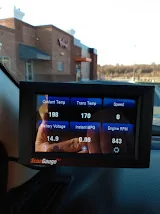
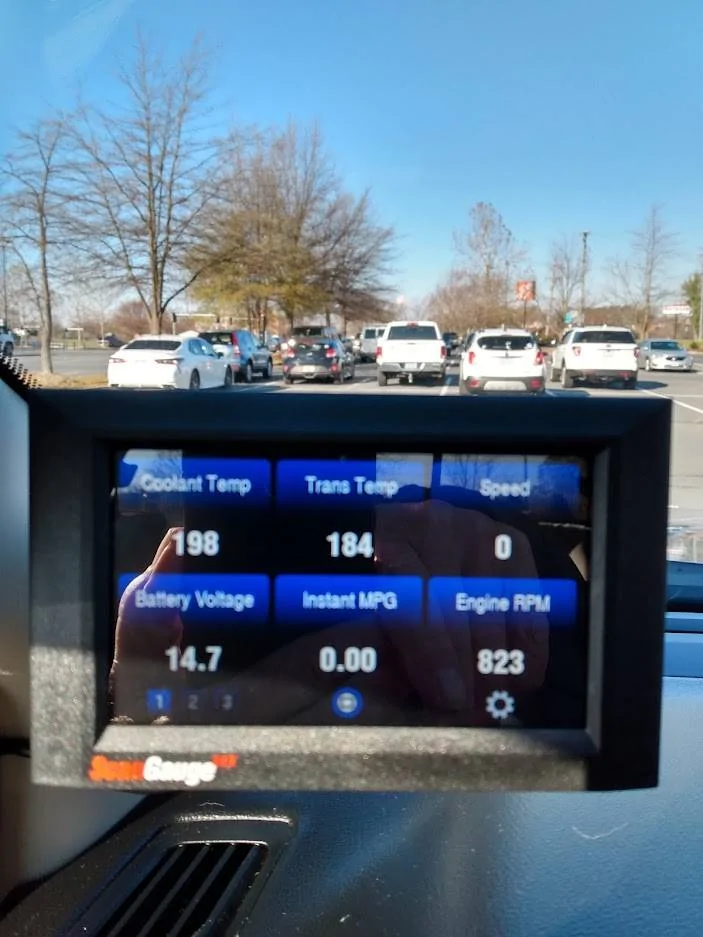
Took these this morning....outside temps were 32 for teh first and 35 for the second.
First was after a 10 mile 15 minute run in traffic from my home to Bojangles for my morning biscuit.
Second was a 10 mile run on the X-Way from Bojangles to Home Depot running 70 mph.
This was on my new Scan Gauge 3 which has the trans temps already loaded into its programming.
Granted, outside temps were low, but you can still get an idea of how ling it takes the trans fluid to warm up.

IMG_20221118_085814492.webp


IMG_20221118_092954887_HDR.webp
Sponsored


Top