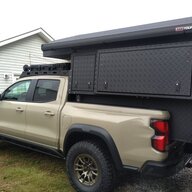
OFC Ranger
Well-Known Member
- Thread starter
- #1
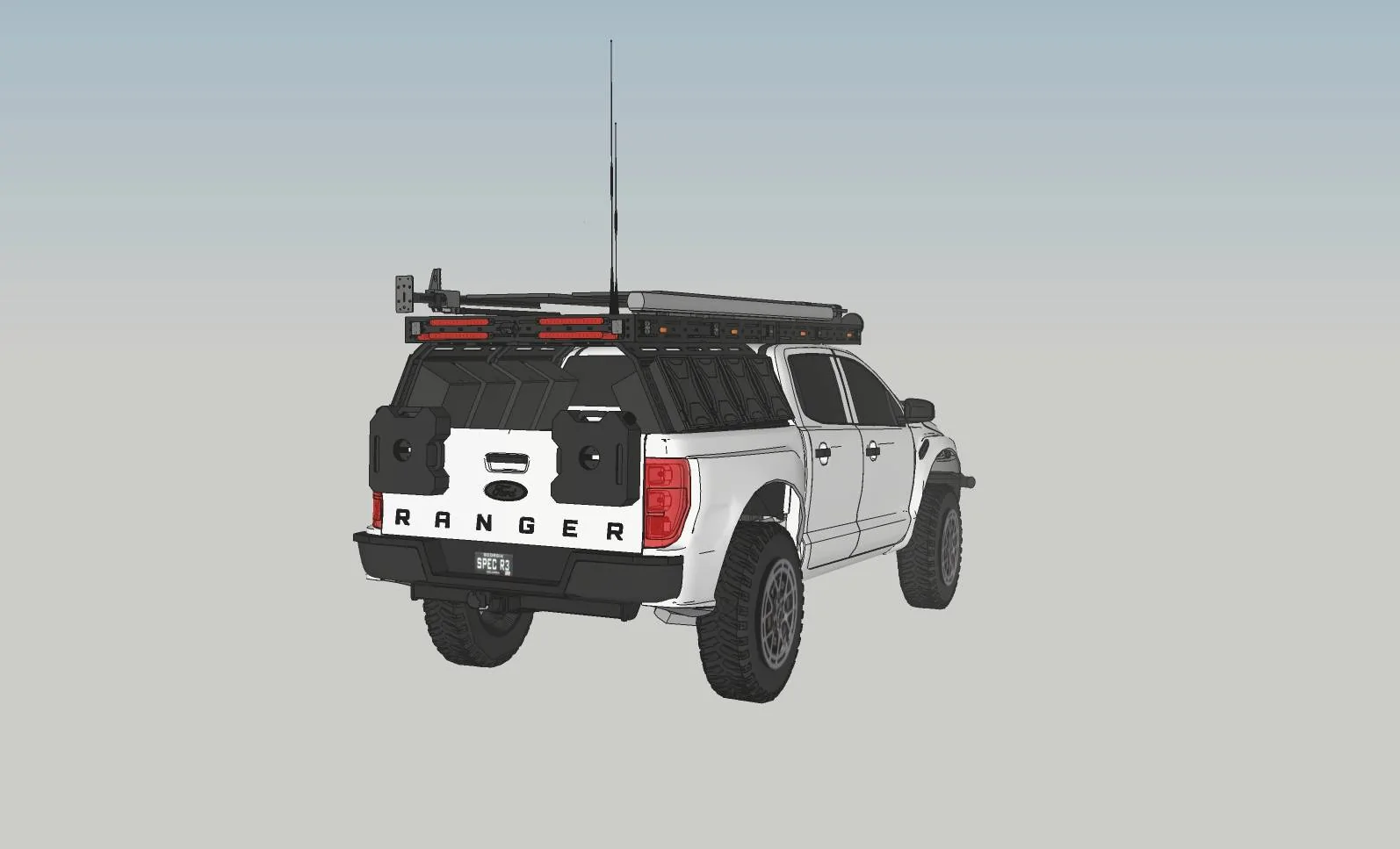
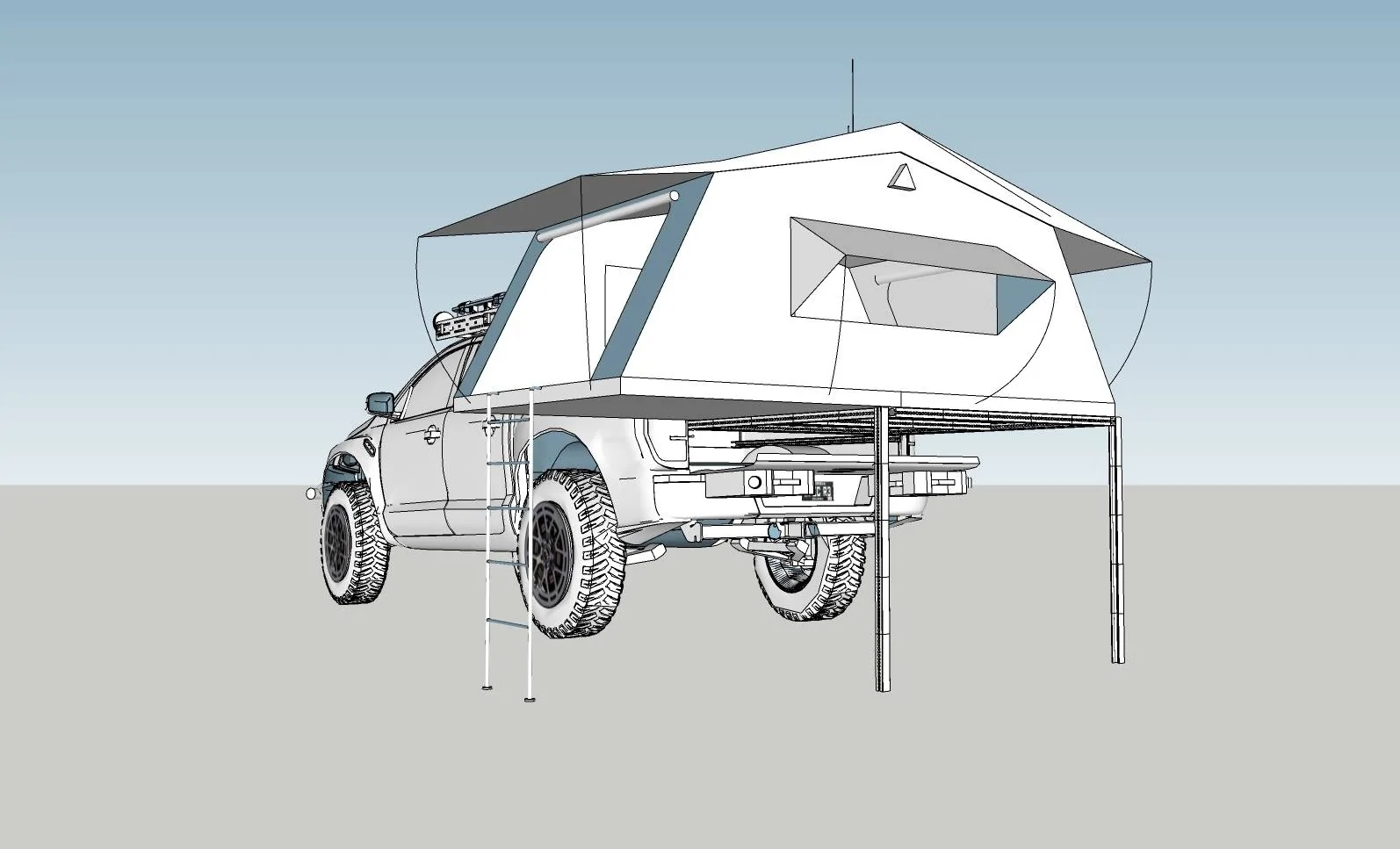
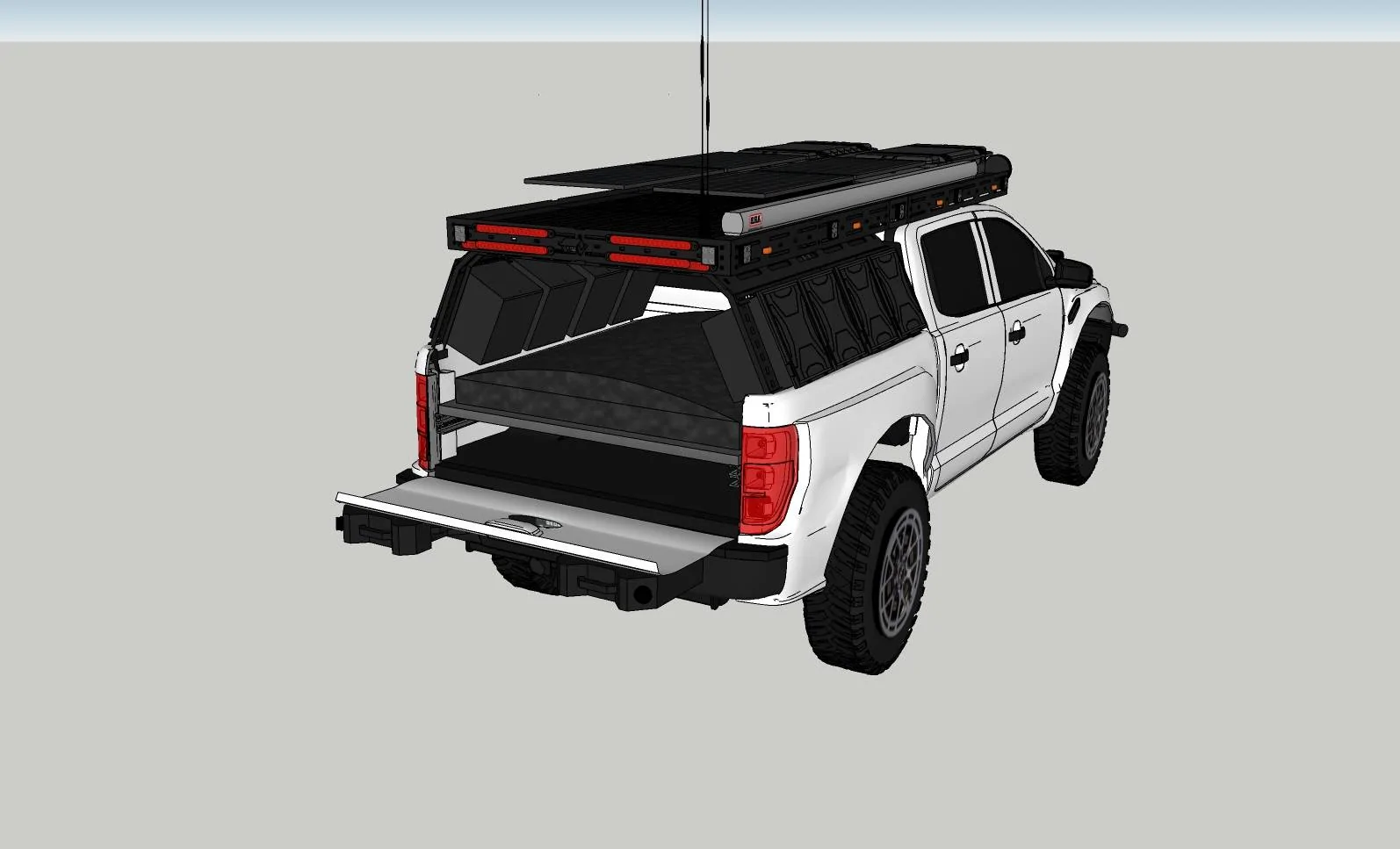
In addressing some other after-thoughts on my over the cab rack build and I think I will finally address the ability to free-float the system instead of having to continue to use two hidden "feet" to prevent front end bounce.
I'm still researching as best I can an answer to my question, but I know some of you on here do this for a living and can either provide some insight, or point me in a better direction than blindly searching out on Google regarding cantilever mechanics. I'll get to that question in a moment after some context;
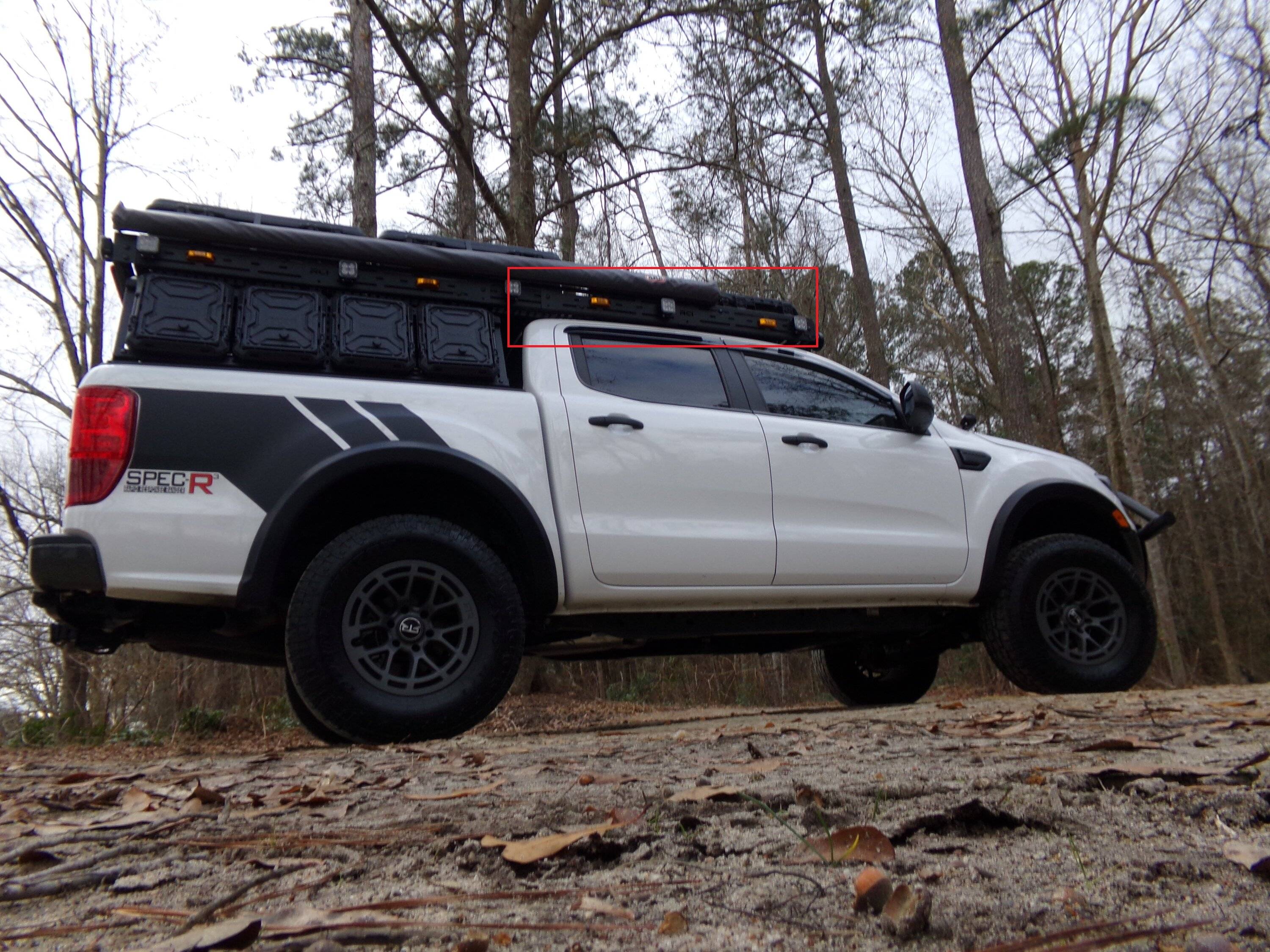
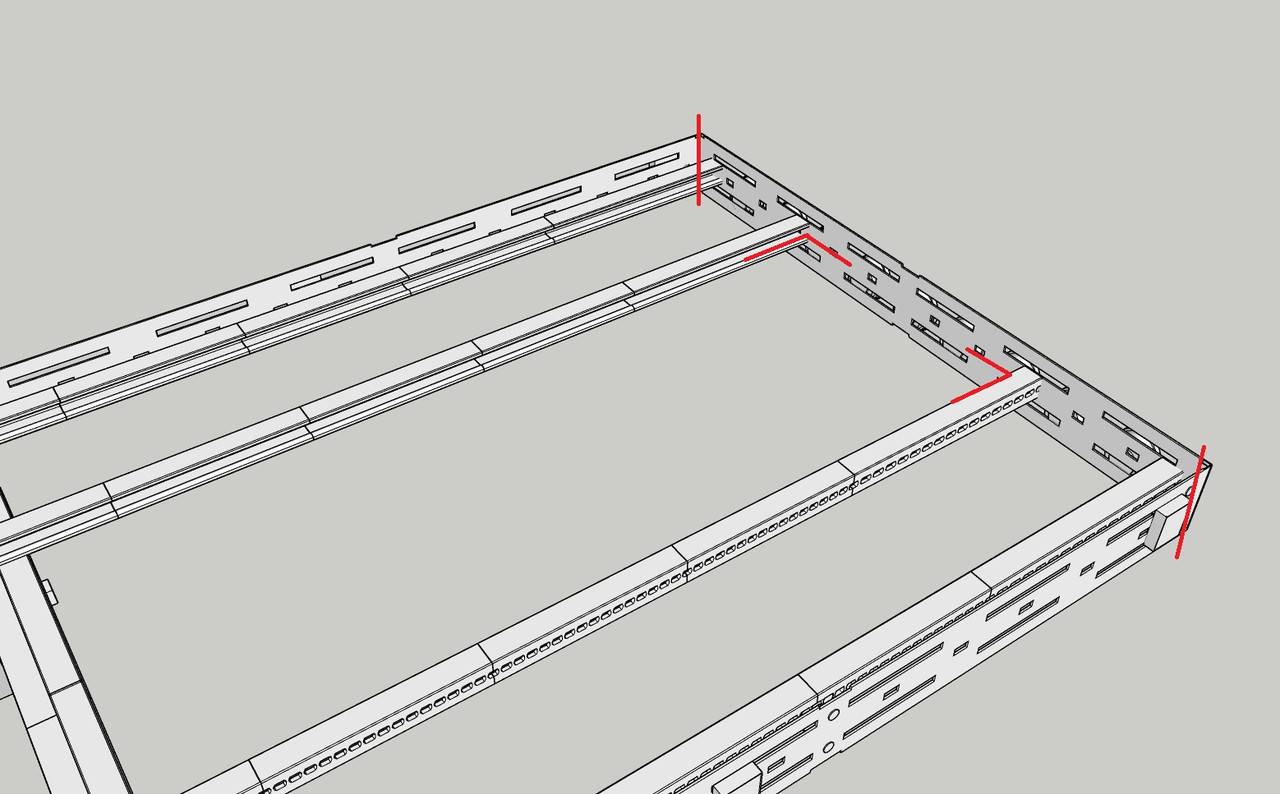
On the new rack variation I will be installing a sub frame piece on the very front (behind the paneling), think of my rack as a box, with an open top in your mind. The open top is the front of the rack. Currently the front is braced by means of the front panel having two L bracket connections on the back side, then the front panel connecting to the side panels which results in two addition fixed contact points on the corners.
The two middle red markers are the L brackets secured by grade 8 bolts, the corners are bend on bend hard contact points, also secured by grade 8 bolts.

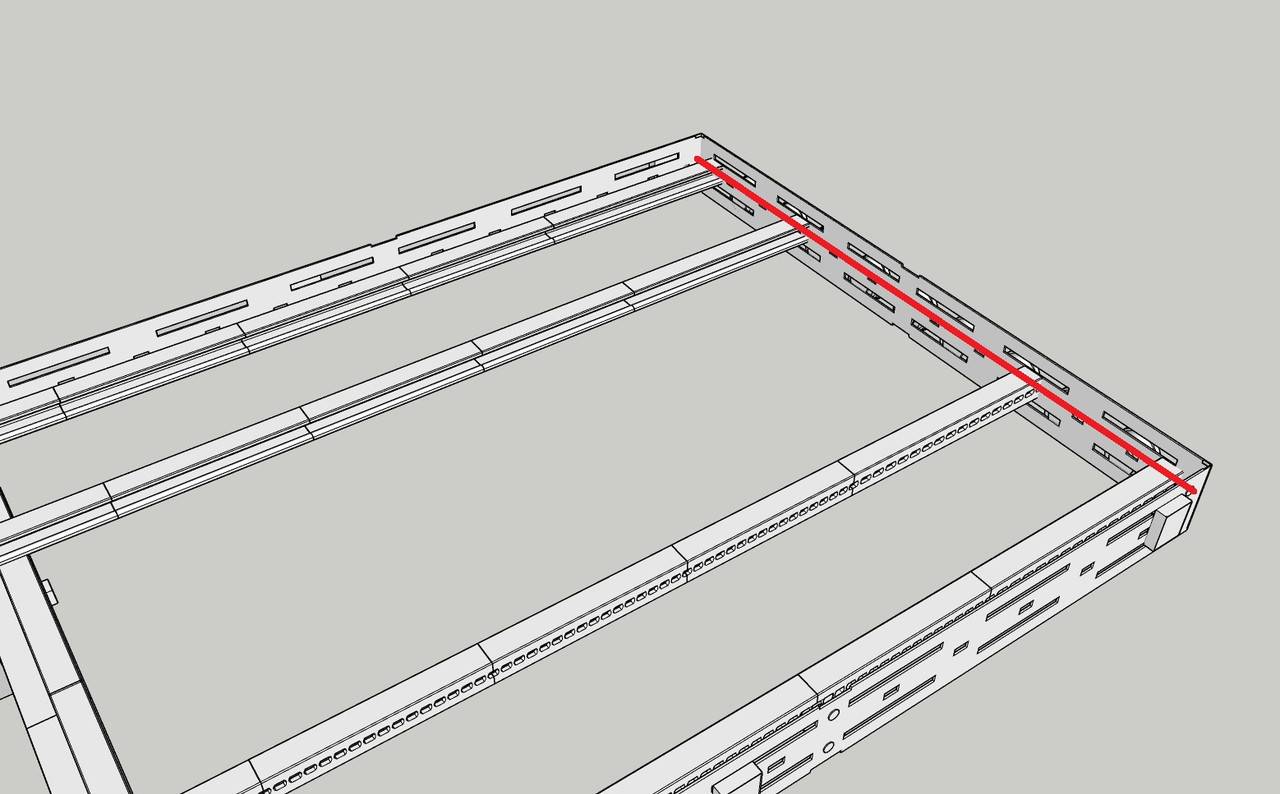
The new setup will have a new sub frame piece running corner to corner across the entire span of the front and THAT is what the front panel will connect to, instead of just the corners and two L brackets.
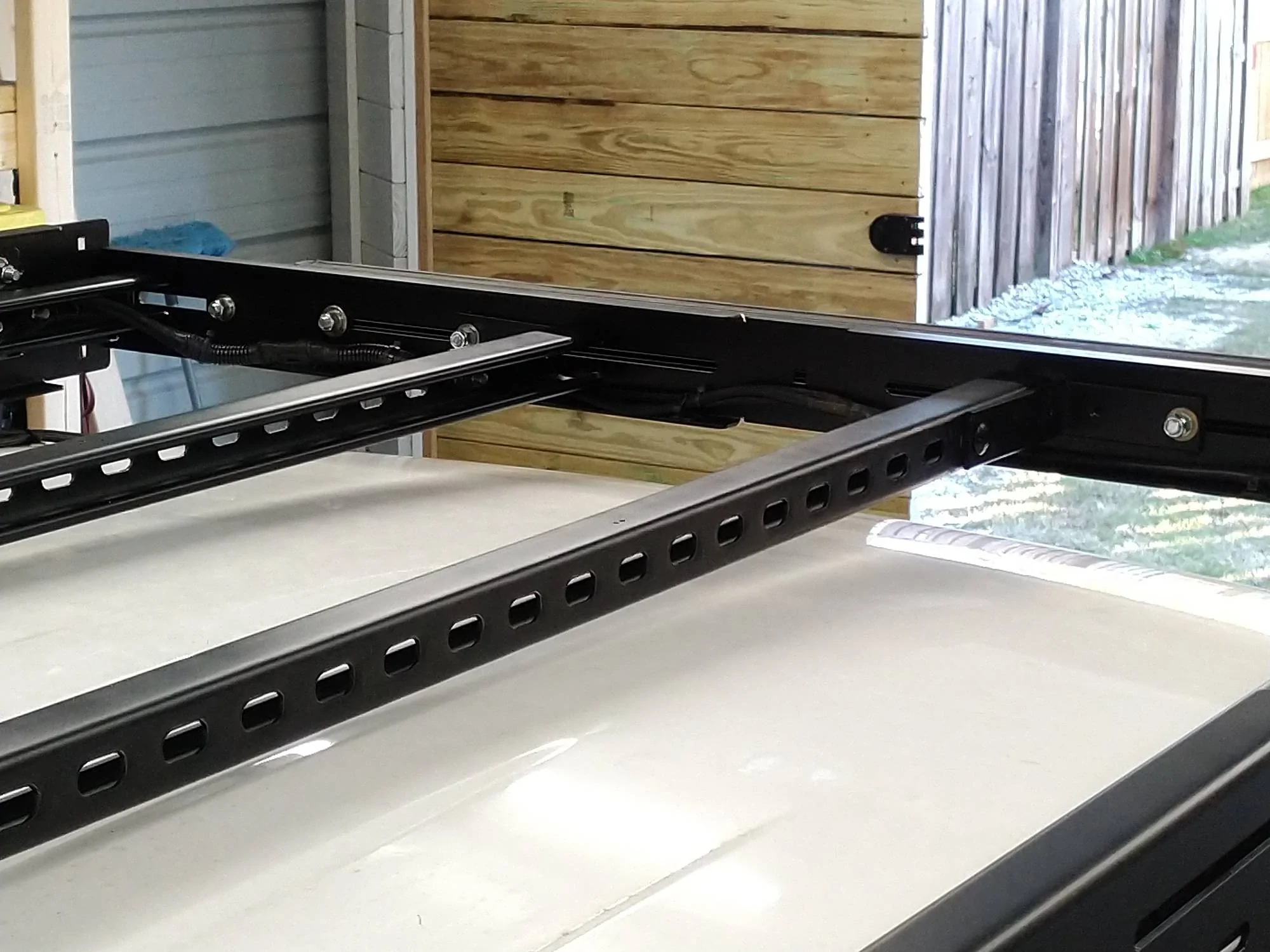
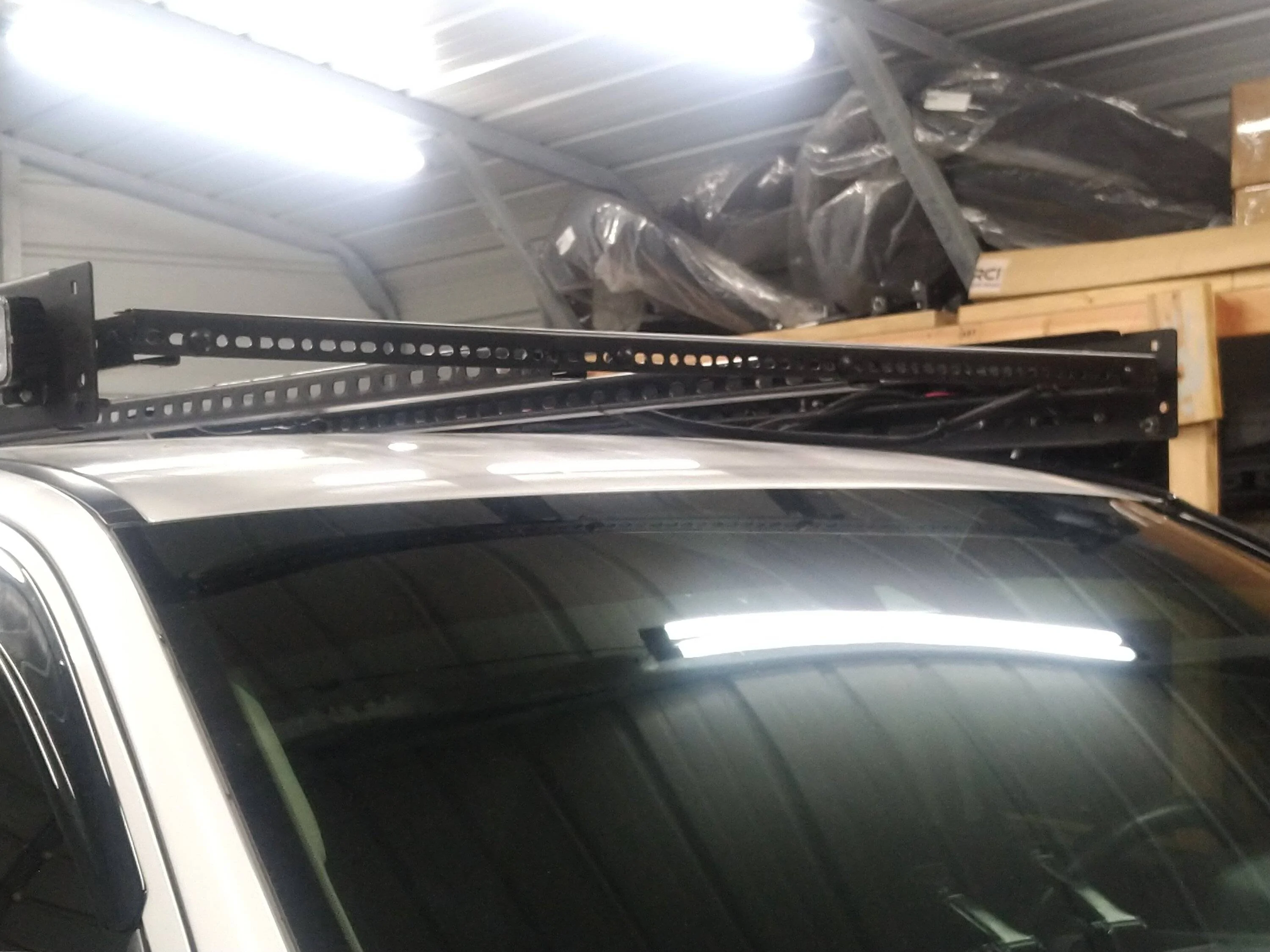
I will also be shortening my rack from 10 feet, to 8 feet. This is mostly to address hood glare from top mount lights, but also has a secondary purpose of pushing the span of cantilever back much further. Currently there is roughly 5 feet of the rack (rear portion) that is sub beams being supported completely by a sub frame which is in turn connected to my bed rack by numerous hard contact points. The other five feet (front portion) is supported only by the steel sub beams and two hidden "feet" located around the B-pillar area of the roof. These feet consist of 2" wide and 1" thick rubber stereo cabinet feet that rest over the gutter area. They connect to the outside sub beams via a simple nut and bolt system that makes them adjustable in height. They are adjusted so they provide enough upward tension that the sub beams can not longer "bounce" under heavy movement. I originally thought going to a unistrut sub beam system would be strong enough to withstand deflection on the overhang, but it just wasn't happening.
So the new front modification will have the overall platform length ending at the B pillar area, instead of at the front wind shield line. This will eliminate 2 feet of 5 feet of deflection area.
So here is my question; How do you decide when to use additional weight to counter deflection on non-static loads vs not? I have two choices for the new front sub panel beam I meantioned before. Another piece of unistrut, or a simple thin gauge steel piece of angle. Do I want to keep the front as light as possible to combat deflection, or use weight as an ally to counter balance against deflection. The unistrut is considerably more heavy than the angle steel piece I can use.
Secondary question; Does my question make any sense? /derp
I'm still researching as best I can an answer to my question, but I know some of you on here do this for a living and can either provide some insight, or point me in a better direction than blindly searching out on Google regarding cantilever mechanics. I'll get to that question in a moment after some context;
On the new rack variation I will be installing a sub frame piece on the very front (behind the paneling), think of my rack as a box, with an open top in your mind. The open top is the front of the rack. Currently the front is braced by means of the front panel having two L bracket connections on the back side, then the front panel connecting to the side panels which results in two addition fixed contact points on the corners.
The two middle red markers are the L brackets secured by grade 8 bolts, the corners are bend on bend hard contact points, also secured by grade 8 bolts.
The new setup will have a new sub frame piece running corner to corner across the entire span of the front and THAT is what the front panel will connect to, instead of just the corners and two L brackets.
I will also be shortening my rack from 10 feet, to 8 feet. This is mostly to address hood glare from top mount lights, but also has a secondary purpose of pushing the span of cantilever back much further. Currently there is roughly 5 feet of the rack (rear portion) that is sub beams being supported completely by a sub frame which is in turn connected to my bed rack by numerous hard contact points. The other five feet (front portion) is supported only by the steel sub beams and two hidden "feet" located around the B-pillar area of the roof. These feet consist of 2" wide and 1" thick rubber stereo cabinet feet that rest over the gutter area. They connect to the outside sub beams via a simple nut and bolt system that makes them adjustable in height. They are adjusted so they provide enough upward tension that the sub beams can not longer "bounce" under heavy movement. I originally thought going to a unistrut sub beam system would be strong enough to withstand deflection on the overhang, but it just wasn't happening.
So the new front modification will have the overall platform length ending at the B pillar area, instead of at the front wind shield line. This will eliminate 2 feet of 5 feet of deflection area.
So here is my question; How do you decide when to use additional weight to counter deflection on non-static loads vs not? I have two choices for the new front sub panel beam I meantioned before. Another piece of unistrut, or a simple thin gauge steel piece of angle. Do I want to keep the front as light as possible to combat deflection, or use weight as an ally to counter balance against deflection. The unistrut is considerably more heavy than the angle steel piece I can use.
Secondary question; Does my question make any sense? /derp
Sponsored
Last edited: