
AUXITO
Diamond Sponsor
- First Name
- AUXITO
- Joined
- Feb 19, 2025
- Threads
- 63
- Messages
- 96
- Reaction score
- 71
- Location
- California
- Vehicle(s)
- 2019 Ford Ranger
- Occupation
- AUXITO Senior Manager
- Thread starter
- #1
INTRODUCTION
While LED automotive bulbs deliver superior performance and efficiency, their significant heat output requires careful management. Effective heat dissipation is critical - without proper thermal control, LED bulbs face reduced performance and shortened lifespan. Dedicated to providing a comprehensive solution to the pressing thermal issues associated with LED bulbs, this article provides a comparative analysis of fanless LED headlights and fan LED headlights, analyzing the advantages and disadvantages of each. By the end, readers will be equipped with the knowledge necessary to make an informed choice when selecting their favorite LED bulbs. Join us as we explore this critical aspect of automotive lighting.

About Fan and Fanless LED Headlights
There are generally two methods for cooling LED headlights: the first is a fanless LED headlight Bulb (passive cooling) and the second is a fan LED headlight bulb (active cooling). They are both designed to dissipate heat from the LED bulb by maximizing the transfer of bulb heat to ensure proper bulb performance operation. So why do LED bulbs need to dissipate heat, take a look.
THE SIGNIFICANCE OF EFFECTIVE HEAT DISSIPATION FOR LED BULBS
We can see in the data in the table below that as the temperature of the environment in which the LED bulb is operating increases, i.e. heat builds up, its lifespan is much reduced.
All in all, inadequate management of excess heat can significantly compromise the efficiency of LED bulbs, potentially leading to premature degradation or failure. During the lighting process of the LED bulb, the lower the temperature, the brighter the LED light and the longer the light time.
(Warm Reminder: To delve deeper into the significance of heat dissipation for bulbs and recommendations for LED bulbs with optimal heat dissipation, kindly refer to - "THE IMPORTANCE OF HEAT DISSIPATION IN AUTOMOTIVE LED HEADLIGHT BULBS")
Therefore, most of the high-quality LED bulbs on the market today are equipped with a basic heat sink, and the aluminum material itself can help facilitate heat conduction and dispersion. In addition, the current LED bulb market can be roughly divided into two types: active cooling and passive cooling LED bulb designs. Generally speaking, there are LED bulbs with fans and LED bulbs without fans. Next, let's introduce the method of cooling LED headlight bulbs.
WAYS TO DISSIPATE HEAT FROM LED HEADLAMP BULBS
Advantages of Fan and Fanless LED Bulbs
Fanless LED Headlight Bulb (Passive Cooling)
Pros
Fan LED Headlight Bulb (Active Cooling)
Pros
Overall, while fanless light bulbs offer advantages such as quiet operation and reduced maintenance, they may not be suitable for high-wattage or confined-space applications where active cooling is required to maintain optimal performance and longevity. And fan light bulbs offer efficient cooling and higher power capabilities, they can be noisier and more prone to mechanical failure. Whether it is a LED bulb with a fan or without a fan, they each have their advantages and disadvantages. The point is to make a choice based on your personal needs and the actual situation of the car.
While LED automotive bulbs deliver superior performance and efficiency, their significant heat output requires careful management. Effective heat dissipation is critical - without proper thermal control, LED bulbs face reduced performance and shortened lifespan. Dedicated to providing a comprehensive solution to the pressing thermal issues associated with LED bulbs, this article provides a comparative analysis of fanless LED headlights and fan LED headlights, analyzing the advantages and disadvantages of each. By the end, readers will be equipped with the knowledge necessary to make an informed choice when selecting their favorite LED bulbs. Join us as we explore this critical aspect of automotive lighting.
About Fan and Fanless LED Headlights
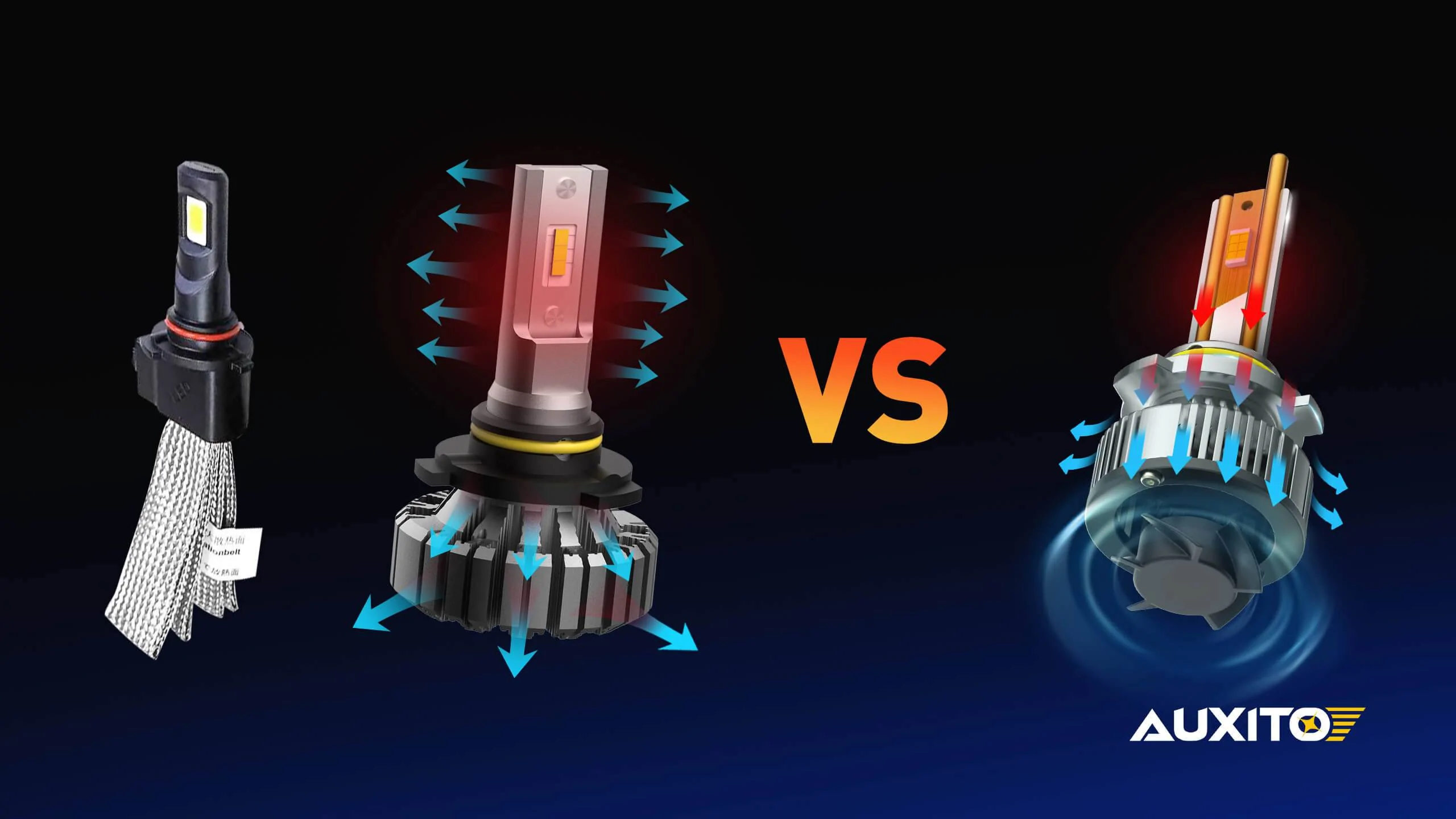
There are generally two methods for cooling LED headlights: the first is a fanless LED headlight Bulb (passive cooling) and the second is a fan LED headlight bulb (active cooling). They are both designed to dissipate heat from the LED bulb by maximizing the transfer of bulb heat to ensure proper bulb performance operation. So why do LED bulbs need to dissipate heat, take a look.
THE SIGNIFICANCE OF EFFECTIVE HEAT DISSIPATION FOR LED BULBS
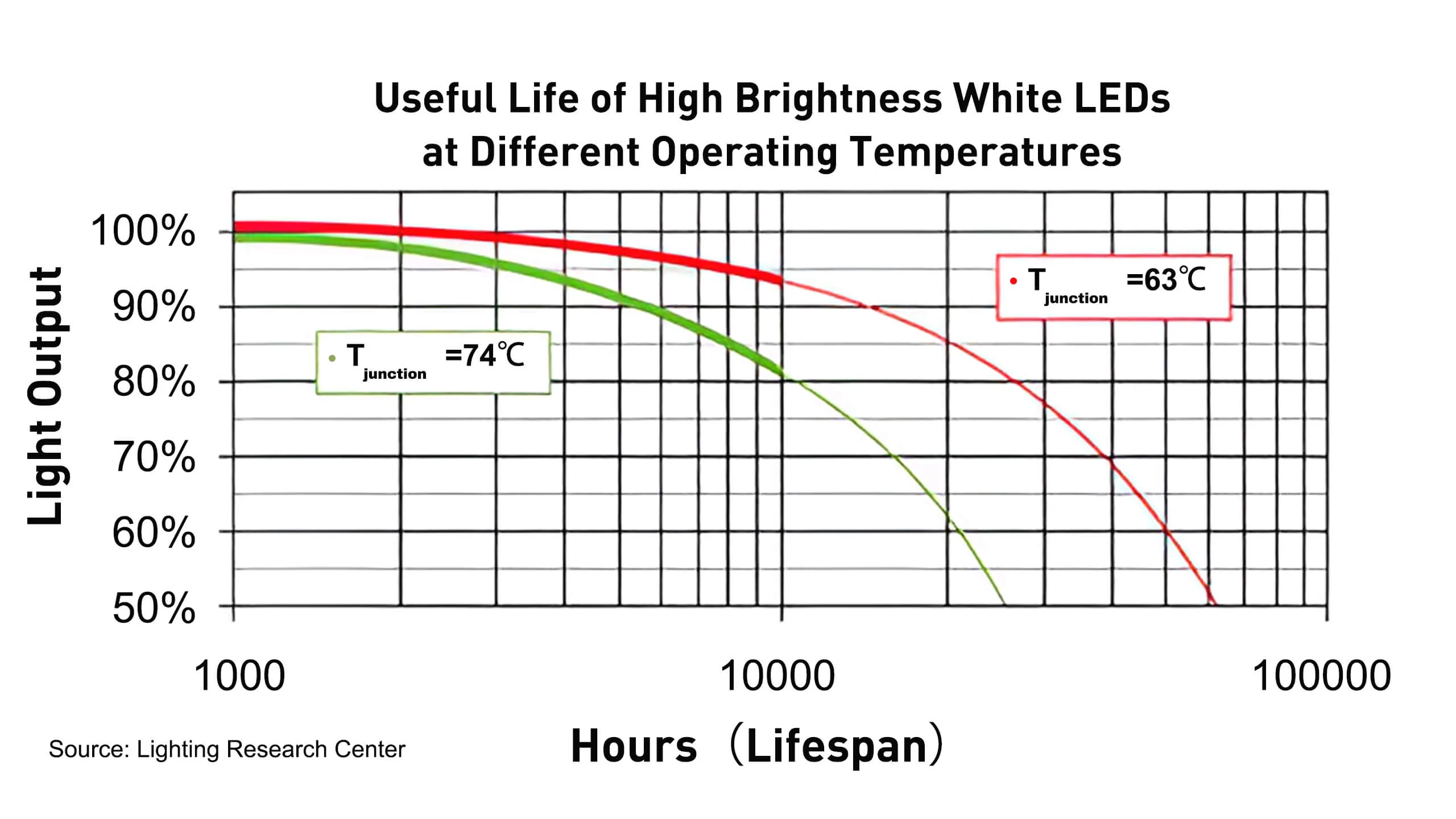
- Extended Lifespan of LED Chips
We can see in the data in the table below that as the temperature of the environment in which the LED bulb is operating increases, i.e. heat builds up, its lifespan is much reduced.
- Preserving Light Quality
- Ensuring Safety
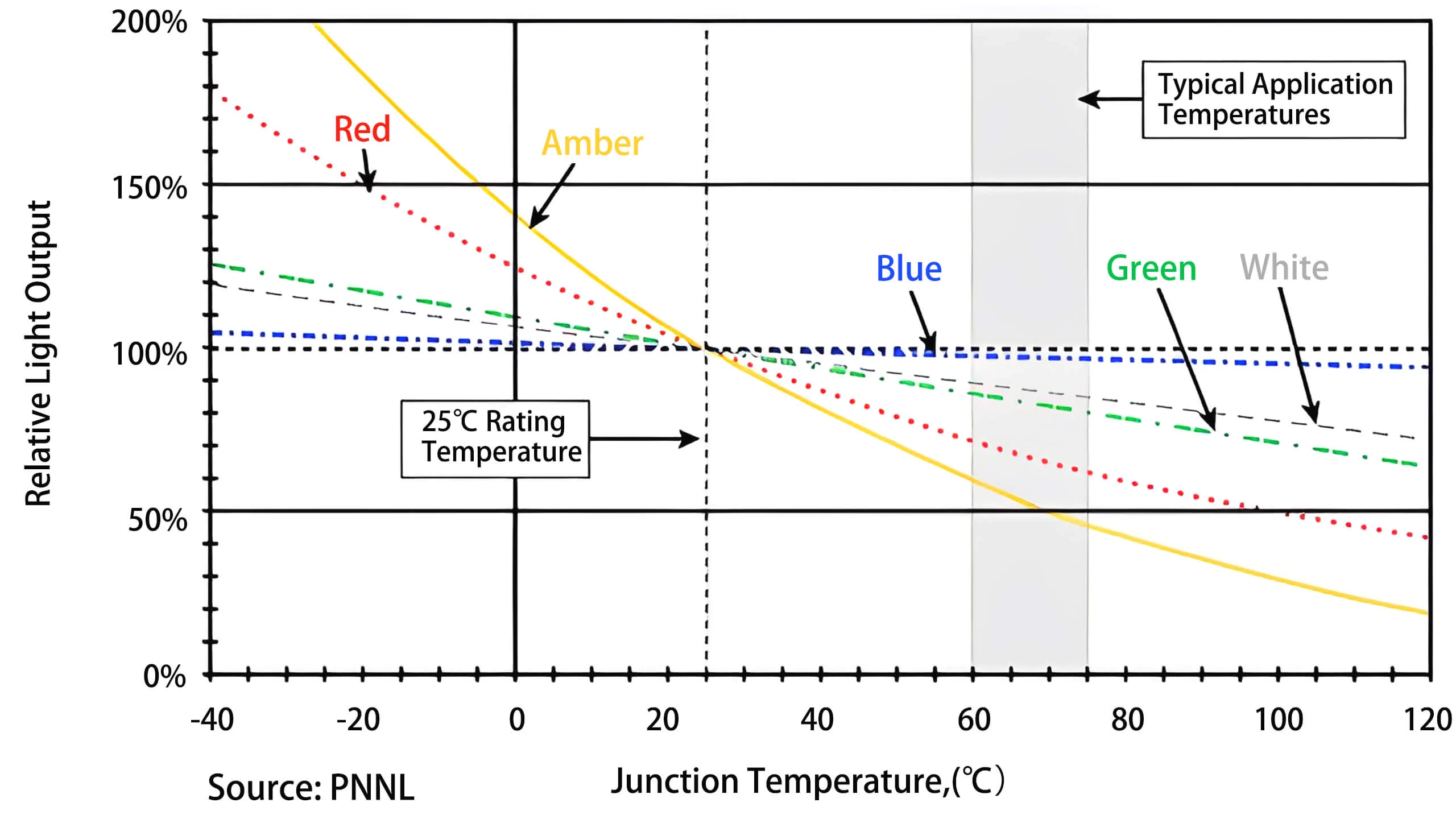
All in all, inadequate management of excess heat can significantly compromise the efficiency of LED bulbs, potentially leading to premature degradation or failure. During the lighting process of the LED bulb, the lower the temperature, the brighter the LED light and the longer the light time.
(Warm Reminder: To delve deeper into the significance of heat dissipation for bulbs and recommendations for LED bulbs with optimal heat dissipation, kindly refer to - "THE IMPORTANCE OF HEAT DISSIPATION IN AUTOMOTIVE LED HEADLIGHT BULBS")
Therefore, most of the high-quality LED bulbs on the market today are equipped with a basic heat sink, and the aluminum material itself can help facilitate heat conduction and dispersion. In addition, the current LED bulb market can be roughly divided into two types: active cooling and passive cooling LED bulb designs. Generally speaking, there are LED bulbs with fans and LED bulbs without fans. Next, let's introduce the method of cooling LED headlight bulbs.
WAYS TO DISSIPATE HEAT FROM LED HEADLAMP BULBS
- Aluminum radiator (passive cooling)
- With copper braided radiator (passive cooling)
- LED bulb with fan assembly inside or on end (active cooling)
- Alternative Cooling Designs
Advantages of Fan and Fanless LED Bulbs
| Compare Factors | Fanless LED Headlight Bulb | Fan LED Headlight Bulb |
|---|---|---|
| Brightness | Produces normal brightness | Capable of producing high brightness and greater light output |
| Energy consumption | Does not require additional power supply to run cooling | Requires additional power consumption to run and cool down |
| Cooling | Utilizes wind and other natural elements to dissipate heat, cooling is not as fast compared to fan LED bulbs | Built-in high-speed fan, cooling faster than fanless LED bulbs |
| Operate | No noise | Noisy |
| Maintain | No additional maintenance | Fan failure maintenance |
| Design | Simple and compact | Requires additional electronic components and space to accommodate the fan, relatively complex design |
| Cost | Relatively low production cost | Relatively high production cost |
Pros
- Low power consumption: The fanless LED bulb does not come with a fan for heat dissipation, only to increase the surface area for heat dissipation, and its radiator is a cooling method without power supply.
- Noiseless: These models have no fans and run quietly for a quieter driving experience.
- Low Maintenance: Fanless bulbs don't have to be overly resistant to damage like dust and water.
- Cost-effective: Fanless LED headlights are relatively affordable.
- Slow cooling speed: fanless LED bulbs only rely on external resources such as wind for heat dissipation. It takes longer for the bulb to cool than active cooling.
- Limited Brightness: Fanless LED bulbs may have limited maximum brightness levels due to limited heat dissipation capabilities. Higher wattage LEDs may require active cooling to maintain optimum operating temperature and achieve maximum light output.
- Sensitivity to ambient temperature: Fanless LED bulbs are more sensitive to the ambient temperature of the environment in which they are installed. In hot climates or confined spaces with limited airflow, the lack of a fan may result in increased operating temperatures, which may affect lamp performance and life.
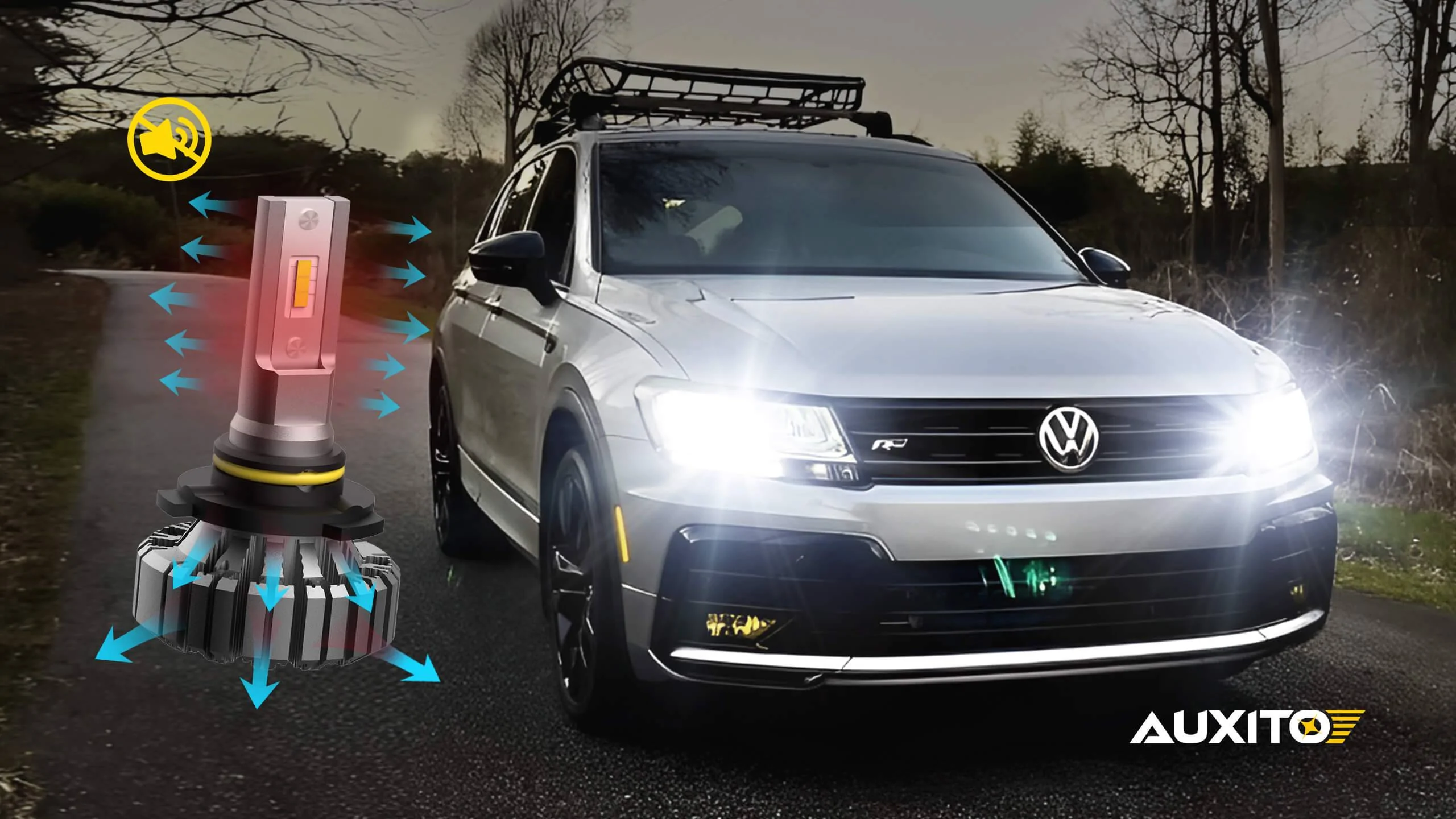
Fan LED Headlight Bulb (Active Cooling)
Pros
- Increased Power and Brightness: The operation of the fan greatly increases the rate at which heat can be dissipated from the bulb, preventing the LED assembly from reaching junction temperatures that could cause performance degradation or failure.
- Enhanced current capacity: Allow LED bulbs to accommodate more current and maintain operational stability.
- Extended Lifespan: The main advantage of headlights with fans is the ability to dissipate heat more effectively. High temperatures will shorten the life of the LED chip, while the fan helps to reduce the temperature, thus prolonging the life of the bulb.
- Noise: The fan makes noise when it is running, which may be distracting for some drivers. It's worth noting, however, that noise levels are generally low and often drowned out by the noise of the vehicle's engine.
- Relatively high power consumption: This is because the fan needs to use electricity for a long time to run, so it relatively increases the energy consumption of the LED bulb, even though it consumes relatively little electricity.
- Mechanical component risk: Fans are mechanical components and there is a risk of failure.
- Relatively high cost: Adding a fan will increase the design complexity and cost of the LED bulb, because additional electronic components and space are required to accommodate the fan, resulting in an increase in product cost. In addition, the fan may also need a dust cover for dust-proof, waterproof and other maintenance.
Overall, while fanless light bulbs offer advantages such as quiet operation and reduced maintenance, they may not be suitable for high-wattage or confined-space applications where active cooling is required to maintain optimal performance and longevity. And fan light bulbs offer efficient cooling and higher power capabilities, they can be noisier and more prone to mechanical failure. Whether it is a LED bulb with a fan or without a fan, they each have their advantages and disadvantages. The point is to make a choice based on your personal needs and the actual situation of the car.
Sponsored

