Sponsored

Noob octane error - filled 1/2 tank w/85 octane

AzScorpion

Moderator
First Name
Dave
Joined
Jul 25, 2019
Threads
335
Messages
26,275
Reaction score
132,343
Location
Back Home In AZ!
Vehicle(s)
2023 Ford Ranger Tremor
Occupation
Retired...Full Time Slacker
Thanks Dave, is there any tutorial or specific video that you know of I could watch to learn more about the mechanics of it. Where would be a good 101 course so I can understand more of this? I hate asking you guys all the time.
??‍♂
No worries Andrew, that's what the forum is here for. I don't know of any specific videos but in this same section there's a ton of info on all the tunes available. If you're worried about retaining your warranty the Ford tune will do that but you are locked into using only premium fuel. You won't get as much hp/tq gains but it's still a very noticeable difference over stock. 5star has a warranty available for purchase with their tune and IIRC it's close to $1,000.
Sponsored


dtech

Well-Known Member
Joined
May 10, 2020
Threads
38
Messages
3,137
Reaction score
7,583
Location
colorado
Vehicle(s)
Ranger Lariat FX4, chromed and forever damperless
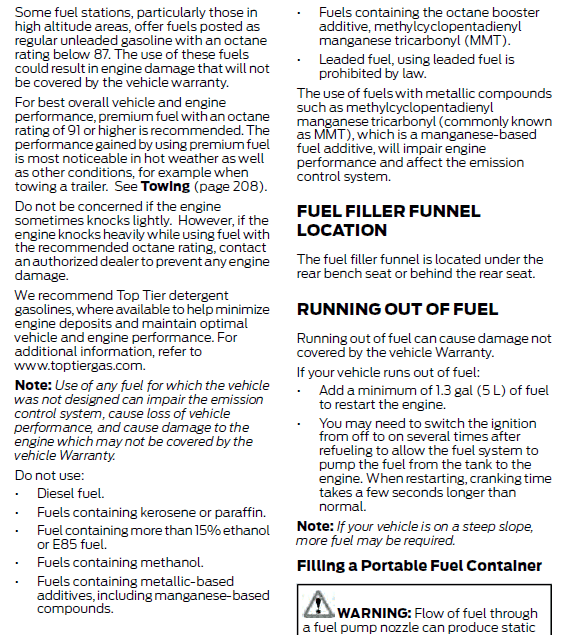
ye olde octane debate . Most makers give guidance against running anything lower than the recommended octane for boosted engines - irrespective of altitude. This because it's inherent for a turbo engine to raise the boost level to compensate for lower air pressure such as seen at higher altitudes. Whether or not the Ford engine mgmt system can fully compensate for running 85 is for me an unknown, I choose to believe in the owner's manual.

I'm of the opinion that Ford has tuned the engine to run quite well on 87 octane, this comes from using 91 and 87, I can tell a difference but it's not one I'd term as all that much - my point of reference are Saabs I owned where they were sluggish using 87 octane - the recommended octane was 91, so these engines were tuned to deliver peak performance using 91 , the difference was immediatedly noticeable.
And then there is the wife's Hyundai - 2.0 turbo, 87 is the required/recommended octane, using 91 makes very little difference in performance - a clue that the engine mgmt system is not designed to leverage higher octanes - some engine mgmt system are not - many recent ones are engineered to optimally use a range of octane levels.
So given the price of premium it's 87 that feeds the Ranger.
 

Groo

Well-Known Member
First Name
Mark
Joined
Jan 16, 2021
Threads
5
Messages
53
Reaction score
60
Location
ohio
Vehicle(s)
Ranger 2020
Occupation
Gainfully umployed 5 Pointed Star
Groo here
My friends....
This is a boosted engine and does not care if it is at sea level or Denver.
The turbo makes up for the pressure change.
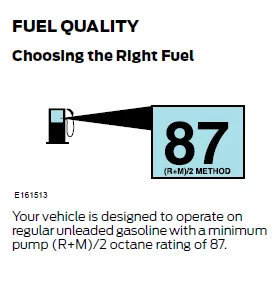
If the engine needs at least 87 ,, that is it.
I hauled gas and testing is minimum 87.
Drive easy till you can put a gal or 2 in the tank then put the highest you can get ,
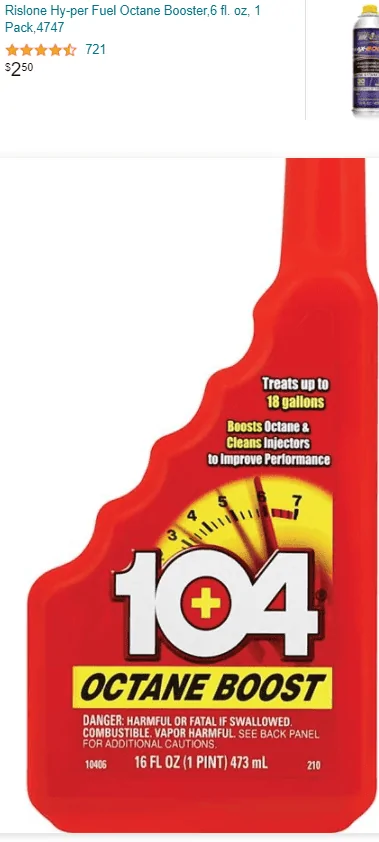
Or ,I would just put a booster in and forget it...
 

slowmachine

Well-Known Member
First Name
Mike
Joined
Jul 18, 2020
Threads
39
Messages
929
Reaction score
1,978
Location
New Hampshire
Vehicle(s)
2015 Jeep Wrangler, waiting for a Ranger PHEV
Groo here
My friends....
This is a boosted engine and does not care if it is at sea level or Denver.
The turbo makes up for the pressure change.
If the engine needs at least 87 ,, that is it.
I hauled gas and testing is minimum 87.
Drive easy till you can put a gal or 2 in the tank then put the highest you can get ,
Or ,I would just put a booster in and forget it...
Boost is relative to ambient atmospheric pressure, not absolute, or even corrected to seal level. The turbo increases air density in the engine, so performance is better than without it, but definitely does not fully compensate for the altitude difference. I’d still run at least 87, if not the highest octane available.
 

Groo

Well-Known Member
First Name
Mark
Joined
Jan 16, 2021
Threads
5
Messages
53
Reaction score
60
Location
ohio
Vehicle(s)
Ranger 2020
Occupation
Gainfully umployed 5 Pointed Star
Boost is relative to ambient atmospheric pressure, not absolute, or even corrected to seal level. The turbo increases air density in the engine, so performance is better than without it, but definitely does not fully compensate for the altitude difference. I’d still run at least 87, if not the highest octane available.
Groo here
Compaired to the boost pressure the engine runs at, the difference is a pittents.
My cobra would boost 10psi above local pressure regardless.
The wast gate limits the pressure,, As long as the turbo outputs enough to open the gate it
will adj for higher or lower local pressure.
This is how an aircraft engine works at higher alt.


dtech

Well-Known Member
Joined
May 10, 2020
Threads
38
Messages
3,137
Reaction score
7,583
Location
colorado
Vehicle(s)
Ranger Lariat FX4, chromed and forever damperless
Groo here
Compaired to the boost pressure the engine runs at, the difference is a pittents.
My cobra would boost 10psi above local pressure regardless.
The wast gate limits the pressure,, As long as the turbo outputs enough to open the gate it
will adj for higher or lower local pressure.
This is how an aircraft engine works at higher alt.
Groo here
Compaired to the boost pressure the engine runs at, the difference is a pittents.
My cobra would boost 10psi above local pressure regardless.
The wast gate limits the pressure,, As long as the turbo outputs enough to open the gate it
will adj for higher or lower local pressure.
This is how an aircraft engine works at higher alt.
waste gates on (modern) turbos operate either through vacuum actuated or electrical solenoid (Ranger) . It is reasonably accurate when said that turbos "create their own atmosphere" referring to the ability to compensate for less atmospheric air pressure than 14.7 bars - which is the typical reading at sea level. Hence the requirement for a min of 87 octane for many boosted engines irrespective of altitude.
 

D Fresh

Banned
Banned
First Name
Doug
Joined
Dec 10, 2020
Threads
20
Messages
6,272
Reaction score
13,570
Location
Colorado
Vehicle(s)
'20 Lariat FX4, '17 FiST, '16 CX-5, '95 YJ
Occupation
Milkman
ye olde octane debate . Most makers give guidance against running anything lower than the recommended octane for boosted engines - irrespective of altitude. This because it's inherent for a turbo engine to raise the boost level to compensate for lower air pressure such as seen at higher altitudes. Whether or not the Ford engine mgmt system can fully compensate for running 85 is for me an unknown, I choose to believe in the owner's manual.

I'm of the opinion that Ford has tuned the engine to run quite well on 87 octane, this comes from using 91 and 87, I can tell a difference but it's not one I'd term as all that much - my point of reference are Saabs I owned where they were sluggish using 87 octane - the recommended octane was 91, so these engines were tuned to deliver peak performance using 91 , the difference was immediatedly noticeable.
And then there is the wife's Hyundai - 2.0 turbo, 87 is the required/recommended octane, using 91 makes very little difference in performance - a clue that the engine mgmt system is not designed to leverage higher octanes - some engine mgmt system are not - many recent ones are engineered to optimally use a range of octane levels.
So given the price of premium it's 87 that feeds the Ranger.
Groo here
My friends....
This is a boosted engine and does not care if it is at sea level or Denver.
The turbo makes up for the pressure change.
If the engine needs at least 87 ,, that is it.
I hauled gas and testing is minimum 87.
Drive easy till you can put a gal or 2 in the tank then put the highest you can get ,
Or ,I would just put a booster in and forget it...
Boost is relative to ambient atmospheric pressure, not absolute, or even corrected to seal level. The turbo increases air density in the engine, so performance is better than without it, but definitely does not fully compensate for the altitude difference. I’d still run at least 87, if not the highest octane available.
I've driven boosted vehicles at altitude for over 20 years. Including OTS tunes for 93 on our lowly 91 here.

Octane rating is basically resistance to pre ignition. Which is something you want at the higher effective compression ratios of a boosted engine. However, oxygen is needed for pre ignition, and the higher you go, the less there is.

When Ford states that 87 is acceptable they are basically saying "Regular" fuel. As 87 at sea level is the equivalent of 85 at altitude. Both are sold as regular grade. At sea level, or even Kansas, you have the choice of 87, 89,93. Here at altitude, 85, 87, 91. Because less oxygen equals a lower propensity to preignite/knock. It's basic science.

There's a reason the performance tunes are listed as 91/93. Because in many places in the US 91 IS 93, essentially.

That being said, I run premium wherever I'm at on boosted vehicles. For the Ranger that's more for performance/insurance than anything. I wouldn't sweat a half tank of 85 here at all.
 

slowmachine

Well-Known Member
First Name
Mike
Joined
Jul 18, 2020
Threads
39
Messages
929
Reaction score
1,978
Location
New Hampshire
Vehicle(s)
2015 Jeep Wrangler, waiting for a Ranger PHEV
I've driven boosted vehicles at altitude for over 20 years. Including OTS tunes for 93 on our lowly 91 here.

Octane rating is basically resistance to pre ignition. Which is something you want at the higher effective compression ratios of a boosted engine. However, oxygen is needed for pre ignition, and the higher you go, the less there is.

When Ford states that 87 is acceptable they are basically saying "Regular" fuel. As 87 at sea level is the equivalent of 85 at altitude. Both are sold as regular grade. At sea level, or even Kansas, you have the choice of 87, 89,93. Here at altitude, 85, 87, 91. Because less oxygen equals a lower propensity to preignite/knock. It's basic science.

There's a reason the performance tunes are listed as 91/93. Because in many places in the US 91 IS 93, essentially.

That being said, I run premium wherever I'm at on boosted vehicles. For the Ranger that's more for performance/insurance than anything. I wouldn't sweat a half tank of 85 here at all.
You are almost certainly correct, and I am aware of the reduced octane requirement at altitude, but that isn’t in the owner’s manual. Does 85 satisfy the warranty conditions, or are you giving Ford an opportunity to weasel out of their obligations? Gas is cheap; engines are expensive.
 

D Fresh

Banned
Banned
First Name
Doug
Joined
Dec 10, 2020
Threads
20
Messages
6,272
Reaction score
13,570
Location
Colorado
Vehicle(s)
'20 Lariat FX4, '17 FiST, '16 CX-5, '95 YJ
Occupation
Milkman
You are almost certainly correct, and I am aware of the reduced octane requirement at altitude, but that isn’t in the owner’s manual. Does 85 satisfy the warranty conditions, or are you giving Ford an opportunity to weasel out of their obligations? Gas is cheap; engines are expensive.

Can't say I disagree there. Which is why I wouldn't do it on the regular. Still, I wouldn't be concerned at all about a half tank of 85 mixed with a half tank of 87.

If I were, I'd drive gingerly for a half a tank, then top it off with 91 and call it good.
 

Gazmic

Well-Known Member
First Name
Steve
Joined
Apr 23, 2020
Threads
5
Messages
202
Reaction score
591
Location
WA
Vehicle(s)
2019 Ford Ranger
Occupation
Machinist
I wouldn't worry about it at all for 1/2 a tank. I took a road trip from Washington to Utah a year and a half ago. I couldn't believe ho much "cheaper" the gas was in Idaho and Utah. It wasn't until the last fill on the way back at the Idaho / Washington state line that i noticed I was running 85. I ran 3-4 full tanks without any issues.
 

VAMike

Well-Known Member
First Name
Mike
Joined
Feb 22, 2019
Threads
1
Messages
3,390
Reaction score
4,408
Location
Virginia
Vehicle(s)
2019 Ranger Lariat SuperCab
Octane rating is basically resistance to pre ignition. Which is something you want at the higher effective compression ratios of a boosted engine. However, oxygen is needed for pre ignition, and the higher you go, the less there is.
The percentage of oxygen in the air is the same at sea level and on top of a mountain (about 21%). What varies is the air pressure, which determines how much air (by mass) is in a given volume; at sea level that's 14.7PSI and at 10k feet that's 10.2PSI. There's less oxygen by volume at higher altitude, but that's irrelevant if you're squishing more air into a given volume with some sort of pump! If you have an engine at sea level boosted by 10PSI you've got about 25PSI in the cylinder and the same amount of oxygen (by mass) you'd have at 10k feet with 15PSI of boost. The computer sets the boost pressure based on what it takes to get a certain amount of oxygen into the cylinder to generate a desired amount of power, so the main difference is that at higher altitude you tend to need more boost (higher pressurization) for the same power output. It is true that the final pressure in the cylinder will be lower with max boost at altitude vs max boost at sea level, but the engine typically spends most of its time at lower boost levels and at those lower levels the altitude is compensated for (so the octane requirement is what's stated, with no "altitude reduction").
 

dtech

Well-Known Member
Joined
May 10, 2020
Threads
38
Messages
3,137
Reaction score
7,583
Location
colorado
Vehicle(s)
Ranger Lariat FX4, chromed and forever damperless
Numerous considerations - but I think this video does a good job regards explanations and the pros and cons of using 85 octane in modern cars - they don't take a firm stance either way just outline the risk factors. The video was apparently created in response to people asking about octane requirement in Ford's F-150. I find it an interesting debate about using 85 octane in high altitude whereas it's not infrequent for some to say they will only use premium because it'a turbo charged engine - which I believe to be well - old school thinking.

https://www.torquenews.com/14093/how-85-octane-fuel-can-destroy-your-engine-and-void-your-warranty
 

jblc

Well-Known Member
First Name
JB
Joined
Nov 15, 2020
Threads
75
Messages
749
Reaction score
644
Location
USA
Vehicle(s)
2021 XLT FX2 supercab
Thanks... I saw that, but it didn't say anything about engine longevity with higher octane (as others in this thread were implying). I can, of course, see that higher octane is better performance.
What about engine life though, as others had eluded to in this thread?
 

Aonarch

Well-Known Member
First Name
Alec
Joined
Jan 21, 2022
Threads
4
Messages
731
Reaction score
1,795
Location
North GA/ Montana
Vehicle(s)
'21 Tremor, '16 Audi TT, '21 Ducati Hyper, '85 E30
Occupation
Engineer
Not recommended by Ford and performance shops. This stuff leaves nasty deposits.

Even at altitude 85 is no bueno. That stuff is left over from the old carb days.

But the computer is smart enough to adjust. Just avoid WOT (Wide open throttle). At a quarter tank fill it with the highest octane that you have and you'll be fine.

Btw 89, is just 87 and 91/93 mixed.
Sponsored


Top