woodworker
Well-Known Member
- Thread starter
- #1
Only some will understand.

Sponsored


RightI know what the first 5 letters mean........but the "R" ?????
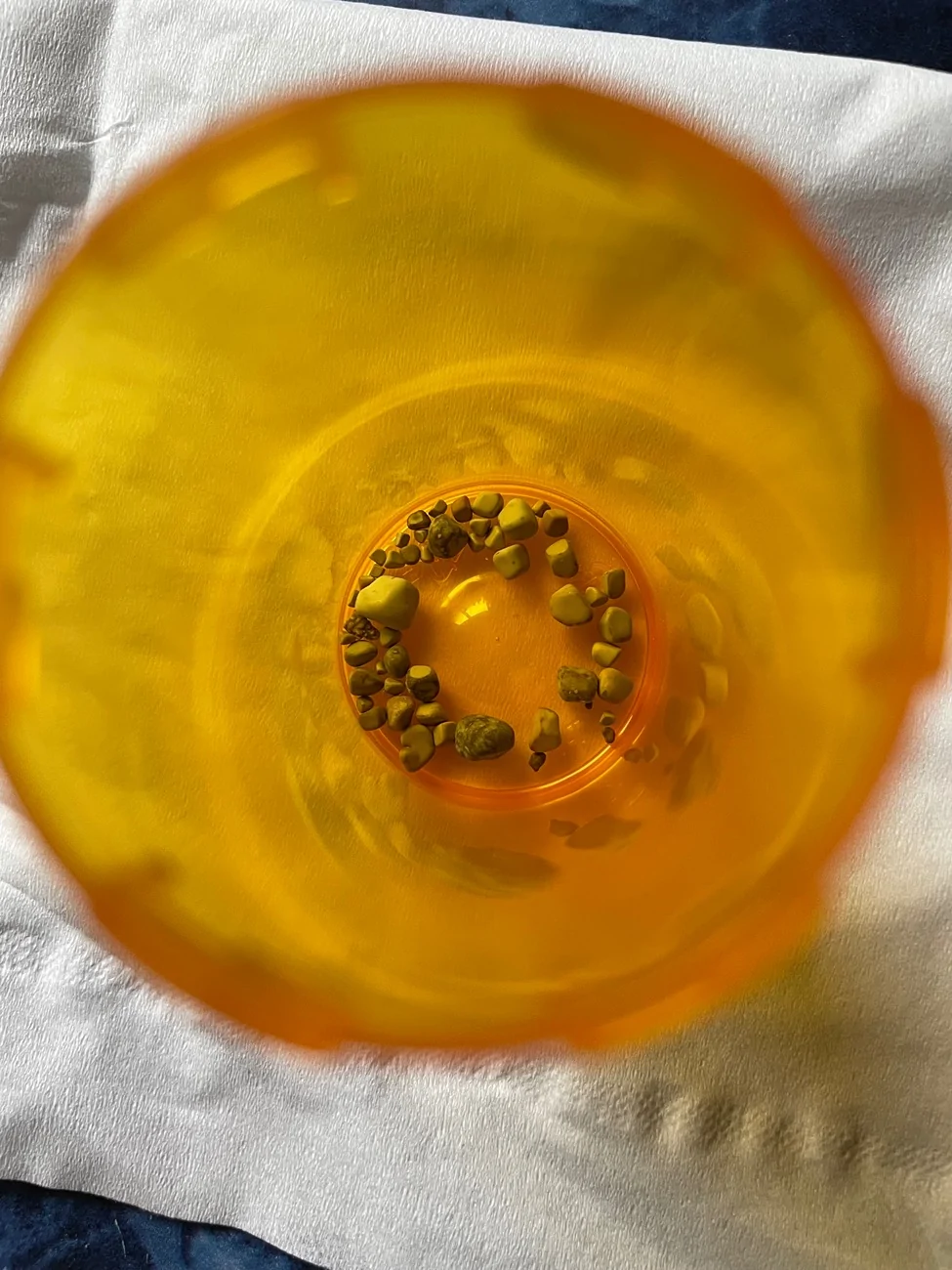

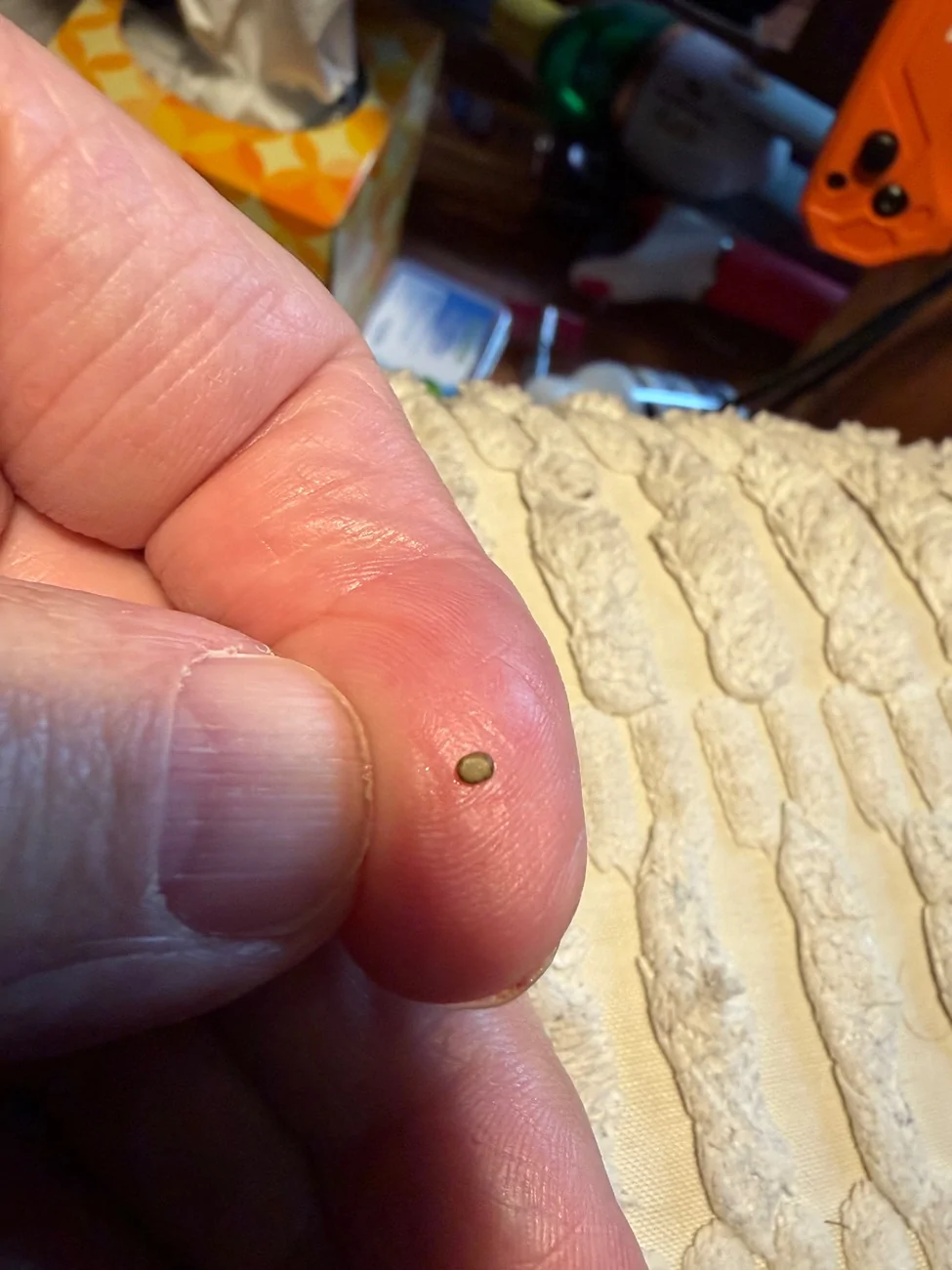
My friend years ago said she would have three kids rather than one stone. They can make you curl up into the fetal position cause there’s nothing you can do. Had to have lithotripsy twice.Damn, there's some big ones in there! They must have hurt like hell. I am guessing more than crushing my finger tip. (still can't really use it)
Then I guess I am more than covered!My urologist said one beer a day can help. Got that covered doc….
If I’m at the house, just one won’t cut it. If I’m out and about, it’s one and done…. That will get me back to the house.Then I guess I am more than covered!

Double posted?
Too many big words! Seriously though, good info. I take potassium, not sure of the type, need to check. EGFR is new to me, don't remember seeing it in my bloodwork.Potassium Citrate (dissolves exisiting and prevents new ones from forming) does the trick, and results in a very high EGFR reading. Your kidneys stay clean dna youthful. Most 70 year olds have an EGFR of mid to low 60's- mid 70's. My EGFR is on the mid to high 90's. Doc says I have the kidneys of a 30 year old!
I'm been on Potassium Citrate for years, as I need large amount of K daily. I shed it. K Citrate is fully absorbed in your blood stream in 2 hours. I've had this condition since I was 30. Eat lots of K rich foods, and still take supplementation. I consume only 700mg of sodium daily... eating more speeds up the shedding.
It is very effective in treating arrhythmia if you tend to be hypokalemic. I am way hypokalemic - genetic condition.
Of course if beer works for you, you're covered!
Thanks. The beer must not be working or I wouldn’t be passing gravel.Potassium Citrate (dissolves exisiting and prevents new ones from forming) does the trick, and results in a very high EGFR reading. Your kidneys stay clean dna youthful. Most 70 year olds have an EGFR of mid to low 60's- mid 70's. My EGFR is on the mid to high 90's. Doc says I have the kidneys of a 30 year old!
I'm been on Potassium Citrate for years, as I need large amount of K daily. I shed it. K Citrate is fully absorbed in your blood stream in 2 hours. I've had this condition since I was 30. Eat lots of K rich foods, and still take supplementation. I consume only 700mg of sodium daily... eating more speeds up the shedding.
It is very effective in treating arrhythmia if you tend to be hypokalemic. I am way hypokalemic - genetic condition.
Of course if beer works for you, you're covered!
Most Doctors prescribe Potassium Chloride - that's what their therapeutic guidelines call for.Too many big words! Seriously though, good info. I take potassium, not sure of the type, need to check. EGFR is new to me, don't remember seeing it in my bloodwork.
Please see the attached PDF for symptoms of low and high levels of each electrolyte used by your body. There will only be positive effects if you stay within the normal serum Potassium range of 3.5 - 5.0.Thanks. The beer must not be working or I wouldn’t be passing gravel.
If you don’t mind saying, how much do you take a day and does it cause any side effects? Do you use prescription or OTC?
My telehealth NP call two weeks ago went very well. BP is fine, glucose is good and I still don’t take any prescription pills at all going on 72. She said whatever you’re doing, keep it up because you’re healthier than some of my 40 year old patients. My one weakness is salt, I could put salt on a salt lick and eat it on bread.

Listed as this on a CMP reportToo many big words! Seriously though, good info. I take potassium, not sure of the type, need to check. EGFR is new to me, don't remember seeing it in my bloodwork.
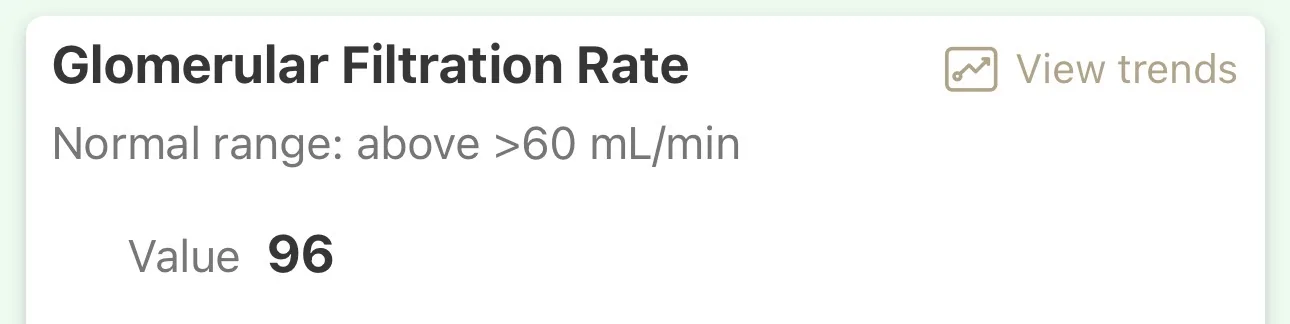
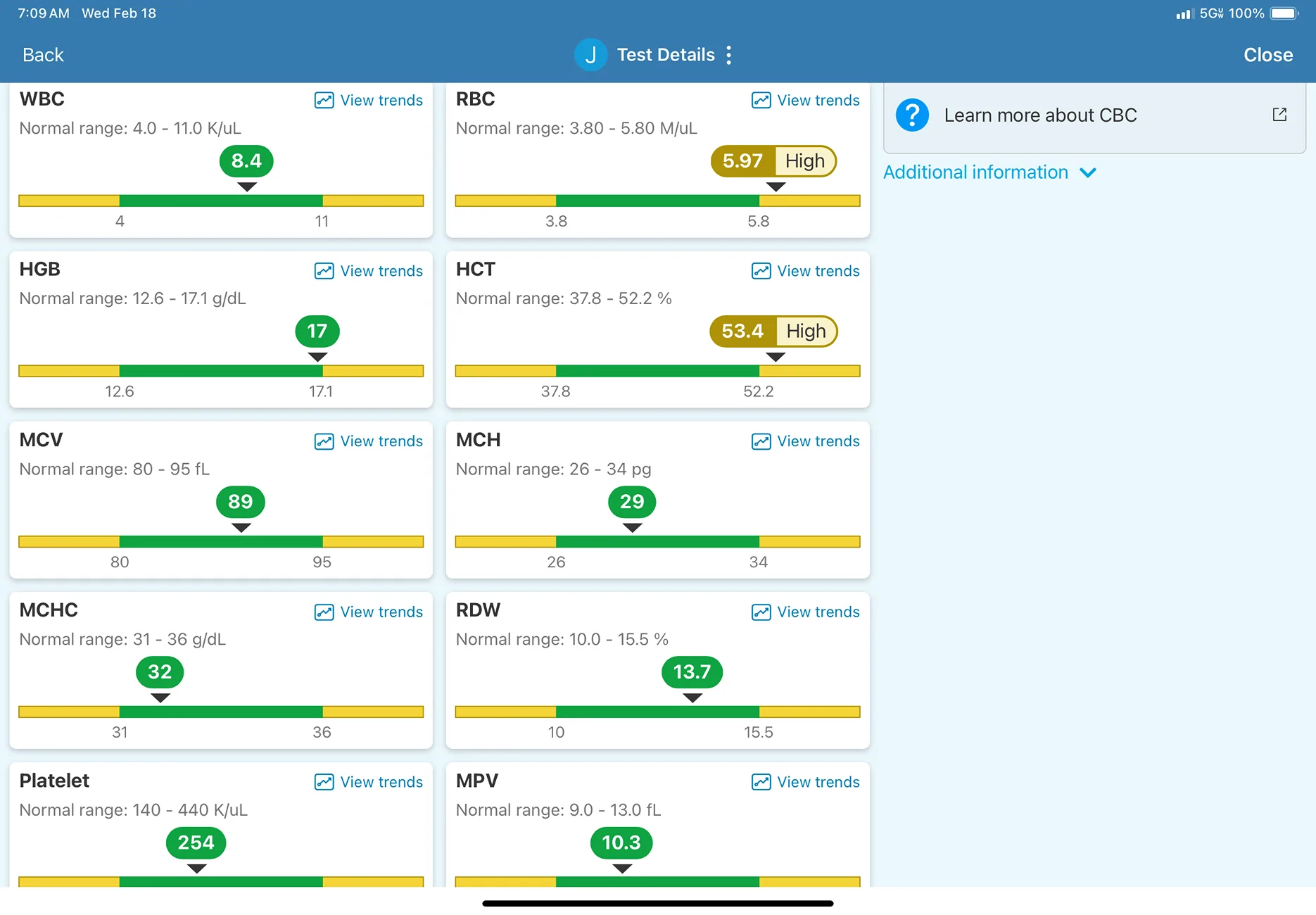
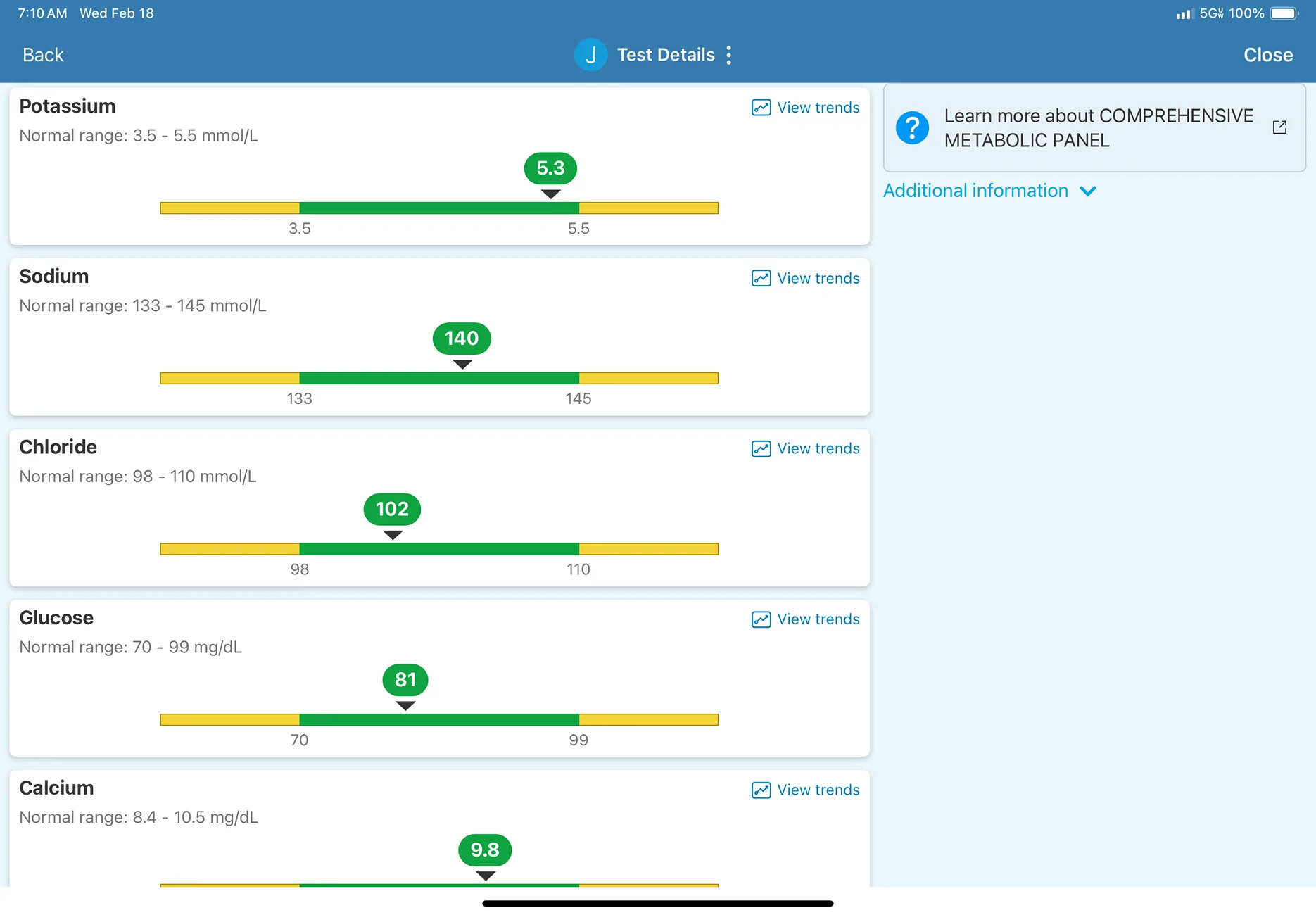
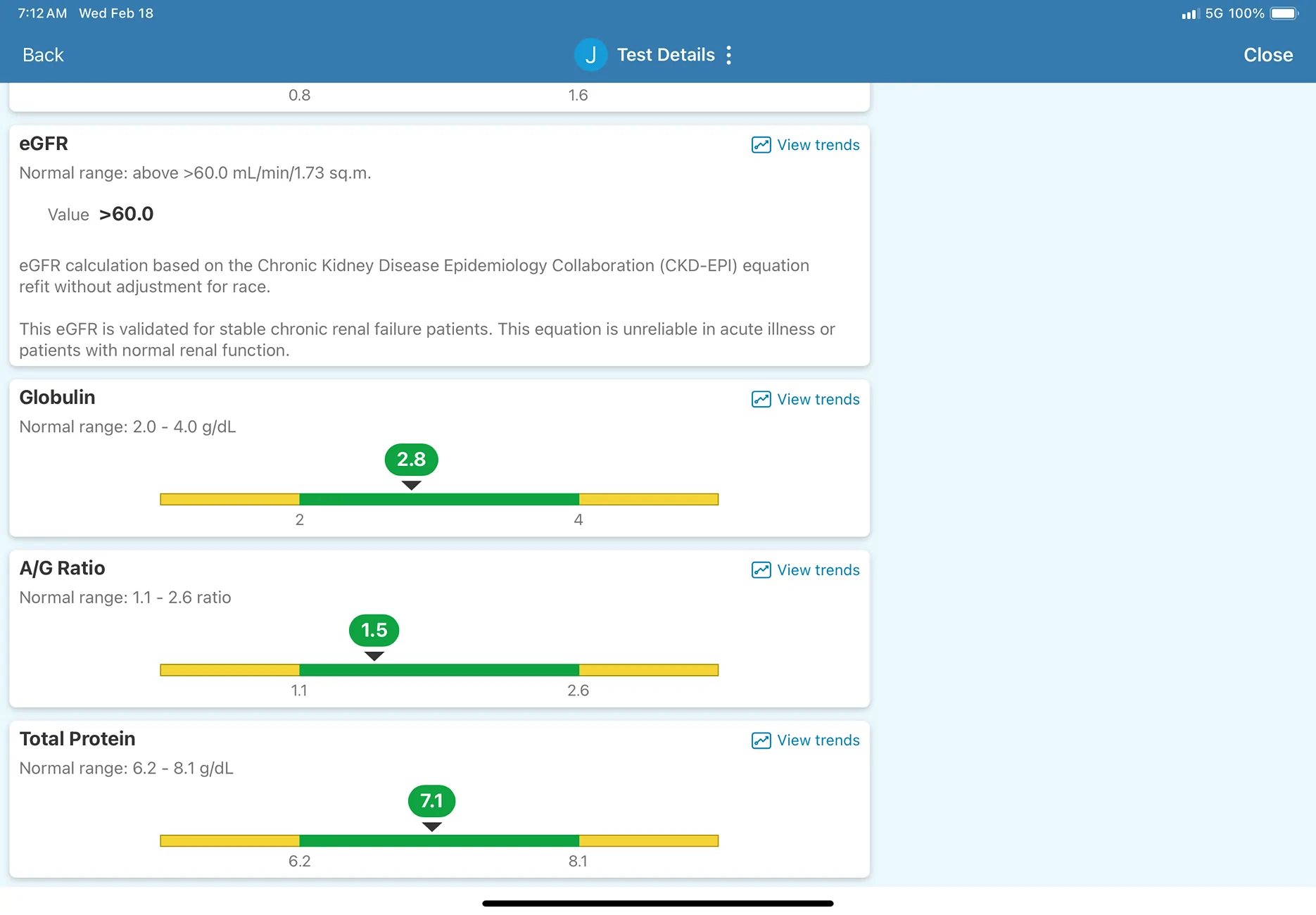
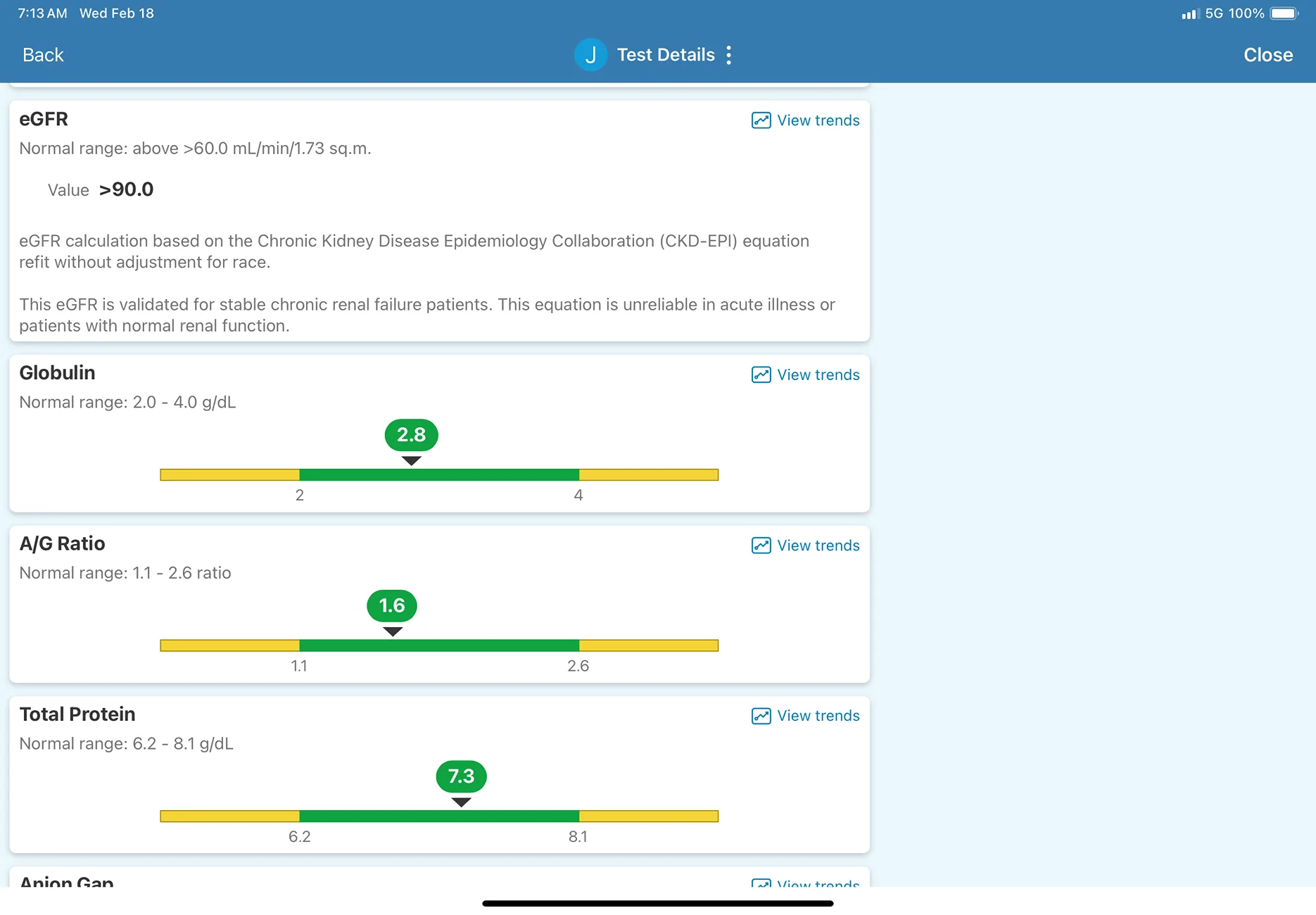
Than you very much for taking the time to do this. I do love greens, sweet potatoes, and especially white beans. Your write up made me curious about my numbers so I went into MyChart and looked at my last test (see attached) because I had’nt really paid attention to them because she told me there was nothing she was concerned about. Pretty much everything was in the green range, which must be a miracle for me or I’m just lucky, and what was out was only a few points and I go back for my CBC in May. I saved that document you sent and thank you again.Please see the attached PDF for symptoms of low and high levels of each electrolyte used by your body. There will only be positive effects if you stay within the normal serum Potassium range of 3.5 - 5.0.
I agree with your nurse. Keep doing what you are doing! If your kidneys are fine, you can take a daily 20mEq of potassium citrate without any harm and it will help keep your kidneys healthy, and keep stones at bay.
If you are eating the typical Amercian diet , you are low on Potassium anyway. If you eat lots of greens, sweet potatoes, and white beans. you're getting plenty of Potassium.
Your kidneys act like a teeter/totter when it comes to sodium and potassium. Eat lots of salt and your kidneys will shed potassium, eat lots of potassium and your kidneys will shed salt.
Your kidneys are constantly balancing sodium and potassium - at the expense of each other.
My kidneys hold sodium too much, and I shed potassium as a result. So I do not need the normal amount of salt that most do. And if I eat say a couple of slices of pizza, I will lose a great deal of potassium very quickly. It is genetic. So no eating out for me. Too much sodium.
Warning Long Science Lesson note!
I consume 4700mg of Potassium / day. And only 750-1,000 mg of salt / day. Most people's diet is the reverse of those numbers. The Potassium Citrate brand that I take is Effer-K 20mEq tablets (782mg) which is perscription only.
20 mEq of either Potassium Citrate or Potassium Chloride yields 782mg of elemental Potassium.
(20 x 39.1 (- 39.1 is the atomic weight of K in the periodic table))
FDA requirements for daily intake of Potassium is between 3500mg and 4700mg. The FDA just set the lower number in the last year or so, It used to be 4700mg.
It takes 100mEq to raise your serum potassium level 1 point. 20mEq will raise your serum level 0.2.
The lower limit of Serum Potassium is 3.5, the upper limit is 5, although some labs say 5.5. So if you are at 3.5 and take 100mEq of potassium (5 of my Effer-K Tablets), your serum level will rise to 4.5, which I consider in the top of the sweet spot range 4.3 - 4.5.
I seldom see 4.0 and it drops very quickly (within hours) if I do not stay on top of it. I can work physically extremely hard one day, and be in arrhytmia the next, if I do not take a lot of Potassium during the work day, night, and the next day.
I typically take 3 tablets during the day and all my food is high potassium foods, no salt used, instead I season with Potassium Chloride. It takes getting used to, but you soon find you lose the taste for salt. If I eat say a Chic-fil-a sandwich it burns my mouth.... too salty to eat!
You don't want to be under or over those K Range numbers. Too much or too little Potassium will cause major electrical issues, esp with your heart.
People who have classic kidney failure hold onto potassium and as it increases in your blood, it very quickly becomes life threatening.
For years they killed death row inmates with a high dose of Potassium Chloride.
There are Potassium Citrate drops OTC from Amazon or others. Do your homework to insure that you are getting a quality product.
Before beginning, have a CMP blood test to see where your EGFR and electrolyte are. You need a baseline. Do not fly blind. Quest Diagnostics or LabCorp both can draw your blood test and will report back results within 24 hours. You can take this test without the need of a doctor's approval, just make an appointment.
Check your potassium level before taking a supplement. The CMP will list several of your electrolytes including your potassium level, just make sure they draw your blood properly (most don't and it will result in a false high Potassium level. As much as +2.0 high!
It happened to me at Duke Hospital ER. I went in with severe arrhythmia from low Potassium. They disregarded my instructions and took my blood sample incorrectly.
The doctor later came in with the results and told me I had to be immediately admitted to the hospital as my Potassium level was at 5.7!
They were going to raise my sodium levels to lower my Potassium level (which would have killed me).
I told him I came in with an extremely low Potassium level and to take the test again. They did and it came back at 3.5 (the lowest safe level). Before heading to the hospital I had taken 100mEq of potassium over a 4 hour period, and it takes 2 hours for each dose to be absorbed into my system. I had been there 4 hours, so my Potassium levels had been far below the 3.5 lower limit.
He apologized and left me go home. BTW, Duke charged me for both tests!
To insure an accurate reading, have the nurse apply the tourniquet, make a fist, insert the needle, remove tourniquet, relax hand, wait 45 seconds, then draw the blood. I was taught this by a world class endocronologist who spent his career studying my condition. I hired him to consult and train me how to care for myself for a year. I had him contact my concierge doctor to instruct him on how it was to be done.
Knowlwdge is power!
I am attaching a pdf that gives the symptoms of Electrolyte Imbalances. Both too little and too much. Curiously, the sympoms for Potassium are almost identical in both cases.
I tried to make it as concise as I could. I find it helpful, and hope you will as well.
Finally, It took me several years to learn to manage my condition, and I can go a year between arrhythmia attacks, and those typically happen when I start to "color outside the lines".
Here's to your health!